
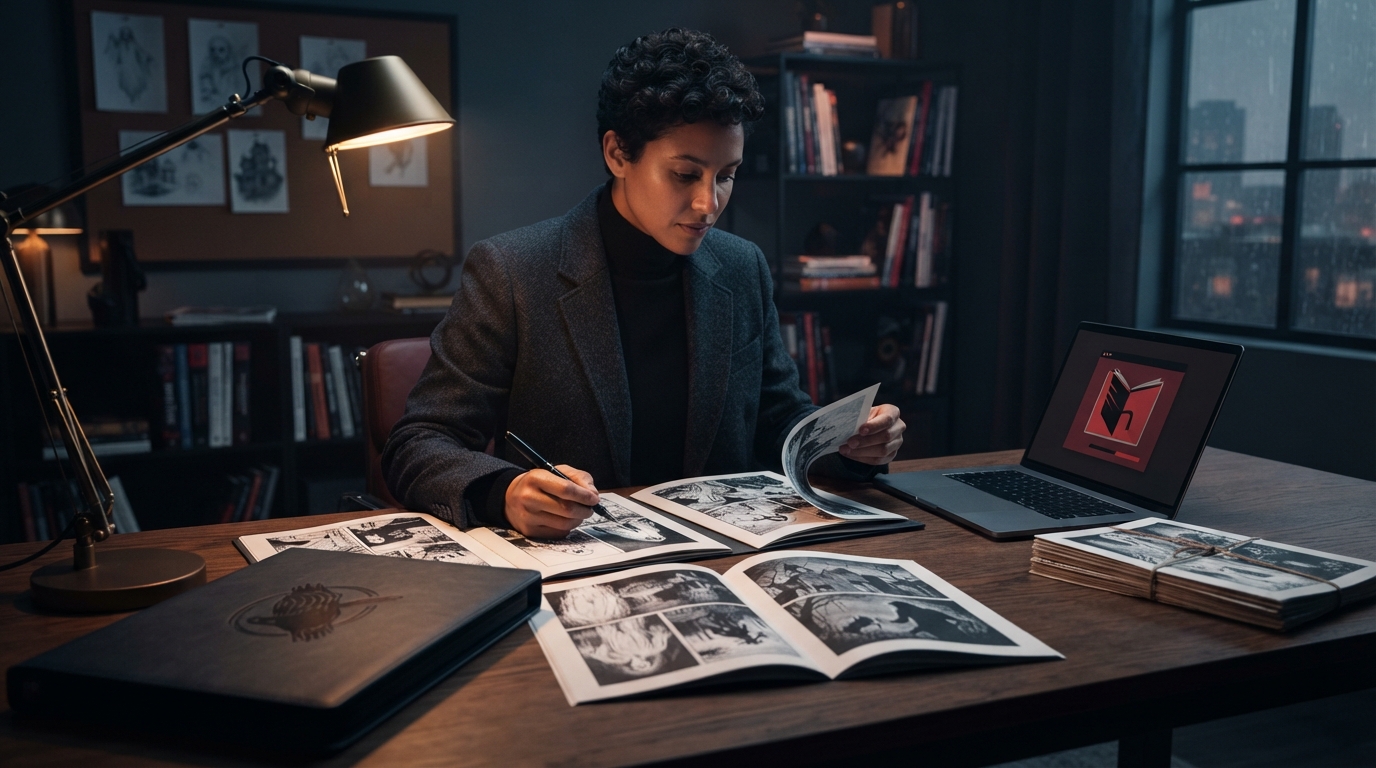
The top horror comic publishers accepting submissions today include Image Comics, Dark Horse Comics, Scout Comics (via their horror imprint Black Caravan), Mad Cave Studios, Source Point Press, and Ablaze Publishing. While some publishers accept unsolicited comic book scripts, most require a complete creative team consisting of a writer, artist, colorist, and letterer, alongside a fully realized 5-to-10-page pitch package. Navigating these submission portals successfully requires a deep understanding of creator-owned rights, visual storytelling, and the specific subgenres—ranging from gothic and psychological horror to cosmic dread and slasher gore—that each editorial team prefers.
Breaking into the indie comic book industry with a horror title is both incredibly challenging and immensely rewarding. Horror has undergone a massive renaissance in sequential art, driven by breakout hits like Something is Killing the Children, Gideon Falls, and Wytches. Unlike traditional superhero stories dominated by the Big Two, the horror genre thrives within the independent and creator-owned space. To help you secure a publishing contract, this comprehensive guide breaks down the active horror publishers, their exact submission requirements, and the precise mechanics of crafting a terrifying comic book pitch.
The Current Landscape of Horror Comic Book Publishing
The modern horror comic market is highly segmented. Publishers are no longer just looking for generic monster stories; they are seeking highly specific, atmospheric, and culturally resonant narratives. When preparing your submission, you must understand where your story fits within this ecosystem. The industry is broadly divided into three tiers of publishers:
- The Creator-Owned Giants: Publishers like Image Comics and Dark Horse. They offer the highest visibility and intellectual property (IP) retention but require complete, professional-grade creative teams and often do not pay upfront page rates, relying instead on backend profit-sharing.
- Mid-Tier Genre Specialists: Publishers like Scout Comics (Black Caravan), Mad Cave Studios, and Source Point Press. These houses are highly receptive to new talent, actively look for horror, and offer robust distribution through Diamond, Lunar, and the book market.
- Boutique and Anthology Presses: Small presses and annual open calls (such as those from Iron Circus Comics or various Kickstarter-backed anthologies) that accept individual horror comic scripts or short stories, making them perfect for writers without attached artists.
Understanding these distinctions prevents you from wasting time submitting a niche, avant-garde psychological horror script to a publisher that specializes in high-octane, action-horror grindhouse books.
Top Horror Comic Publishers Accepting Submissions
Below is an exhaustive breakdown of the leading comic book publishers currently accepting horror submissions, complete with their submission guidelines, preferred formats, and editorial focus.
| Publisher / Imprint | Submission Status | Primary Submission Requirements | Rights / Financial Model |
|---|---|---|---|
| Image Comics | Always Open (Unsolicited) | Proposal document, cover letter, 5 finished sequential pages (colored & lettered) | Creator-owned; 100% IP retention; backend revenue model |
| Dark Horse Comics | Open via Mail/Specific Portals | Synopsis, character bios, plot outline, 5-8 finished pages | Varies (Creator-owned and licensed options available) |
| Scout Comics (Black Caravan) | Open via Submittable | Logline, pitch deck, 5-6 lettered pages, complete story arc outline | Creator-owned; distribution-focused profit split |
| Mad Cave Studios | Open (Annual Talent Search & General) | Pitch document, 22-page script (for writers), sequential art samples | Creator-owned and work-for-hire hybrid options |
| Source Point Press | Periodically Open | Complete pitch package, brief creator bios, 5 completed pages | Creator-owned; strong focus on mid-tier indie distribution |
| Ablaze Publishing | Open via Email | Full series outline, sample script, 6 finished sequential pages | Creator-owned; global distribution focus |
1. Image Comics: The Pinnacle of Creator-Owned Horror
Image Comics remains the gold standard for creator-owned comic books. If you want to retain 100% of your media rights, film options, and intellectual property, Image is the dream destination. However, their submission process is notoriously competitive.
What They Want: Image does not accept solo writer submissions or raw scripts. You must submit a complete package representing a fully formed creative team. Your horror pitch must include a compelling, one-page cover letter, a detailed synopsis of the story arc, and a minimum of five fully finished, lettered, and colored sequential pages. Pitching a horror concept to Image requires a distinct visual identity; they look for artists with unique styles that depart from standard superhero house styles.
Submission Strategy: Do not submit a first issue script. Instead, focus your pitch on the core hook. If your horror comic is “The Conjuring meets Succession,” make sure that thematic tension is palpable in your five-page preview. Submit your pitch via their online portal as a single PDF under 10MB.
2. Dark Horse Comics: The Home of Gothic and Cosmic Horror
As the long-time publisher of Mike Mignola’s Hellboy universe, The Umbrella Academy, and legendary eerie anthologies, Dark Horse Comics has a legendary pedigree in horror. They are highly selective but occasionally open up submission pipelines for creator-owned horror series.
What They Want: Dark Horse values atmosphere, lore, and strong character-driven horror. They require a comprehensive pitch proposal consisting of a logline, a detailed multi-issue plot outline, character descriptions, and finished sequential art. Like Image, they do not pair writers with artists; you must bring your own creative team.
Submission Strategy: Dark Horse appreciates classic storytelling structures mixed with modern, diverse voices. Ensure your letterer is professional; bad lettering is one of the quickest ways to get a pitch rejected by Dark Horse editors who prize clean, readable layouts.
3. Black Caravan (Scout Comics): Grindhouse, Sci-Fi, and Edgy Horror
Black Caravan, an imprint of Scout Comics co-published by Joseph Schmalke and Rich Woodall, is specifically dedicated to exploring the darker, weirder, and more macabre corners of sequential art. They are highly accessible to indie creators and actively search for fresh horror voices.
What They Want: Black Caravan looks for horror that pushes boundaries—think retro grindhouse, psychological thrillers, sci-fi horror, and occult mysteries. Their submission portal requires a logline, a 1-2 page synopsis of the entire mini-series or ongoing arc, and 5-6 finished, lettered pages of art.
Submission Strategy: Because Black Caravan is run by horror creators, they appreciate passion for the genre. Highlighting your horror influences (e.g., 1980s horror cinema, EC Comics, classic manga) in your cover letter can help build immediate rapport with their editorial team.
4. Mad Cave Studios: Action-Horror and the Annual Talent Search
Mad Cave Studios has quickly built a reputation as a dynamic, creator-friendly publisher. While they publish across multiple genres, their horror and dark fantasy titles are exceptionally strong. Additionally, they run an annual talent search specifically designed to give unrepresented writers and artists their first professional break.
What They Want: Outside of their talent search, Mad Cave accepts creator-owned pitches. They prefer high-concept horror with strong commercial appeal. Your pitch must include a detailed breakdown of the target audience, a full issue-by-issue outline of the first arc, and completed sequential pages.
Submission Strategy: If you are a solo writer without an artist, keep a close eye on Mad Cave’s annual talent search. During this window, they accept raw scripts based on their existing IPs or specific prompts, offering a rare backdoor into the industry without needing a pre-assembled creative team.
5. Source Point Press: Pulp, Monsters, and Cult Horror
Source Point Press is a division of Ox Eye Media and has become a staple of the indie comic book scene. They have a massive presence at comic conventions and are known for publishing fun, pulpy, monstrous, and highly entertaining horror comics.
What They Want: Source Point Press wants high-concept, easily marketable horror. They are highly receptive to mini-series (4 to 6 issues) that can be easily collected into trade paperbacks. They require a standard pitch deck, creator bios, and completed sample pages.
Submission Strategy: Source Point Press is an excellent home for creators who love physical promotion. If you enjoy traveling to cons and pitching your book directly to fans, their distribution network and marketing support will align perfectly with your goals.
The Anatomy of a Winning Horror Comic Pitch Package
Publishers receive hundreds of submissions every week. To survive the initial slush pile, your pitch package must be visually striking, narrative-focused, and highly professional. A successful horror comic pitch package consists of five core components:
The Logline (The Hook)
Your logline must summarize the protagonist, the inciting incident, the primary conflict, and the unique horror element in 30 words or less. It is the elevator pitch that makes an editor want to open your PDF.
“When a grieving mother uses an ancient pagan ritual to speak to her deceased son, she accidentally unleashes a parasitic entity that feeds on the town’s collective trauma.”
The Pitch Document / Series Synopsis
This is a 1-to-2-page document detailing the setup, the world-building, the tone, and the primary characters. For horror, you must clearly define the rules of your horror element. Is it supernatural? Psychological? Cosmic? Editors need to know that your horror has internal logic and isn’t just a series of random jump scares.
The Issue-by-Issue Outline
Do not just write “Issue 1 to 5.” Provide a concise paragraph for each issue of your first arc. Show the editors that you know how to pace a comic book, where the cliffhangers lie, and how the story concludes. Publishers rarely accept “ongoing” series from new creators; always pitch your horror comic as a self-contained 4-to-6-issue mini-series that has the potential to expand.
The Sequential Art Samples (5 to 10 Pages)
This is the most critical part of your submission. These pages must be sequential storytelling—not pin-ups, character designs, or cover mockups. Editors want to see how your creative team handles panel-to-panel transitions, dialogue pacing, and visual storytelling. In horror, they are looking specifically for:
- Atmosphere and Shadow: How does the artist use inks, negative space, and colors to create dread?
- Acting and Expression: Can the artist convey terror, grief, shock, and paranoia in the characters’ faces?
- Pacing the Reveal: How does the layout build up to a horrific reveal (ideally placed on a “page-turn” left-hand page)?
The Lettered Script Pages
Your submission pages must be fully lettered. Unlettered art is incredibly difficult for an editor to read and evaluate. Professional lettering ensures that the narrative flow matches the visual composition perfectly.
How to Format a Horror Comic Book Script for Submission
If you are pitching to publishers that accept script-only submissions, or if you are preparing your script to pitch to potential artists, your formatting must be flawless. While there is no single industry-standard comic script format like there is in filmmaking (e.g., Final Draft screenplay format), most professional comic writers use a variation of the Dark Horse or comic-book-style script format.
When writing horror, your script must clearly communicate the visual pacing, panel density, and psychological tone to the artist. Below is an example of a professionally formatted comic book script page designed to build tension:
TITLE: THE WHISPERING WELLPAGE 1 (5 PANELS)PANEL 1:Wide shot. An abandoned, overgrown farmyard in rural Maine under a heavy, overcast autumn sky. In the center of the yard sits a dilapidated stone well, surrounded by dead weeds. 1. NARRATOR (V.O.): They said the water dried up fifty years ago.PANEL 2:Medium shot, focusing on the dark opening of the well. The stone lip is cracked, covered in dark moss that looks almost like dried blood.2. NARRATOR (V.O.): But if you stand close enough... you can still hear it rushing.PANEL 3:Close-up on SARAH (12, wearing a yellow raincoat). She leans over the edge of the well, squinting down into the pitch blackness. Her face is a mix of curiosity and subtle unease.3. SARAH: Hello? Is someone down there?PANEL 4:Extreme close-up on Sarah's ear. From the blackness of the well, a tiny, pale, skeletal hand with elongated fingers gently grips the inner stone rim, just inches from her face. She doesn't see it yet.4. WELL (WHISPER): ...Sarah...PANEL 5:High angle, looking down at Sarah as she jumps back in terror, her face pale, eyes wide. The pale hand has vanished back into the shadows of the well.5. SARAH: (Screaming) Ah!
For writers looking to elevate their scripts, loglines, and pitch documents to meet the rigorous standards of top-tier publishers, collaborating with professional editors and developers is highly recommended. Utilizing specialized services like Geeks Ghostwriting can help you refine your narrative structure, polish your dialogue, and ensure your pitch package is formatted perfectly for busy acquisitions editors.
Real-Time Search Queries & What Comic Editors Look For
To help you align your pitch with what editors are actively searching for, we have analyzed real-time search trends and editorial feedback within the indie comic industry. Here are the primary creative demands and search trends shaping the market today:
- Search Query: “Diverse horror comic books creator-owned”
Editorial Focus: Editors are actively looking for horror rooted in diverse cultural mythologies, folklore, and marginalized perspectives. Moving away from standard European gothic tropes and exploring unique cultural legends is highly marketable. - Search Query: “Sci-fi horror comic pitch guidelines”
Editorial Focus: The crossover between science fiction and body horror (in the vein of Alien or The Thing) is incredibly popular. Editors look for clear world-building rules that explain the sci-fi elements without bogging down the pacing. - Search Query: “Short horror comic anthologies open calls”
Editorial Focus: For newer writers, starting with 4-to-8-page stories in established anthologies is the best way to build a publishing resume. Editors look for stories with a sharp, twilight-zone-style twist ending.
The Ultimate Horror Comic Submission Checklist
Before you hit “submit” on any publisher’s portal or send that pitch email, run through this comprehensive checklist to ensure you do not get disqualified on a technicality:
- Is the PDF file size optimized? Most publishers reject emails or uploads over 10MB to 15MB. Compress your PDF while maintaining high image resolution.
- Did you include a clear contact page? Your name, email, phone number, portfolio links, and social media handles must be on the first page of your pitch document.
- Are the sequential pages numbered and in order? Ensure your PDF pages match the reading order perfectly.
- Did you spell-check the lettering? Typographical errors in lettered comic pages are an immediate red flag for editors.
- Is your creative team clearly credited? Ensure your artist, colorist, and letterer are prominently credited on the cover page of the pitch.
- Have you read the specific publisher’s guidelines today? Submission policies change frequently. Never copy-paste a generic pitch email; tailor each submission to the specific publisher.
Frequently Asked Questions Regarding Horror Comic Submissions
Do I need an agent to submit to horror comic publishers?
No. Unlike traditional book publishing, the vast majority of comic book publishers—including major indie houses like Image, Scout, and Mad Cave—accept unsolicited submissions directly from creators without the need for literary representation.
Can I submit a horror script if I don’t have an artist?
For major creator-owned publishers like Image and Dark Horse, the answer is generally no. They require a complete creative team. However, some publishers like Mad Cave Studios (during their annual talent search) or anthology publishers accept script-only submissions. Alternatively, you can hire an artist to draw a 5-page pitch package to secure a publisher before committing to the full book.
How long do comic publishers take to respond to submissions?
Response times vary wildly. Smaller indie publishers may respond within 4 to 8 weeks, while larger publishers can take anywhere from 3 to 6 months. Due to the high volume of submissions, many publishers state on their websites that they will only contact you if they are interested in acquiring your project.
Should I register my comic book copyright before submitting?
While your work is technically copyrighted the moment you create it, registering your pitch and script with the U.S. Copyright Office provides an extra layer of legal protection and peace of mind before sending your ideas out to multiple industry entities.
Related Reading
- Ebook Publishers Accepting Submissions
- Fantasy Comic Publishers Accepting Submissions
- All-Ages Comic Publishers Accepting Submissions
- Superhero Comic Publishers Accepting Submissions
- Cosmic Horror Fiction Publishers Accepting Submissions
Ready to take the next step? See how our book publishing services can support you.






