
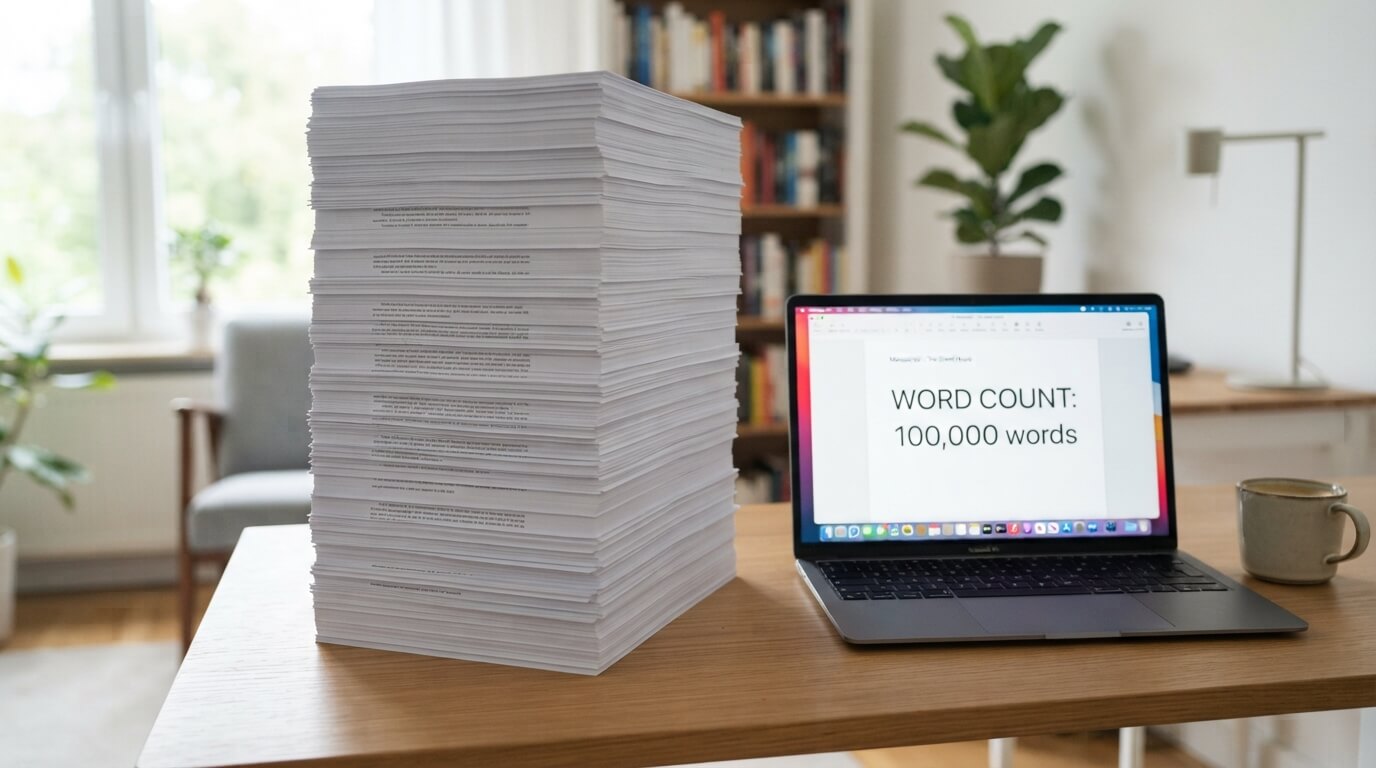
For a standard document formatted with 12-point font (like Times New Roman or Arial), 1-inch margins, and single-spacing, 100,000 words typically translates to approximately 200 pages. However, if the document is double-spaced, the same word count would extend to around 400 pages. For a professionally published paperback book, which uses specific typesetting, smaller fonts, and optimized layouts, 100,000 words usually ranges between 250 and 350 pages, depending heavily on genre, design, and target audience considerations. This seemingly straightforward question, “How many pages is 100,000 words?” is actually a gateway to understanding the intricate world of document formatting, publishing standards, and the reader experience. Whether you are an aspiring author, a student tackling a thesis, a business professional crafting a comprehensive report, or a ghostwriter delivering a manuscript, grasping the nuances of word count to page count conversion is absolutely critical for planning, budgeting, and managing expectations. This definitive guide from Geeks Ghostwriting will unravel the complexities, providing clarity and actionable insights into what 100,000 words truly means in terms of physical or digital pages.
Unraveling the Page Count Mystery: Beyond Simple Division
The journey from a raw word count to a tangible page count is rarely a simple arithmetic division. It’s a dynamic interplay of numerous factors, each capable of significantly expanding or contracting your document’s physical footprint. Understanding these variables is not just academic; it’s essential for anyone involved in content creation, publishing, or even just reading. From the author’s initial draft to the final printed book, every decision about presentation impacts the ultimate page number.
Consider the common online search queries that highlight this very confusion:
- How many pages is 100k words in a novel?
- 100,000 words double spaced pages
- How many pages is 100,000 words single spaced?
- What does 100,000 words look like?
- Average book page count for 100,000 words
- How long does it take to write 100,000 words?
- How many pages is a 100,000 word manuscript?
- Is 100,000 words a long book?
These queries underscore the need for a comprehensive explanation that addresses not just the numerical conversion but also the practical implications for different types of content and audiences. Let’s dive into the core elements that dictate how many pages your 100,000 words will occupy.
The Core Calculation: Words Per Page Averages
At its heart, the calculation relies on an average number of words that fit onto a single page. This average is not fixed; it fluctuates based on a set of critical formatting choices. However, for quick estimations, here are the widely accepted benchmarks:
- Standard Single-Spaced Document (12pt font, 1-inch margins): Approximately 450-550 words per page. A safe average is 500 words per page.
- Standard Double-Spaced Document (12pt font, 1-inch margins): Approximately 225-275 words per page. A safe average is 250 words per page.
- Published Book (standard paperback, typeset): This is the most variable, but typically ranges from 250-400 words per page, with 300-350 words per page being a common estimate for novels.
Applying these averages to 100,000 words gives us our initial range:
- Single-Spaced: 100,000 words / 500 words/page = 200 pages
- Double-Spaced: 100,000 words / 250 words/page = 400 pages
- Published Book: 100,000 words / 300 words/page = ~333 pages (or 100,000 / 350 = ~285 pages)
These are the foundational numbers, but as we explore further, you’ll see why they are merely starting points.
The Variables That Bend the Page Count: A Deep Dive into Formatting
The true page count of 100,000 words is a chameleon, changing its colors based on the environment it’s placed in. These “environments” are defined by your formatting choices. Mastering these elements allows for precise estimation and strategic presentation of your content.
Font Size and Type: The Silent Page Extenders
The choice of font size and typeface has an enormous, yet often underestimated, impact on page count. A larger font size means fewer words per page, while a smaller font packs more words in.
- Standard Readability: For most documents, 10-12 point font is standard. Academic papers often mandate 12pt, while many published books use 10pt or 11pt for body text.
- Serif vs. Sans-Serif: Serif fonts (like Times New Roman, Garamond) often have slightly different character widths and heights compared to sans-serif fonts (like Arial, Calibri). While subtle, these differences accumulate over 100,000 words.
- Leading (Line Spacing): Beyond simple single or double spacing, the actual leading (space between baselines of text) can be adjusted. Tighter leading means more lines per page, reducing page count.
Expert Perspective: “When preparing a manuscript for submission, authors often use a standard 12pt Times New Roman, double-spaced format. This isn’t just for readability; it gives editors ample space for notes and corrections. However, this isn’t what the final book will look like. A professionally typeset book might use a 10.5pt Garamond with optimized leading, significantly reducing the overall page count compared to the manuscript.”
Line Spacing: Double Trouble or Single Solution?
This is perhaps the most significant factor after font size. It’s the difference between a manuscript that looks dense and one that breathes.
- Single Spacing: Common for business reports, articles, web content, and final published books. Maximizes words per page.
- 1.5 Line Spacing: Sometimes used in academic settings or for internal drafts where a bit more readability is desired without doubling the space.
- Double Spacing: The gold standard for academic papers, manuscript submissions to agents/publishers, and often for drafts of longer works. It provides ample white space for annotations and makes proofreading easier. It roughly halves the words per page compared to single spacing.
Margins and Page Size: Framing Your Narrative
The white space around your text isn’t just for aesthetics; it defines the textual area of your page.
- Standard Margins: Most word processors default to 1-inch margins on all sides. Academic institutions often have specific margin requirements (e.g., 1.25 inches left for binding).
- Page Size:
- Letter (8.5 x 11 inches): Standard for academic papers and most print-at-home documents in North America.
- A4 (210 x 297 mm): Standard in most other parts of the world. Slightly narrower and longer than Letter.
- Trade Paperback (e.g., 5.5 x 8.5 inches, 6 x 9 inches): Common dimensions for published books. A smaller page size means fewer words per page, even with the same font and line spacing, thus increasing the total page count for the same word count.
Pro Tip: When estimating for a published book, remember that a smaller page size (like 5.5 x 8.5 inches) will inherently lead to a higher page count for 100,000 words than if that same text were formatted on an 8.5 x 11-inch page.
Paragraph Breaks, Headings, and White Space: Beyond the Text
It’s not just the words themselves, but how they are arranged. Every paragraph break, heading, sub-heading, image, or dedicated white space adds to the page count without adding to the word count.
- Frequent Paragraph Breaks: Short paragraphs increase the number of line breaks and thus pages.
- Chapter Breaks: New chapters typically start on a new page, often with significant white space above the title, adding “empty” pages.
- Images, Charts, Tables: Visual elements take up space, reducing the amount of text that can fit on a page.
- Footnotes/Endnotes: These can occupy significant space at the bottom of pages or at the end of chapters/documents.
Geeks Ghostwriting Insight: “For ghostwritten novels, we often advise clients that while a 100,000-word manuscript might be 400 double-spaced pages, the final published book will be considerably shorter. Our professional formatting and typesetting services optimize for reader experience and publishing standards, turning that manuscript into a polished, print-ready document.” For intricate projects requiring precise word count management and optimal formatting, consider partnering with Geeks Ghostwriting to ensure your vision translates perfectly to the page.
A Comparative Table: Words Per Page by Common Formatting Styles
To illustrate the impact of these variables, here’s a table showing approximate words per page under different common scenarios for a 12pt font (e.g., Times New Roman or Arial) with 1-inch margins.
| Formatting Style | Approx. Words Per Page (12pt Font) | Approx. Pages for 100,000 Words | Common Use Case |
|---|---|---|---|
| Single-Spaced (Standard) | 500 | 200 | Reports, articles, web content, ebooks |
| 1.5 Line Spacing | 330 | 303 | Some academic papers, internal documents |
| Double-Spaced (Standard) | 250 | 400 | Academic papers, manuscript submissions |
| Published Book (Trade Paperback, 5.5×8.5″) | 280-350 | 285-357 | Novels, non-fiction books (typeset) |
| Published Book (Hardcover, 6×9″) | 300-400 | 250-333 | Textbooks, some non-fiction, literary fiction |
Note: These are averages. Actual results can vary based on specific font choice, precise margin settings, and the density of paragraphs/headings.
Industry Benchmarks: What 100,000 Words Means Across Genres
The “ideal” length for a 100,000-word document varies significantly depending on its purpose and target audience. What’s considered a standard length in one domain might be an outlier in another.
Novels and Fiction: The Epic Journey
100,000 words is a substantial length for a novel. It generally falls into the category of a “long novel” or “epic fantasy/sci-fi.”
- Average Novel Length: Most debut novels are between 70,000 and 90,000 words.
- Genre Specifics:
- Fantasy/Sci-Fi: Often longer, with 100,000-120,000 words being common due to world-building requirements.
- Literary Fiction: Can vary widely, but 80,000-100,000 words is a good range.
- Thrillers/Mysteries: Tend to be tighter, often 70,000-90,000 words, but 100,000 isn’t unheard of.
- Page Count for Published Novels: As established, a 100,000-word novel typically translates to 280-350 pages in a standard paperback format (e.g., 5.5 x 8.5 inches). This is a respectable length that offers a fulfilling reading experience.
Non-Fiction Books: Depth and Detail
For non-fiction, 100,000 words indicates a highly detailed, comprehensive exploration of a topic.
- Memoirs/Biographies: Can range from 70,000 to 120,000 words. 100,000 words would be a very thorough account.
- Self-Help/Business Books: Often shorter (40,000-70,000 words) to maintain focus and deliver actionable advice quickly. A 100,000-word self-help book would need to be exceptionally well-structured to maintain reader engagement without feeling verbose.
- Academic/Technical Books: 100,000 words is quite common for in-depth textbooks, research monographs, or scholarly works. These often include extensive references, indices, and sometimes figures, which can further increase page count.
Academic Papers and Theses: Rigor and Research
While individual academic papers are rarely 100,000 words, dissertations and PhD theses frequently exceed this length.
- PhD Dissertation: Often 80,000-150,000 words or more. A 100,000-word dissertation would be a solid, comprehensive piece of research.
- Formatting: These documents almost always require strict formatting, typically 12pt Times New Roman, double-spaced, with specific margin requirements. This means a 100,000-word dissertation would be approximately 400 pages, excluding appendices, bibliography, and front matter.
Business Reports and Whitepapers: Strategic Communication
A 100,000-word business report is an anomaly. Most business documents prioritize conciseness.
- Typical Length: Most business reports are 5,000-20,000 words. A “comprehensive” report might hit 30,000-50,000 words.
- Implications of 100,000 words: Such a document would likely be an internal manual, a highly detailed industry analysis, or a regulatory submission. It would require extensive executive summaries and clear navigation to be useful.
Checklist: Is 100,000 Words Right for Your Project?
- Fiction: Is it an epic, a complex world, or a multi-POV story? If so, 100K is good. If it’s a tight thriller or romance, consider editing down.
- Non-Fiction: Does your topic genuinely require this level of depth and detail? Will readers sustain engagement?
- Academic: Is 100K within the typical range for your specific degree and institution’s requirements?
- Business: Is this an internal reference, a regulatory document, or an archival piece? For external communication, it’s almost certainly too long.
Strategic Planning for Your 100K-Word Project
Managing a project of 100,000 words, whether writing it, editing it, or publishing it, requires strategic planning. Understanding the page count implications is a foundational step.
Estimating Reading Time: How Long Will It Take?
Beyond page count, readers often want to know how long a book will take to read. The average adult reading speed is about 250 words per minute (WPM) for non-fiction and 300 WPM for fiction.
- At 250 WPM: 100,000 words / 250 WPM = 400 minutes = 6 hours and 40 minutes.
- At 300 WPM: 100,000 words / 300 WPM = 333 minutes = 5 hours and 33 minutes.
This means a 100,000-word book is a significant commitment for a reader, often requiring multiple sittings. This insight can influence pacing and chapter structure.
Printing and Production Costs: The Financial Footprint
For physical books, page count directly correlates with printing costs. More pages mean more paper, more ink, and potentially higher shipping costs.
- Offset Printing: Large runs see per-page costs decrease, but overall cost increases with page count.
- Print-on-Demand (POD): Platforms like KDP Print or IngramSpark calculate costs largely based on page count and trim size. A 300-page book will cost significantly more to print than a 150-page book, impacting royalty margins.
- Shipping: Heavier books (more pages) cost more to ship, affecting distribution and retail pricing.
Manuscript Preparation for Submission: Meeting Expectations
When submitting a 100,000-word manuscript to an agent or publisher, adhering to industry standards is paramount.
- Standard Manuscript Format: Almost universally, this means 12pt Times New Roman, double-spaced, 1-inch margins. This results in approximately 400 pages for 100,000 words.
- Why this matters: This format is designed for readability and ease of editing. Deviating from it can make your manuscript appear unprofessional and difficult to work with, potentially leading to rejection.
Digital vs. Physical Page Count: A Modern Distinction
The concept of “pages” changes in the digital realm.
- E-books: E-readers (Kindle, Kobo, Nook) display text dynamically. “Pages” are often relative, based on font size settings, and don’t correspond to fixed physical pages. Instead, progress is measured by percentage or “locations.”
- Web Content: A 100,000-word article would be an exceptionally long-form piece, likely broken into many sub-sections and potentially multiple web pages for optimal user experience.
Expert Perspective: “As a ghostwriter, delivering a 100,000-word manuscript is a significant achievement. But the work doesn’t stop there. We often guide our clients through the next steps, explaining how that raw word count will transform into a publishable book. This involves professional editing, formatting for specific platforms (print vs. ebook), and understanding the nuances of how page count impacts everything from marketing to distribution. It’s a journey from concept to reader, and every ‘page’ counts.”
Beyond the Numbers: The Quality of 100,000 Words
While understanding page count is crucial for logistics, the true value of a 100,000-word document lies in its content. Length for length’s sake is a trap; quality, clarity, and engagement should always be the priority.
The “Helpful Content” Imperative: More Than Just Word Count
In the age of AI-driven search and Google’s Helpful Content Update, simply hitting a word count target is insufficient. A 100,000-word document must demonstrate genuine topical authority, provide unique insights, and solve the user’s problem comprehensively. For a piece on “how many pages is 100,000 words,” this means:
- Comprehensive Coverage: Addressing all related queries and aspects (formatting, genres, implications).
- E-E-A-T: Demonstrating Expertise, Experience, Authoritativeness, and Trustworthiness. This means providing accurate data, drawing on industry knowledge, and offering practical advice from a position of authority, like that of Geeks Ghostwriting.
- Reader-Centric Approach: Writing in a natural, engaging tone that anticipates reader questions and provides clear, unambiguous answers, avoiding jargon where possible.
- Value Beyond Simple Answers: Offering deeper insights into *why* these conversions matter, not just *what* they are.
The Role of Editing and Revision: Trimming the Fat
Rarely is a 100,000-word first draft perfect. Professional editing is vital for any large document.
- Developmental Editing: Focuses on structure, plot, character development (for fiction), argument, and overall coherence. It can lead to significant cuts or additions, affecting the final word count.
- Line Editing: Polishes prose, improves flow, and refines language.
- Copyediting/Proofreading: Catches grammatical errors, typos, and inconsistencies.
Often, a 100,000-word manuscript can be tightened to 90,000 or even 80,000 words without losing essential content, resulting in a more impactful and readable document, and potentially a more manageable page count for publishing.
When to Seek Professional Ghostwriting and Editing Services
Crafting a 100,000-word document, whether a novel, a comprehensive report, or a memoir, is a monumental task. Many individuals and businesses turn to professional services for assistance.
- For Authors: If you have a compelling story or expertise but lack the time or writing prowess, a ghostwriter can bring your vision to life. They understand pacing, structure, and how to maintain reader engagement over a long narrative.
- For Businesses: Producing detailed whitepapers, manuals, or industry reports requires specialized knowledge and skilled writers who can translate complex information into clear, authoritative prose.
- For Everyone: Professional editors are indispensable. They provide an objective eye, refine your language, and ensure your 100,000 words are as impactful and error-free as possible. They can also advise on optimal formatting for your specific goals.
Geeks Ghostwriting specializes in creating high-quality, comprehensive content of significant length, from concept to final polished manuscript. Our team understands the intricacies of word count, page count, and genre-specific requirements, ensuring your 100,000-word project meets professional standards and achieves its intended impact.
Conclusion: The Dynamic Nature of 100,000 Words in Pages
The question “How many pages is 100,000 words?” is more than a simple numerical conversion; it’s an exploration into the art and science of document presentation. While a quick answer points to approximately 200 pages single-spaced, 400 pages double-spaced, or 250-350 pages for a published book, the true page count is a fluid entity, shaped by font choices, line spacing, margins, page size, and the strategic use of white space. For authors, publishers, academics, and business professionals, understanding these variables is crucial for effective planning, accurate budgeting, and ultimately, delivering a compelling and professional final product.
Whether you’re embarking on writing your first 100,000-word novel, compiling a definitive research paper, or commissioning a comprehensive industry analysis, remember that the numbers are just one part of the story. The quality of the content, its structure, and its readability will ultimately define its success. By paying meticulous attention to both word count and its manifestation in page count, you ensure your extensive work is not just voluminous, but also impactful, accessible, and aligned with its purpose.
Related Reading
- Word Count to Page Count Calculator: How Many Pages Is Your Word Count?
- How Much Does It Cost to Make a 200-Page Book?






