
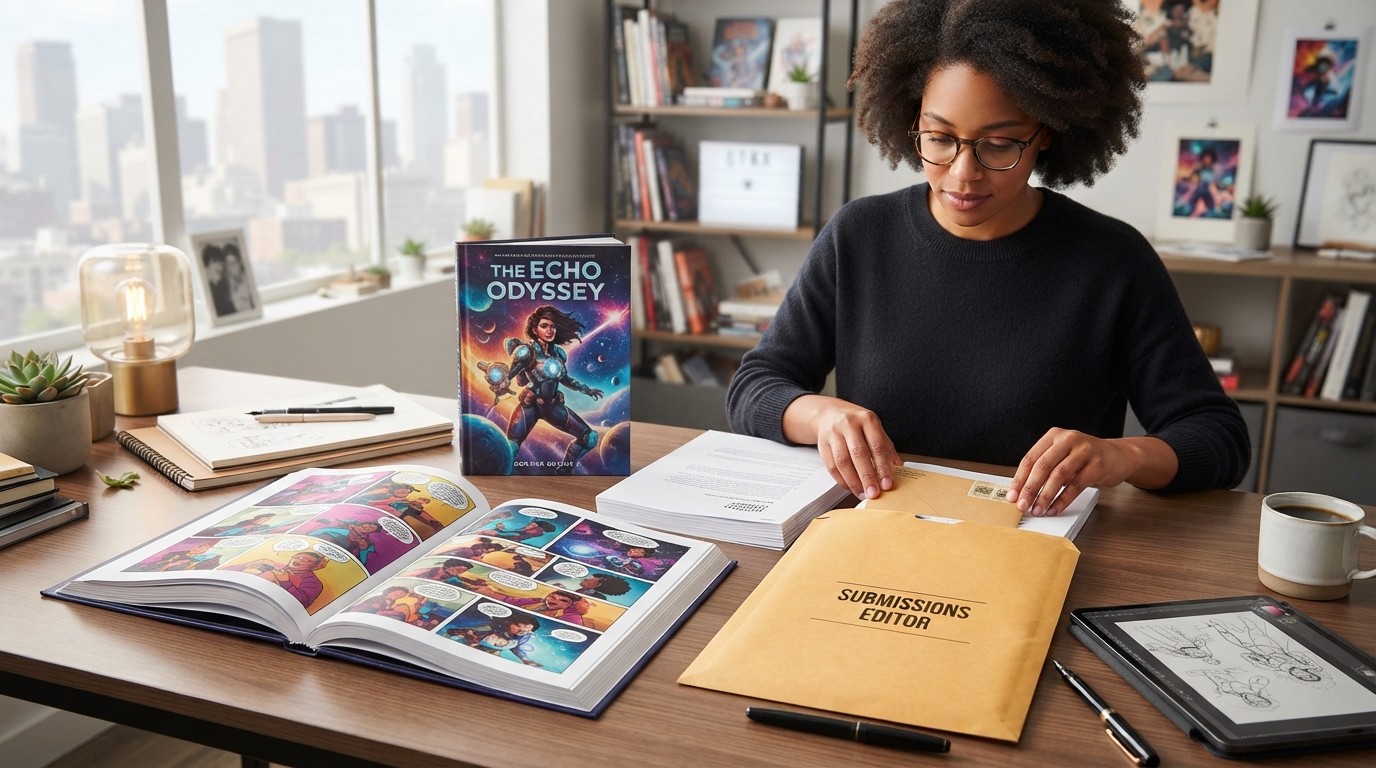
Finding graphic novel publishers accepting submissions requires navigating a complex landscape of traditional book imprints, independent comic book publishers, and specialty graphic novel houses. Currently, prominent publishers such as Image Comics, Oni Press, Dark Horse Comics, Iron Circus Comics, and Mad Cave Studios accept unsolicited creator-owned pitches. To submit successfully, creators must typically provide a comprehensive pitch bible containing a logline, a detailed story synopsis, character designs, and completed sequential art samples. This definitive guide outlines active publishers, submission requirements, and strategic steps to get your graphic novel manuscript or comic book pitch accepted.
The Graphic Novel Publishing Landscape: Indie vs. Traditional Book Imprints
The graphic novel market has experienced explosive growth over the past decade, driven by a surge in Middle Grade (MG) and Young Adult (YA) readership, the global popularity of manga, and the critical acclaim of mature indie graphic memoirs. However, the path to publication depends heavily on whether you target traditional book publishers or direct-market comic book publishers.
Traditional book publishers (like First Second, Scholastic Graphix, or HarperAlley) operate on a standard literary model. They rarely accept unsolicited submissions directly from authors or artists; instead, they require representation by a literary agent. These publishers offer advances against royalties and distribute primarily to bookstores, schools, and libraries.
Conversely, direct-market comic book publishers (like Image Comics, Mad Cave, or Scout Comics) frequently accept unsolicited submissions directly from creative teams. They distribute primarily through comic shops (the direct market) and digital platforms. Understanding this distinction is crucial before you format your submission materials or write your query letters.
Active Graphic Novel Publishers Accepting Submissions
The following directory highlights key publishers currently open to unsolicited submissions, pitches, or portfolio reviews. Submission policies can change rapidly, so always verify the latest guidelines on each publisher’s official website before submitting your work.
| Publisher | Submission Status | Primary Target Genres & Audience | Key Requirements |
|---|---|---|---|
| Image Comics | Always Open (Creator-Owned) | Sci-Fi, Fantasy, Horror, Crime, Literary (Adult/YA) | Proposal document, cover art, 5 finished sequential pages. No scripts alone. |
| Oni Press | Periodically Open / Open Calls | YA, Middle Grade, Queer Stories, Diverse Sci-Fi/Fantasy | Pitch packet, character designs, sample script, and portfolio link. |
| Dark Horse Comics | Open to Writers & Artists separately | Action, Adventure, Supernatural, Indie Creator-Owned | Detailed synopsis, sample script, or art portfolio link. |
| Iron Circus Comics | Open via themed anthologies & pitch calls | Erotica, Sci-Fi, Alternative History, Diverse voices | Specific guidelines per open call; highly focused on unique indie voices. |
| Mad Cave Studios | Open via annual talent search & portal | Action, Adventure, Thriller, YA (Maverick imprint) | Completed pitch form, logline, synopsis, and sample pages. |
| Scout Comics | Always Open | Cinematic Sci-Fi, Horror, Thriller, Adventure | Logline, detailed synopsis, character designs, 5+ lettered pages. |
1. Image Comics: The Gold Standard for Creator-Owned Work
Image Comics is legendary for allowing creators to retain 100% of their intellectual property (IP). They do not pay page rates or advances; instead, creators receive a share of the profits after production and distribution costs are covered. This model is highly lucrative for established creators or breakout hits, but carries financial risk for debut authors.
- What they want: High-concept, original stories with strong visual identities. They do not publish work that utilizes existing licensed IPs.
- Submission format: A proposal containing a cover letter, a 1-page synopsis of the overall story arc, and 5 completed, inked, and lettered sequential story pages. They do not accept script-only submissions; you must have an artist attached to your project.
2. Oni Press: Inclusive, Character-Driven Narratives
Oni Press has long been a champion of diverse voices, pioneering the publication of LGBTQ+ narratives, slice-of-life dramas, and innovative YA graphic novels. They offer traditional publishing contracts with advances and page rates.
- What they want: Contemporary YA, middle-grade adventures, unique fantasy, and memoir. They place a high premium on character development and emotional depth.
- Submission format: Pitch packages must include a logline, a brief summary of the project, character descriptions with visual turnarounds, and a detailed outline of the narrative arc.
3. Dark Horse Comics: Genre-Defying Epics
As one of the largest independent comic publishers, Dark Horse is famous for balancing massive licensed properties (like Star Wars, Avatar: The Last Airbender, and Hellboy) with bold creator-owned titles. They accept submissions from creative teams as well as individual writers and artists looking to be paired up.
- What they want: Highly polished genre fiction, including horror, dark fantasy, sci-fi, and superhero subversions.
- Submission format: A detailed plot outline, character descriptions, and at least 5 pages of finished, lettered sequential art. Individual artists can submit portfolio links.
4. Iron Circus Comics: Trailblazing Alternative Publishing
Founded by cartoonist C. Spike Trotman, Iron Circus Comics is a powerhouse of independent, crowd-funded publishing. They are famous for championing projects that traditional publishers might deem too niche, strange, or explicit.
- What they want: Graphic novels featuring marginalized protagonists, sex-positive themes, unique historical fiction, and highly original sci-fi.
- Submission format: They frequently run themed anthology calls. For full-length graphic novels, they require a complete script or highly detailed outline along with comprehensive visual samples.
The Anatomy of a Winning Graphic Novel Pitch Bible
Acquisitions editors at graphic novel publishing houses review hundreds of pitches every week. To stand out, your submission must be professional, visually striking, and structurally sound. This document is known as a pitch bible or proposal packet.
The Core Elements of a Pitch Bible
- The Cover Page: A single, high-impact illustration featuring your main characters, along with the title, target audience (e.g., MG, YA, Adult), genre, and creator contact information.
- The Logline: A 1-to-2 sentence hook that summarizes the protagonist, the inciting incident, the primary conflict, and the stakes. It must answer: *Who is the main character, what do they want, and what is stopping them?*
- The Project Overview: A brief description of the format (e.g., standalone 150-page graphic novel, or a 3-volume series), estimated page count, and comp titles (comparable books published in the last 3-5 years).
- Character Profiles: Brief biographical sketches of the main characters, paired with concept art, expression sheets, and model sheets showing them from different angles.
- The Detailed Synopsis: A 1-to-2 page summary of the entire story. Do not hide the ending. Editors need to know that you can successfully resolve the narrative arc you have set up.
- Sample Sequential Pages: 5 to 10 consecutive pages of finished comic art. These pages must demonstrate your ability to tell a story visually, handle pacing, manage panel layouts, and guide the reader’s eye across the page.
“A beautiful cover illustration might get an editor to open your pitch, but clear, dynamic sequential storytelling is what gets your graphic novel signed. Focus on the transition between panels, not just pin-up art.”
| Component | Purpose | Common Mistake to Avoid |
|---|---|---|
| Logline | Hook the editor instantly | Being too vague or philosophical instead of plot-driven. |
| Synopsis | Show the complete story arc | Writing a teaser that ends with a cliffhanger instead of revealing the resolution. |
| Character Sheets | Establish visual consistency | Submitting static front-facing poses with no emotional expressions. |
| Sequential Pages | Prove storytelling ability | Submitting splash pages or covers instead of panel-to-panel narrative flow. |
| Sample Script | Demonstrate dialogue & pacing | Overwriting dialogue, crowding panels, or formatting poorly. |
How to Format Your Comic Book Script
If you are a writer seeking to partner with an artist, or if a publisher requests a sample script, you must format it professionally. Unlike screenplay formatting, which is strictly standardized by software like Final Draft, comic scripting is slightly more flexible. However, the Dark Horse Style is the most widely accepted standard in the industry.
Here is an example of standard comic book script formatting:
PAGE 1PANEL 1Setting: A rain-slicked neon alleyway in neo-Tokyo. KAI (20s, wearing a worn leather jacket) stands beneath a flickering holographic billboard. He is looking at a cracked data-pad.1. KAI (Internal Monologue): They told me the drop would be clean. They lied.PANEL 2Close up on KAI's face. His eyes widen in sudden realization. A red laser-sight dot is visible on his forehead.2. SFX: *BZZT*PANEL 3Wide shot. Kai dives behind a stack of rusted metal crates as a blue energy bolt scorches the brick wall where he stood.3. ENEMY (Off-panel): Don't let him reach the terminal!
If you need professional assistance drafting, polishing, or formatting your comic book script to meet these rigorous industry standards, utilizing specialized services can elevate your project. Working with a dedicated creative team like Geeks Ghostwriting ensures your script, pacing, and pitch bible are polished to perfection before they reach an editor’s desk.
Real-Time Search Queries: What Creators Want to Know
To help you navigate the highly competitive submission process, we analyzed popular search queries and provided direct, actionable answers below.
“How to submit a graphic novel to Scholastic Graphix?”
Scholastic Graphix is the premier publisher of middle-grade graphic novels (home to *Dog Man* and *Smile*). They do not accept unsolicited submissions from unrepresented creators. To get your work in front of Graphix editors, you must secure a literary agent who specializes in graphic novels and children’s literature.
“Do graphic novel publishers pay advances?”
Yes, traditional book publishers (such as First Second, HarperAlley, and Penguin Random House) pay advances against royalties. These advances typically range from $10,000 to over $100,000, depending on the creator’s track record and the project’s potential. Direct-market comic book publishers, however, often operate on page-rate models or profit-share models (like Image Comics) where no upfront advance is guaranteed.
“Can I pitch a graphic novel if I can’t draw?”
Yes, but it is significantly harder if you are pitching to comic book publishers. Most comic publishers require a complete creative team (writer and artist) to be attached to the pitch. If you are solely a writer, your best path is to hire an artist to draw sample pages, find a co-creator on platforms like Reddit’s r/ComicBookCollab, or query literary agents who are willing to pitch script-only packages to traditional book publishers (who often prefer to pair writers with illustrators themselves).
Critical Mistakes That Will Get Your Submission Rejected
Acquisitions editors reject the vast majority of submissions within the first two minutes of reading. Avoid these common pitfalls to ensure your pitch gets the serious consideration it deserves:
- Submitting unfinished art: Sending rough pencil sketches or unlettered pages makes your pitch look amateur. Publishers want to see that you can deliver a finished, print-ready product.
- Ignoring submission guidelines: If a publisher asks for a PDF under 10MB, do not send a Google Drive link or a file that is 100MB. Ignoring guidelines signals that you will be difficult to work with during production.
- Pitching fan fiction or licensed IPs: Do not pitch stories featuring Marvel, DC, Disney, or Nintendo characters. Publishers cannot legally produce these stories, and submitting them shows a lack of understanding of creator-owned publishing.
- Overwriting panels: A common mistake for prose writers transitioning to comics is putting too much text in a single panel. Keep dialogue under 25 words per panel to allow the art room to breathe.
Alternative Paths: Self-Publishing and Webcomics
If traditional or indie publishers pass on your project, do not let that be the end of your graphic novel’s journey. Many of today’s most successful graphic novels began as self-published webcomics or crowdfunding campaigns.
Platforms like Webtoon, Tapas, and GlobalComix allow you to publish your work directly to a global audience. Building a dedicated readership online is one of the most effective ways to attract traditional publishers. Additionally, platforms like Kickstarter and BackerKit have revolutionized comic publishing, allowing creators to fund high-quality print runs directly through their fan base, often raising tens of thousands of dollars without giving up any creative control or IP rights.
Related Reading
- Ebook Publishers Accepting Submissions
- Horror Comic Publishers Accepting Submissions
- All-Ages Comic Publishers Accepting Submissions
- Fantasy Comic Publishers Accepting Submissions
Looking for expert support? Learn about our book publishing services.






