
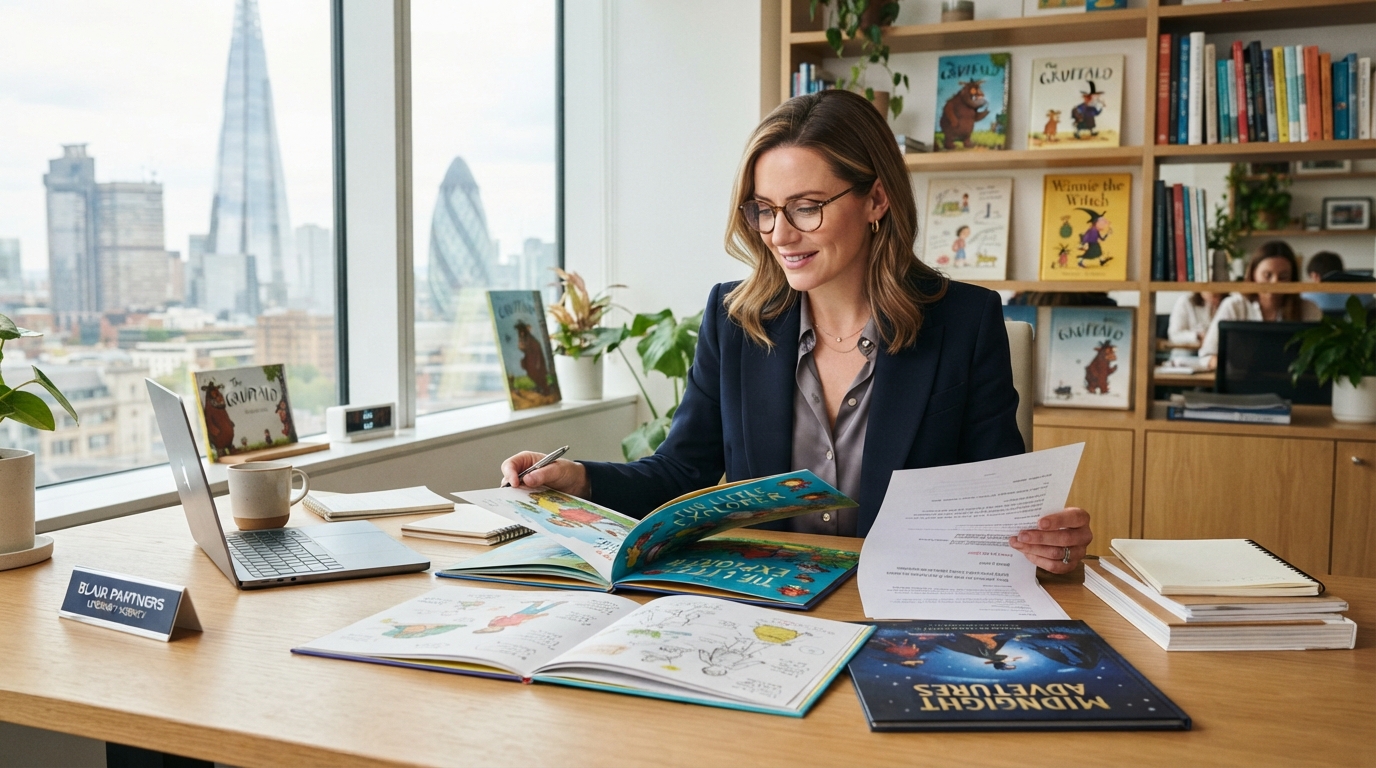
Leading literary agents in the UK accepting picture book submissions include top-tier representation at agencies such as Plum Pudding Illustration, The Catchpole Agency, Caroline Sheldon Literary Agency, Bell Lomax Moreton, Darley Anderson Children’s Book Agency, and Curtis Brown. To successfully secure representation, authors and author-illustrators must submit a polished manuscript (typically under 500–800 words), a concise cover letter or query, a creative pitch with comparison titles, and an optional visual dummy or portfolio link for illustrators, formatted precisely to each agency’s distinct submission guidelines.
Breaking into the British picture book market requires a strategic blend of narrative voice, emotional resonance, market awareness, and professional presentation. Whether you are an author writing lyrical text, an author-illustrator pairing dummy layouts with rich palettes, or a storyteller seeking editorial mentorship, understanding the nuances of the United Kingdom publishing landscape is essential. Navigating agency rosters, open submission windows, submission formatting, and post-query communication determines whether your manuscript reaches an acquisitions desk or languishes in the slush pile.
The Current Landscape of UK Picture Book Publishing
The United Kingdom’s children’s publishing industry is globally renowned for producing enduring picture books celebrated for linguistic flair, character design, and universal childhood themes. However, the commercial landscape has evolved considerably over the past decade. Traditional publishing houses like Penguin Random House Children’s, Macmillan Children’s Books, Walker Books, Bloomsbury, and Nosy Crow increasingly acquire picture book properties via literary representation rather than unsolicited open reading periods.
Because picture books represent high production investments—involving full-colour printing, high-grade paper stock, co-edition sales, and foreign rights distribution—publishers rely on literary agencies to curate and refine manuscripts before presentation. Literary agents function not only as legal negotiators and business managers, but also as creative editors who shape manuscripts to thrive in competitive domestic and international markets, including the Bologna Children’s Book Fair and the London Book Fair.
| Market Element | Standard UK Picture Book Expectation | Key Agent Considerations |
|---|---|---|
| Word Count Range | 200 to 600 words (rarely exceeding 800 words) | Economic storytelling, read-aloud pacing, page-turn urgency, absence of unnecessary descriptive filler. |
| Target Age Demographics | Ages 2–5 (Early Years) to 4–7 (Primary Transition) | Developmental appropriateness, psychological accessibility, shared reading potential between parent and child. |
| Structural Pagination | Standard 32-page layout (occasionally 24 or 40 pages) | Visual pacing across 12–14 distinct double-page spreads; clear narrative trajectory without visual overcrowding. |
| Creative Formats | Text-only, Author-Illustrator dummy, Novelty / Board | Text-only authors should NOT source their own external illustrators; agencies pair narrative texts with publisher-selected artists. |
| Global Commercial Potential | High international co-edition viability | Universal emotional hooks that translate across cultures without being bound exclusively to localized British idioms. |
Verified UK Literary Agencies Accepting Picture Book Submissions
Below is a curated directory of established, reputable UK literary agencies that actively represent picture book creators, including text-only authors, author-illustrators, and visual artists. Submissions policies, agent wishlists, and open submission windows change periodically; creators should verify specific details on agency websites prior to dispatching queries.
| Literary Agency | Notable Agents & Specialties | Submission Requirements | Client Profiles / Notable IP |
|---|---|---|---|
| Caroline Sheldon Literary Agency | Caroline Sheldon, Millie van Grutten (Text & Illustration) | Covering letter, 3 complete picture book manuscripts pasted into a single Word doc, brief synopsis. | Julia Donaldson (early works), historical and modern classic picture book creators. |
| Bell Lomax Moreton | Paul Moreton, Alice Williams (Associate), Lauren Gardner | Query letter, up to 3 picture book texts, full PDF dummy or website portfolio for illustrators. | Award-winning contemporary author-illustrators, commercially driven character properties. |
| The Catchpole Agency | James Catchpole, Lucy Catchpole | 1–3 complete picture book manuscripts, biographical details, transparent publishing history. | Authentic disability representation, deeply emotive storytelling, character-led fiction. |
| Plum Pudding Illustration | Mark Mills and dedicated artist agents | Portfolio of 15–20 high-res illustrations, 1–2 picture book dummies/texts for author-illustrators. | Global commercial illustration, novelty board books, early-years picture narratives. |
| Darley Anderson Children’s Agency | Clare Wallace, Lydia Silver | Cover letter, 3 complete picture book texts, illustration samples/links if applicable. | High-concept commercial hooks, humorous texts, quirky character-driven series. |
| Curtis Brown (Children’s Dept) | Stephanie Thwaites, Alice Sutherland-Hawes | Cover letter, full text submission, online submission portal via Curtis Brown website. | Literary award contenders, internationally recognized brand franchises. |
| Madeleine Milburn Literary Agency | Chloe Seager, Giles Milburn | Detailed pitch letter, 3 distinct picture book texts, clear market positioning. | Breakout debut creators, trendsetting modern narratives, inclusive themes. |
| Jodie Hodges at United Agents | Jodie Hodges, associate team | Query letter, 2–3 manuscripts, short creative CV, submitted via online agent email. | High-profile, multidisciplinary children’s authors and globally published master illustrators. |
| The Soho Agency | Philippa Milnes-Smith, Julia Churchill | Standard submission package: cover letter, 3 texts, portfolio links. | Distinctive authorial voices, visually driven texts, commercial gift books. |
| Bright Agency (The Bright Agency) | Vicki Willden-Lebrecht, Arabella Stein | Online portal upload: story text, illustrated dummy, artistic portfolio. | Author-illustrators, early years visual titles, international co-edition bestsellers. |
Anatomy of a Standout Picture Book Submission Package
Agents evaluating picture book submissions look for precise, highly disciplined writing. Because a picture book manuscript is short, every word, line break, and implied visual transition carries significant weight. A complete submission package typically includes three core elements:
1. The Professional Cover / Query Letter
Your query letter must be professional, brief, and market-focused. It should rarely exceed one A4 page (approximately 300–400 words) and must cover the following points:
- The Hook: A single-sentence elevator pitch highlighting the protagonist, the central conflict, and the core emotional hook.
- Manuscript Metadata: Title, target age bracket (e.g., 3–6 years), precise word count, and format (text-only picture book or author-illustrator dummy).
- Comparison Titles (Comps): Mention two or three contemporary picture books published in the UK within the past 3 to 5 years that share thematic, stylistic, or tonal elements with your work.
- Biography & Authority: A brief summary of your writing background, relevant awards, membership in organizations (such as SCBWI, Society of Authors), or practical experience working with children.
2. The Multi-Manuscript Portfolio (The “Rule of Three”)
Unlike novelists who submit a single manuscript, picture book writers are often asked to provide two to three separate, completed manuscripts in their initial submission. Agents want to see versatile voice, range, and longevity rather than a one-hit idea. When preparing multiple texts:
- Lead with your strongest, most polished, and commercially accessible manuscript.
- Include a second text that displays a different tone (e.g., if manuscript one is humorous and character-driven, manuscript two can be lyrical or emotionally resonant).
- Ensure all three texts are formatted in standard 12pt clean font (Times New Roman, Arial, or Georgia), 1.5 or double spaced, without embedded clip art or external illustrations (unless you are a professional illustrator).
3. The Role of Illustration Notes (Art Notes)
One of the most common pitfalls for debut picture book writers is overusing illustration notes (commonly abbreviated as [Art Note: …] or [Illus: …]). In modern UK publishing, illustrators are co-storytellers who interpret the narrative visually. The Golden Rule of Art Notes is: Only include an art note if the text alone does not explain the visual action, irony, or narrative twist.
Example of an Unnecessary Art Note:
Text: “Barnaby put on his giant yellow boots.”
[Art Note: Show Barnaby pulling on bright yellow rain boots.] — Do not do this.Example of a Necessary Art Note:
Text: “Leo was the quietest, neatest pet in the universe.”
[Art Note: The illustration reveals Leo is a massive, chaotic baby rhinoceros chewing through the sofa.] — Do this.
If you are looking for professional guidance to refine your manuscripts, polish narrative balance, or format dynamic pacing before submission, working alongside professional editorial partners like Geeks Ghostwriting can help ensure your pitch materials match the highest industry standards.
Real-Time UK Children’s Agent Search Queries & Market Insights
Writers frequently search for specific criteria when looking for representation. Below are common search queries and the practical realities behind them:
| Common Search Query | Industry Reality & Strategic Context | Recommended Action |
|---|---|---|
| “UK literary agents accepting rhyming picture books” | Agents are cautious with rhyming texts because meter errors are common and translated co-editions are difficult. | Submit rhyming text only if your scansion and metric structure (e.g., anapestic tetrameter) are flawless. Have text evaluated by an experienced editor. |
| “Picture book agents UK looking for diverse voices” | UK agencies actively seek underrepresented voices, authentic cultural narratives, own-voices stories, and neurodiverse perspectives. | Highlight personal connections, lived experiences, and community cultural authority directly within your cover letter biography. |
| “Children’s book agents UK open to unsolicited manuscripts” | Most children’s agents accept unsolicited slush pile queries, but many operate strictly timed submission windows (e.g., open in Spring/Autumn only). | Follow agents on social platforms, check agency websites quarterly, and avoid querying when an agent announces a temporary closed period. |
| “Author-illustrator literary representation UK” | Agents prioritize author-illustrators because dual-skilled creators are highly attractive to domestic and foreign rights buyers. | Submit a clean, printable PDF dummy along with a link to an online illustration portfolio containing narrative sequential art. |
| “Non-fiction picture book agents London” | STEM, biography, conservation, and mental wellbeing non-fiction picture books for ages 4–8 are seeing sustained demand in the UK market. | Provide a clear curriculum-linked hook, verified factual sourcing, and a short explanation of visual diagram concepts. |
Step-by-Step Submission Process for UK Picture Book Creators
- Refine and Polish Your Core Portfolio
Do not query with your very first draft. Ensure your texts have gone through thorough critique groups, professional beta readers, or children’s manuscript assessments. Confirm your word count sits comfortably within the 300–600 word sweet spot.
- Build a Tiered Agent Wishlist
Research 20–30 prospective agents across the UK. Organize them into Tiers: Tier A (Dream agents with major sales records), Tier B (Established agents with active children’s lists), and Tier C (Promising newer associate agents building their client base). Look for agents who explicitly represent your sub-genre (e.g., quirky comedy, lyrical bedtime, or non-fiction biography).
- Tailor Every Query Letter Individually
Never send generic bulk emails. Address the specific agent by name. State clearly why you chose them (e.g., “I noticed your representation of [Client Name] and your wishlist request for humorous, character-led picture books about animal friendships…”).
- Strictly Obey Agency Submission Guidelines
Every UK agency has explicit formatting rules. Some require text pasted directly into the body of the email; others request attachments in Word (.docx) or PDF format. If an agency asks for two texts, do not send five. Failing to follow submission instructions can lead to immediate rejection.
- Track Submissions Systematically
Maintain a spreadsheet recording: Agent Name, Agency, Date Submitted, Materials Sent, Status, and Response. UK agencies typically quote response times between 6 and 12 weeks. If an agency states they only respond if interested, mark the submission as closed after their stated deadline passes.
- Handle Offers of Representation Professionally
When an agent offers representation, it is standard industry protocol to notify all other agents currently reviewing your manuscript. Offer them a window of 7 to 10 working days to review your work and state whether they would also like to schedule an offer call.
Crucial Dos and Don’ts for Picture Book Submissions
The Do List:
- Do read contemporary UK picture books: Read 50–100 picture books published within the last three years to understand current pacing, theme choices, and visual structures.
- Do consider the read-aloud quality: Read your manuscript out loud multiple times. Check for rhythm, natural pauses, and breath points for adults reading aloud to children.
- Do show visual space: Leave room for the illustrator to tell half of the story. If your text describes every single leaf and button, the visual artist has less room to add narrative depth.
- Do highlight your platform appropriately: If you are an educator, librarian, psychologist, or visual artist, mention it briefly in your biographical note.
The Don’t List:
- Don’t hire your own illustrator: Unless you are an author-illustrator submitting your own work, do not commission an independent artist to draw your characters. Traditional publishers prefer to pair texts with their own chosen illustrators.
- Don’t send rhyming text unless the meter is flawless: Clunky, forced rhymes are the fastest route to a rejection pile. If your rhythm stumbles by a single syllable, rewrite it in prose.
- Don’t moralize or preach: Children’s publishers look for entertaining stories, emotional truth, and fun, rather than didactic moral lessons delivered from an adult perspective.
- Don’t query incomplete ideas: Do not pitch an unfinished idea or concept. A picture book text must be fully written, polished, and ready to print.
Evaluating an Agency Offer: Questions to Ask Before Signing
Signing with a literary agent is a significant milestone in a creative career. When an agent expresses interest and schedules an offer call, treat the meeting as a mutual interview. Key questions to ask include:
- Editorial Vision: What specific editorial revisions do you envision for this text before submitting it to UK publishing houses?
- Submission Strategy: Which publishing editors and imprints do you plan to target, and will you include independent publishers as well as the ‘Big Five’?
- Portfolio Representation: Do you represent my future writing across middle-grade, chapter books, or non-fiction, or solely my picture book texts?
- Rights & Co-editions: How does the agency manage international rights, co-editions, translation sales, film/TV adaptations, and merchandising?
- Communication Style: What is your working process for updating clients during submission rounds, editorial work, and ongoing contract management?
Frequently Asked Questions About UK Picture Book Submissions
Do I need an agent to publish a picture book in the UK?
While some independent UK children’s presses (such as Tiny Owl or Maverick Publishing) occasionally run unagented open submission windows, the majority of traditional publishing imprints (Penguin, Macmillan, HarperCollins, Farshore, Faber) acquire picture books exclusively through literary agents.
How many words should a UK picture book be?
Modern UK picture books generally range between 300 and 600 words. Board books and early years titles often run under 200 words, while complex narratives or non-fiction picture books may occasionally reach 800 to 1,000 words. Submitting a debut fiction picture book over 1,000 words is a common reason for quick rejection.
Should I paginate my manuscript with 32-page breakdowns?
While you do not need to format your final submission strictly across 32 individual pages, your narrative must show an intuitive understanding of page-turns. It can be helpful to storyboard your manuscript across 12–14 double-page spreads during drafting to confirm each spread contains a fresh visual beat.
What commission rate do UK literary agents charge?
Standard UK literary agency commission rates are 15% on domestic sales and 20% on foreign, translation, and film/audio/TV rights. Legitimate literary agents never charge upfront reading fees, evaluation fees, or marketing costs.
Final Thoughts: Taking Your Next Steps
Securing a literary agent for picture books in the UK requires patience, discipline, and attention to craft. By refining your manuscript, studying contemporary shelf releases, tailoring your queries, and approaching the submission process methodically, you will position your stories effectively for representation in the UK publishing market.
Related Reading
- What Does a Self Publishing Service Include? Complete Guide
- How to Self-Publish a Children’s Book: A Step-by-Step Guide
Looking for expert support? Learn about our book publishing services.






