
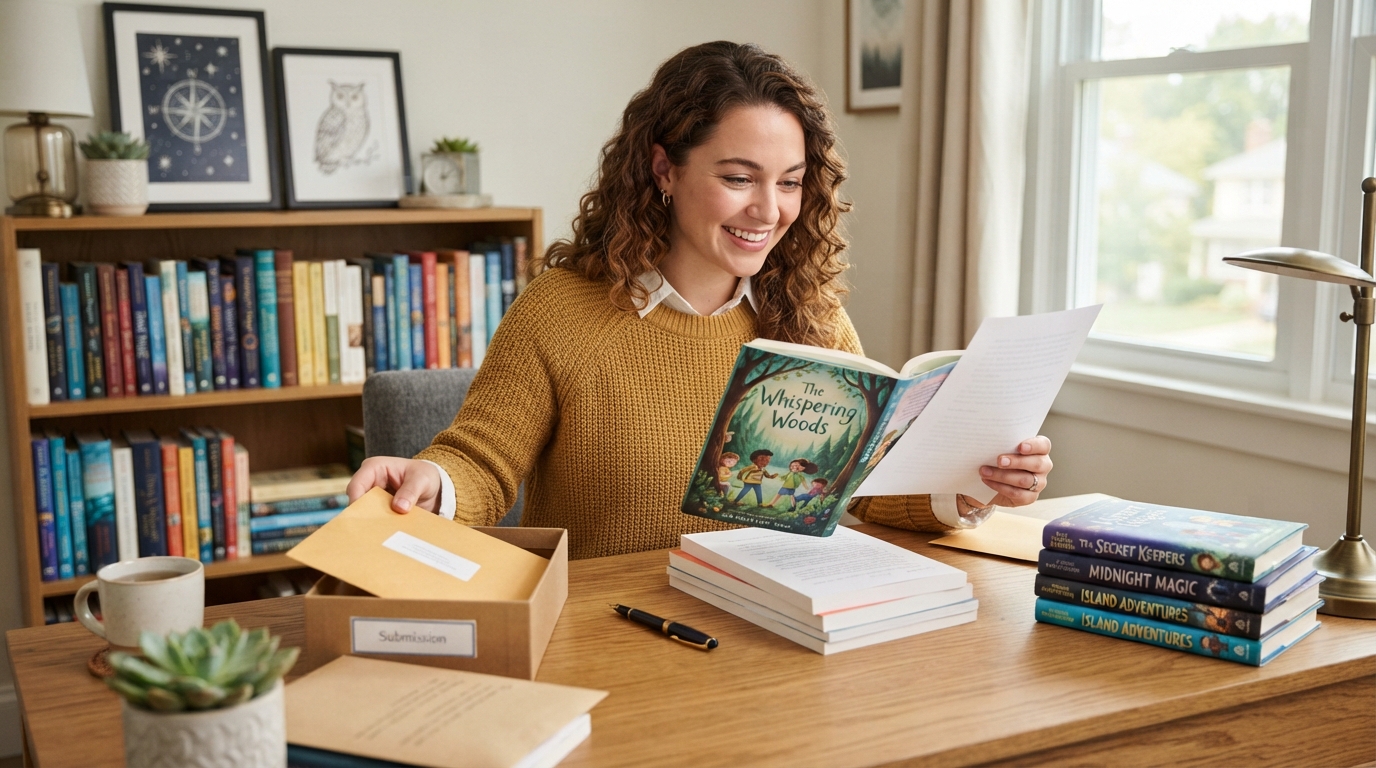
Middle grade publishers accepting submissions without requiring a literary agent include reputable independent presses such as Chronicle Books, Holiday House, Albert Whitman & Company, Page Street Kids, Levine Querido, and Shadow Mountain Publishing. Writers targeting readers aged 8 to 12 can submit complete, polished middle grade fiction manuscripts (typically 20,000 to 55,000 words) directly through open submission portals, email queries, or Submittable during designated reading windows.
Navigating the traditional publishing landscape for children’s literature requires an understanding of word count conventions, age-appropriate themes, query construction, and publisher-specific manuscript guidelines. Whether writing contemporary, fantasy, mystery, historical fiction, or graphic novels for upper middle grade audiences, direct-to-publisher submissions offer authors a viable route to commercial publication, royalty contracts, and global distribution.
Real-Time Search Intent & What Middle Grade Writers Ask Most
Analyzing search trends and community queries from platforms like Reddit (r/PubTips, r/writing), Absolute Write, and Google reveals the most pressing questions authors ask when seeking traditional publishers for juvenile fiction:
- “Which traditional middle grade publishers accept unagented manuscripts in 2025?”
- “What is the standard word count for a debut middle grade novel?”
- “Do I need an agent to publish with major children’s book imprints?”
- “What is the difference between Lower Middle Grade (LMG) and Upper Middle Grade (UMG) submission guidelines?”
- “How should I format a middle grade query letter and synopsis for open submission windows?”
- “Which independent children’s presses offer advance-and-royalty contracts without vanity fees?”
Understanding the Middle Grade (MG) Publishing Landscape
Middle grade literature occupies a distinct commercial category within children’s publishing. Targeted at young readers aged 8 to 12 (grades 3 through 7), middle grade bridges early chapter books and young adult (YA) fiction. Protagonists in middle grade books are typically between 10 and 13 years old—readers consistently prefer characters who are their age or slightly older.
Unlike Young Adult fiction, which frequently explores identity through romance, existential angst, and external social systems, Middle Grade focuses on friendship, family dynamics, belonging, agency, and expanding a child’s worldview. While dark and heavy themes (grief, divorce, illness, injustice) are welcome, middle grade manuscripts must maintain an underlying sense of hope, resilience, and emotional safety.
| Category Sub-type | Target Reader Age | Protagonist Age | Standard Word Count | Common Core Themes |
|---|---|---|---|---|
| Lower Middle Grade | 8–10 years | 9–10 years | 20,000 – 35,000 words | Humor, school mischief, light adventure, illustrations often included |
| Core Middle Grade | 9–11 years | 10–12 years | 30,000 – 50,000 words | Friendship challenges, magical realism, family secrets, mystery, self-reliance |
| Upper Middle Grade | 11–13 years | 12–13 years | 45,000 – 65,000 words | Identity, social justice, complex grief, epic fantasy, transition to adolescence |
| MG Nonfiction / Graphic | 8–12 years | N/A or Varies | 15,000 – 40,000 words / script | Biography, STEM, history, visual narratives, high-interest memoirs |
Comprehensive Directory: Verified Middle Grade Publishers Accepting Submissions
The following traditional, independent, and small presses publish middle grade fiction and nonfiction and regularly maintain open, unagented submission windows. These publishers operate on traditional contract models, meaning they never charge authors reading fees, production costs, or marketing packages.
1. Chronicle Books (Children’s Imprint)
Chronicle Books is one of the most respected independent trade publishers in the United States, renowned for innovative, design-forward children’s books, fiction, and graphic novels.
- Accepted Genres: Contemporary fiction, humor, magical realism, graphic novels, STEM-focused nonfiction.
- Submission Method: Digital submissions via email or their online submission form (check current guidelines for open windows).
- Requirements: Query letter, 1-page synopsis, and the complete manuscript for middle grade novels.
- Status: Periodically open to unagented authors.
2. Holiday House
Founded in 1935 as the first American publishing house dedicated exclusively to children’s books, Holiday House publishes award-winning juvenile fiction and nonfiction, including Newbery and Caldecott Honor titles.
- Accepted Genres: Historical fiction, contemporary realism, mystery, fantasy, narrative nonfiction.
- Submission Method: Unsolicited submissions accepted via postal mail or Submittable depending on editorial department schedules.
- Requirements: Cover letter with relevant author background, synopsis, and full manuscript.
- Status: Continuously reviews unagented manuscripts.
3. Albert Whitman & Company
With a legacy spanning over a century (including the iconic The Boxcar Children series), Albert Whitman & Company creates books that promote empathy, curiosity, and literacy for young readers.
- Accepted Genres: High-concept mystery, sports fiction, social-emotional learning, adventure, diverse perspectives.
- Submission Method: Email submission directed to specific editorial staff or general submissions inbox.
- Requirements: One-page query letter including pitch, target audience, competitive titles, and the first three chapters pasted in the body of the email.
- Status: Open to unsolicited queries.
4. Levine Querido
Founded by Arthur A. Levine (the legendary editor who brought Harry Potter to the United States), Levine Querido is dedicated to amplifying marginalized voices, underrepresented cultures, and world-class storytelling.
- Accepted Genres: Literary middle grade, translated juvenile fiction, contemporary, LGBTQIA+, diverse cultural narratives.
- Submission Method: Open submission portal / Submittable.
- Requirements: Query letter and full manuscript.
- Status: Conducts regular open submission calls throughout the calendar year.
5. Page Street Kids
An imprint of Page Street Publishing, Page Street Kids produces distinctive, voice-driven middle grade novels, illustrated chapter books, and visual storytelling distributed by Macmillan.
- Accepted Genres: Contemporary, historical, speculative fiction, novels-in-verse, high-concept adventures.
- Submission Method: Digital query form via Submittable.
- Requirements: Query letter, brief synopsis, and the first 3 chapters or full manuscript (as requested on the portal).
- Status: Open to unagented submissions during designated monthly windows.
6. Shadow Mountain Publishing
Shadow Mountain is known for clean, uplifting children’s fiction and is the original home of Brandon Mull’s best-selling Fablehaven series. They actively look for action-oriented middle grade series.
- Accepted Genres: Clean fantasy, adventure, historical, middle grade empathy initiatives.
- Submission Method: Online submission portal.
- Requirements: Query letter, detailed chapter-by-chapter outline, and the first three sample chapters.
- Status: Open to unagented submissions.
7. Charlesbridge Publishing
Charlesbridge focuses on books that encourage lifelong reading, critical thinking, and global awareness for kids of all backgrounds.
- Accepted Genres: Humor, STEM-infused fiction, contemporary realism, diverse voices, nature and environmental themes.
- Submission Method: Direct web form or email.
- Requirements: Complete manuscript for middle grade fiction accompanied by a query letter.
- Status: Open year-round.
8. Flashlight Press
While Flashlight Press is predominantly known for exceptional picture books, they selectively acquire illustrated, high-concept lower middle grade titles and juvenile chapter books focusing on universal childhood dilemmas.
- Accepted Genres: Family relationships, school dynamics, humor, social empathy.
- Submission Method: Submittable / Email.
- Requirements: Complete manuscript with query.
- Status: Open to unagented authors.
| Publisher Name | Primary Focus | Preferred Format | Advance Offered | Standard Response Time |
|---|---|---|---|---|
| Chronicle Books | Innovative, quirky, design-led | Query + Full Manuscript | Yes (Competitive) | 3–6 months |
| Holiday House | Literary, historical, contemporary | Query + Full Manuscript | Yes (Standard Trade) | 4–6 months |
| Albert Whitman & Co. | High-concept, series, mystery | Query + 3 Sample Chapters | Yes (Standard Trade) | 2–4 months |
| Levine Querido | Diverse, literary, transformative | Full Manuscript via Portal | Yes (Competitive) | 3–5 months |
| Page Street Kids | Voice-driven, accessible, commercial | Query + Sample/Full | Yes (Standard Trade) | 2–3 months |
| Shadow Mountain | Clean fantasy, series-potential | Query + Outline + 3 Chapters | Yes (Standard Trade) | 3–6 months |
Key Manuscript Benchmarks for Middle Grade Submissions
Before submitting to any editor or acquisition desk, your manuscript must strictly conform to juvenile market expectations. Acquisitions editors reject otherwise compelling stories within minutes if they fail basic structural tests.
1. Target Word Count Optimization
Publishing houses have tight printing budgets and strict production standards. Debut authors should adhere to these industry-accepted lengths:
- Contemporary / Realistic MG: 28,000 – 45,000 words (sweet spot: 35,000 words).
- Fantasy, Sci-Fi & Worldbuilding MG: 40,000 – 60,000 words (rarely exceeding 65,000 words for debuts).
- Mystery & Adventure MG: 30,000 – 50,000 words.
- Verse Novels: 15,000 – 25,000 words.
2. The Middle Grade Voice & Perspective
Middle grade voice is immediate, earnest, and deeply rooted in the present tense of a child’s emotions. Common voice pitfalls include:
- Nostalgia (The “Looking Back” Trap): Adults writing an adult looking back fondly at childhood. Middle grade must take place in the now from the immediate perspective of the young protagonist.
- Condescension or Preachiness: Writing down to children or moralizing ruins narrative drive. Kids read for entertainment, empathy, and adventure, not lectures.
- Excessive Cynicism: While middle grade handles dark issues, the tone should avoid the world-weary nihilism frequently found in adult or gritty YA fiction.
3. Active Child Protagonist Agency
In successful middle grade fiction, children solve their own problems. While adult figures (parents, teachers, guardians) can exist, they must not swoop in to save the day. The protagonist must make choices, make mistakes, face the consequences, and discover the resolution through their own initiative.
Anatomy of a Winning Middle Grade Query Letter
When approaching middle grade publishers accepting submissions, your query letter serves as your formal business proposal. An effective children’s book query should fit onto a single page (under 350 words) and follow a precise four-part architecture:
- The Metadata & Personalization: State the title, category (Middle Grade), genre, word count, and why you are targeting that specific publisher or editor. Include 2–3 relevant comparative titles published in the last 3–5 years.
- The Hook (The Logline): A 1–2 sentence dynamic summary conveying the protagonist, the inciting incident, the central conflict, and the core stakes.
- The Narrative Blurb (150–200 words): Written in present tense, showcasing the distinctive character voice, the primary quest or challenge, the antagonist force, and what happens if the protagonist fails.
- Author Bio & Credentials: Relevant publishing credits, memberships (e.g., SCBWI – Society of Children’s Book Writers and Illustrators), personal connection to the subject matter, and platform (if applicable).
Sample Middle Grade Pitch Example:
“Twelve-year-old amateur cryptid hunter Leo Vance never expected his trail camera to capture a genuine Michigan Dogman behind his suburban middle school. When the creature steals his late father’s compass—the only keepsake Leo has left—Leo must team up with his eccentric science-fair rival to track the beast into the northern woods before the local wildlife patrol finds and traps it first.”
Navigating Contract Terms and Manuscript Development
Landing an offer of publication from an unagented submission is a major milestone. However, authors must understand the fundamentals of publishing contracts before signing. Traditional publishers offer an advance against royalties, handle all professional editing, interior formatting, cover design, and manage bookstore distribution.
If you are looking to bring your concept to life or ensure your draft meets the highest literary standards, working with professionals who understand story architecture can make all the difference. For expert story shaping, ghostwriting, and comprehensive manuscript doctoring, authors turn to trusted partners like Geeks Ghostwriting to polish their work before submitting to acquisition editors.
Top 10 Mistakes to Avoid When Submitting to MG Publishers
- Submitting an Incomplete Manuscript: Unlike nonfiction where book proposals are standard, middle grade fiction must be 100% written, revised, and polished prior to submission.
- Mismatched Age Categories: Featuring a 16-year-old protagonist in a book pitched as Middle Grade, or a 9-year-old protagonist dealing with explicitly adult subject matter.
- Ignoring Publisher Guidelines: Sending attachments when the publisher asks for pasted text in the email, or querying outside of open submission windows.
- Using Outdated “Comp” Titles: Comparing your book to Harry Potter, Percy Jackson, or Charlotte’s Web. Use titles published within the last 3–5 years to show you understand today’s marketplace.
- Including Unrequested Illustrations: Unless you are a professional author-illustrator pitching a graphic novel or illustrated chapter book, do not hire an illustrator. Traditional publishers select and hire their own illustrators.
- Simultaneous Submission Violations: Sending queries to publishers that explicitly demand exclusive reading windows. Always clarify in your tracker if simultaneous submissions are permitted.
- Lack of SCBWI Formatting: Submitting manuscripts that don’t adhere to industry standards (double-spaced, 12pt standard font like Times New Roman, 1-inch margins, proper chapter breaks).
- Weak Pacing in the First Three Chapters: Middle grade readers decide quickly whether they enjoy a book. Avoid prolonged exposition (“info-dumping”) and drop the reader directly into the protagonist’s world.
- Overusing Adult Dialect / Slang: Trying too hard to sound “hip” using ephemeral slang that dates the manuscript before it reaches print.
- Failing to Track Submissions: Not maintaining a detailed spreadsheet tracking date sent, editor queried, materials submitted, and responses received.
Step-by-Step Submission Workflow for Middle Grade Writers
- Complete the First Draft: Write without editing until the manuscript reaches a natural conclusion between 30,000 and 55,000 words.
- Self-Revision & Structural Check: Evaluate character arcs, pacing, stakes, theme, and dialogue authentic to ages 8–12.
- Beta Readers & Critique Groups: Solicit feedback from fellow children’s writers, teachers, librarians, and trusted target-age readers.
- Professional Developmental & Copy Editing: Ensure your manuscript is free of grammatical errors, narrative inconsistencies, and pacing dead zones.
- Draft Submission Materials:
- One-page query letter with 2–3 modern comps.
- 1 to 2-page detailed plot synopsis (including the ending/spoilers).
- Sample chapters (first chapter, first 3 chapters, or first 50 pages).
- Build a Tiered Submission List: Segment publishers into Tier 1 (Dream Houses), Tier 2 (Strong Mid-Sized Indies), and Tier 3 (Niche/Regional Children’s Presses).
- Submit in Batches: Query 5 to 8 publishers at a time. If you receive universal rejections or no responses after 12–16 weeks, refine your query letter and opening pages before sending the next wave.
Frequently Asked Questions About Middle Grade Submissions
Do middle grade publishers accept unagented submissions?
Yes. While major imprints (Big 5: Penguin Random House, HarperCollins, Simon & Schuster, Macmillan, Hachette) largely require literary agents, dozens of established independent and mid-sized children’s publishers accept submissions directly from unagented authors during open submission windows.
Can I submit an unagented middle grade graphic novel script?
Yes. Independent publishers like Levine Querido, Chronicle Books, and Page Street Kids actively seek graphic novel scripts from unagented writer-artist teams or writers who provide a complete script paired with sample character designs and illustrated sample pages.
What is the typical advance for a debut middle grade novel?
Advances for debut middle grade novels from independent and mid-sized traditional publishers typically range between $2,000 and $15,000, depending on the house’s size, print run, and retail distribution capacity. Major publishers (via agents) may offer advances ranging from $10,000 to over $50,000.
Do I need to hire an illustrator for my middle grade book before submitting?
No. Traditional publishers pair middle grade authors with professional illustrators and cover designers at their own expense. Submitting your own artwork (unless you are a professional illustrator seeking an author-illustrator contract) can detract from the commercial viability of your manuscript.
Related Reading
- Print Publishers Accepting Submissions
- Children’s Book Publishers Accepting Unsolicited Manuscripts
- Coming-of-Age Fiction Publishers Accepting Submissions
- Canadian Children’s Book Publishers Accepting Submissions
- Book Publishers in the UK Accepting Submissions
Ready to take the next step? See how our book publishing services can support you.






