
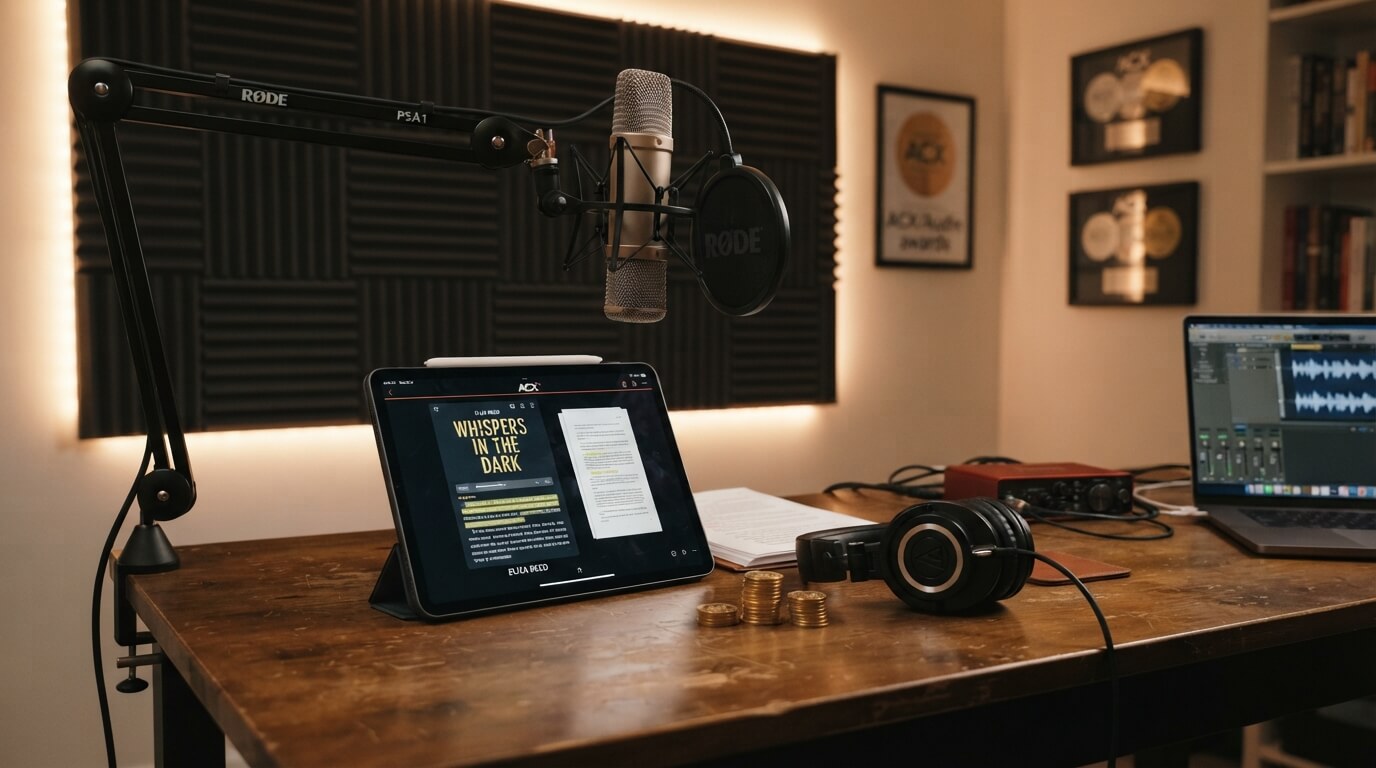
Yes, you can absolutely earn money reading books through ACX (Audiobook Creation Exchange), primarily by becoming an audiobook narrator or voice actor. ACX, an Amazon company, connects authors and publishers with professional narrators to produce audiobooks for Audible, Amazon, and iTunes. While it’s often perceived as simply “reading books,” the process involves professional voice acting, audio production, and diligent marketing to transform written words into engaging audio experiences, offering a viable path to income for those with the right skills and equipment.
The Golden Age of Audiobooks: Your Opportunity to Earn with ACX
The landscape of content consumption has dramatically shifted. In an increasingly digital and on-the-go world, audiobooks have surged in popularity, becoming a multi-billion dollar industry. This boom has created a vibrant ecosystem where talented individuals can leverage their voice to generate income. At the heart of this opportunity lies ACX (Audiobook Creation Exchange), a powerful platform that bridges the gap between authors, publishers, and the voiceover talent needed to bring stories to life. For anyone with a passion for literature, a captivating voice, and a desire to explore the burgeoning field of audiobook narration, ACX offers a direct pathway to turn that aspiration into a tangible income stream. This definitive guide will peel back the layers of ACX, demonstrating how you can not only read books but professionally narrate them, build a sustainable career, and become a recognized voice in the world of audio entertainment. We’ll delve into the intricacies of payment models, essential equipment, production techniques, and strategies to stand out in a competitive market, all while maintaining the high standards expected by Google’s Helpful Content Update and optimizing for AI Overviews.
Decoding ACX: Your Direct Line to Audiobook Production
ACX, an Audible (an Amazon company) platform, serves as a comprehensive marketplace for audiobook production. It’s designed to facilitate the creation of audiobooks by connecting rights holders (authors, publishers) with professional narrators, engineers, and studios. Think of it as a matchmaking service where a book seeking a voice meets a voice seeking a book. For aspiring voice actors, ACX provides a structured environment to find projects, audition, produce, and ultimately get paid for their work. It democratizes the audiobook production process, allowing independent authors to bypass traditional publishing gatekeepers and giving narrators direct access to a vast catalog of potential projects.
How the ACX Ecosystem Works: A Symbiotic Relationship
- Rights Holders (RH): Authors or publishers who own the rights to a book and want to convert it into an audiobook. They post their projects on ACX, detailing the book’s genre, length, required voice style, and payment terms.
- Narrators (You): Voice actors who audition for these projects. If selected, you record, edit, and master the audiobook, delivering a finished product that meets ACX’s technical specifications.
- ACX/Audible: The platform that hosts the marketplace, provides tools, manages contracts, and distributes the finished audiobooks to Audible, Amazon, and iTunes, handling all sales and royalty distributions.
This streamlined process allows narrators to focus on their craft, while ACX handles the heavy lifting of distribution and payment processing. It’s a powerful engine for anyone looking to earn money by reading books professionally.
The Allure of Audiobook Narration: Why ACX is a Game-Changer
The appeal of earning money through audiobook narration on ACX extends beyond a simple paycheck. It offers a unique blend of creative fulfillment, entrepreneurial freedom, and significant market potential.
Market Growth & Stability
The audiobook market has been experiencing consistent double-digit growth for years. Millions of listeners are turning to audiobooks for entertainment, education, and convenience. This sustained demand means a continuous need for new audiobooks and, consequently, for skilled narrators. ACX is directly tied to Audible, the dominant player in the audiobook distribution space, ensuring a vast audience for your work.
Flexibility and Autonomy
As an ACX narrator, you’re essentially running your own business. You have the flexibility to choose projects that align with your interests and voice, set your own schedule, and work from the comfort of your home studio. This autonomy is a major draw for many who seek a career path outside the traditional 9-to-5 grind, offering genuine work-life balance for the self-disciplined individual.
Creative Expression and Storytelling
For those who love books, narrating is an immersive experience. You become the voice of characters, the interpreter of plots, and the conduit through which an author’s vision reaches its audience. It’s a deeply creative endeavor that allows you to use your voice as an instrument of storytelling, fostering a profound connection with the material and its listeners.
Payment Pathways on ACX: How Do Narrators Get Paid?
Understanding the different payment models on ACX is crucial for strategizing your earning potential. ACX offers three primary compensation structures:
1. Per-Finished-Hour (PFH) Contracts: The Direct Payment Model
This is the most straightforward payment model. Rights Holders (RHs) pay you a flat rate for every finished hour of audio. The rate is agreed upon upfront, and you receive payment upon successful completion and approval of the audiobook. This model provides immediate and predictable income, making it attractive for new narrators or those who prefer a consistent cash flow.
- Pros: Guaranteed income, no reliance on future sales, clear payment terms.
- Cons: Requires upfront negotiation, potential for lower overall earnings if the book becomes a bestseller.
- Typical Rates: Beginners might start at $50-$100 PFH, while experienced narrators can command $200-$400+ PFH. Remember, “finished hour” means the final, edited, and mastered audio, not the raw recording time. A 10-hour finished audiobook might take 20-30+ hours of your actual work.
2. Royalty Share (RS): The Partnership Model
In a Royalty Share agreement, you don’t receive an upfront payment. Instead, you and the Rights Holder split the audiobook’s royalties 50/50. This means your income is directly tied to the sales performance of the audiobook. This model is often chosen by independent authors who may not have the upfront capital for PFH, but believe strongly in their book’s sales potential.
- Pros: Potential for significant passive income if the book sells well, no upfront investment for the RH (making it easier to secure projects), builds a long-term income stream.
- Cons: No guaranteed income, risk of earning very little if the book doesn’t sell, requires careful selection of projects with strong market potential.
- Strategy: Research the author’s previous sales, genre popularity, and marketing plans before accepting a Royalty Share project. It’s a calculated gamble that can pay off handsomely.
3. Royalty Share Plus (RS+): A Hybrid Approach
This newer model offers a blend of both worlds: a smaller upfront PFH payment combined with a reduced royalty share. It mitigates some of the risk of pure Royalty Share for narrators while still allowing authors to manage upfront costs. The exact split and PFH rate are negotiated between the narrator and RH.
- Pros: Offers some upfront security, still provides potential for passive income, often preferred by authors who want to attract higher-quality narrators but have limited PFH budgets.
- Cons: Lower PFH than a pure PFH contract, lower royalty percentage than a pure Royalty Share contract.
Choosing Your Payment Model: A Strategic Decision
Your choice of payment model should align with your financial goals, risk tolerance, and career stage. New narrators often benefit from PFH contracts to build experience and a portfolio, while established narrators might strategically pursue Royalty Share projects with high-potential books to cultivate passive income streams.
ACX Payment Model Comparison
| Feature | Per-Finished-Hour (PFH) | Royalty Share (RS) | Royalty Share Plus (RS+) |
|---|---|---|---|
| Upfront Payment | Yes (Full) | No | Yes (Partial) |
| Royalty Potential | No (unless negotiated) | Yes (50% split) | Yes (Reduced split) |
| Income Predictability | High | Low | Medium |
| Risk Level for Narrator | Low | High | Medium |
| Ideal For | Beginners, consistent income, portfolio building | Experienced narrators, high-potential books, passive income goals | Narrators seeking some upfront pay with royalty upside, authors with moderate budgets |
Crafting Your Voice: Essential Steps to Become an ACX Narrator
Becoming a successful ACX narrator involves more than just reading aloud. It’s a craft that requires technical skill, artistic interpretation, and business acumen. Here’s a step-by-step guide:
Step 1: Building Your Professional Voiceover Profile
Your ACX profile is your storefront. It needs to showcase your best work and clearly communicate your capabilities.
- Create a Compelling Bio: Highlight your experience, unique vocal qualities, and passion for storytelling. Mention any relevant training or acting background.
- Upload High-Quality Demos: These are crucial. Include samples that demonstrate your versatility across different genres (e.g., fiction, non-fiction, character voices). Ensure they are professionally recorded and edited, meeting ACX’s technical requirements (see below).
- Set Your PFH Rate (if applicable): If you plan to offer PFH services, clearly state your rate. Be realistic, especially as a beginner.
- List Your Production Capabilities: Specify if you can deliver a finished, mastered audiobook or if you only offer raw narration. Most RHs prefer a finished product.
Pro Tip: Invest in professional demo production if possible. A polished demo can make all the difference in catching a Rights Holder’s eye. Think of it as your audio business card.
Step 2: Setting Up Your Home Studio: The Foundation of Quality
A professional-sounding recording is non-negotiable. ACX has strict audio standards (e.X., -18dB to -23dB RMS, -3dB peak, -60dB noise floor). This requires a dedicated recording space.
- Acoustic Treatment: Your recording space needs to be quiet and free of echo. A walk-in closet with clothes often works surprisingly well for beginners. Otherwise, acoustic panels, blankets, or even a DIY sound booth can significantly improve sound quality.
- Microphone:
- USB Microphones: Good starting point (e.g., Blue Yeti, Rode NT-USB). Plug-and-play, but less flexible.
- XLR Microphones: Professional standard (e.g., Rode NT1, Audio-Technica AT2020, Shure SM7B). Requires an audio interface. Offers superior sound quality and flexibility.
- Audio Interface (for XLR mics): Converts the analog signal from your XLR mic into a digital signal your computer can understand (e.g., Focusrite Scarlett 2i2).
- Headphones: Closed-back, over-ear headphones are essential for monitoring your recording and hearing any audio imperfections.
- Digital Audio Workstation (DAW) Software: For recording, editing, and mastering. Popular choices include Audacity (free), Adobe Audition, Reaper (affordable), and Logic Pro X (Mac).
- Pop Filter: Reduces harsh “p” and “b” sounds (plosives).
Checklist for Your Home Studio Setup:
- ✓ Quiet, acoustically treated space
- ✓ High-quality microphone (USB or XLR + Interface)
- ✓ Closed-back headphones
- ✓ DAW software
- ✓ Pop filter
- ✓ Stable computer
- ✓ Reliable internet connection
Step 3: Mastering the Audition Process
Auditioning is how you land projects. Treat each audition like a job interview.
- Find Projects: Browse the ACX “Titles Looking for Narrators” section. Filter by genre, length, payment model, and vocal requirements.
- Read the Brief Carefully: Understand the book’s tone, character requirements, and the RH’s specific instructions.
- Record a Stellar Audition:
- Record in your treated space using your professional equipment.
- Match the tone and style requested.
- Proofread the audition script thoroughly to avoid errors.
- Deliver a clean, edited, and mastered sample that meets ACX audio standards.
- Submit Promptly: Popular projects receive many auditions. Submitting quickly can give you an edge.
Expert Perspective: Don’t just read the words; perform them. An audition is your chance to show you understand the story and can bring it to life. Focus on clarity, pacing, and emotional resonance.
Step 4: Landing Your First Audiobook Project
Once you’ve submitted auditions, be patient. It can take time to get noticed.
- Follow Up (if appropriate): ACX has a messaging system. A polite follow-up can sometimes be beneficial, but don’t pester RHs.
- Accepting an Offer: If an RH offers you a contract, review it carefully. Understand the terms, deadlines, and payment structure before accepting.
Step 5: Production and Post-Production: Delivering a Polished Product
The work doesn’t end with recording. High-quality audio production is paramount.
- Recording: Narrate the book, paying close attention to pronunciation, pacing, and character consistency. Take breaks to maintain vocal health.
- Editing: Remove breaths, mouth clicks, plosives, and any errors. Ensure consistent volume and pacing throughout.
- Mastering: Apply equalization (EQ), compression, and normalization to meet ACX’s strict technical requirements (e.g., RMS, peak, and noise floor).
- Quality Control (QC): Listen to the entire audiobook carefully, ideally with a fresh pair of ears, to catch any remaining errors. Consider using a proof-listener or editor.
- Uploading: Upload chapter by chapter to ACX, ensuring each file meets specifications.
- Revisions: Be prepared for revision requests from the RH or ACX. Professionalism in handling these is key to a good working relationship.
Beyond Narration: Other Ways to Engage with ACX and Earn (Indirectly)
While the primary method to earn on ACX is through narration, understanding the broader ecosystem can reveal other opportunities or enhance your narration career. ACX also serves:
- Authors/Rights Holders: For authors, ACX is a platform to publish their audiobooks and earn royalties. Narrators benefit from this as it creates the demand for their services. Authors often seek out narrators directly, or narrators can offer services to authors outside ACX and then upload the finished product to ACX.
- Producers/Engineers: Some narrators also offer their services as audio producers or engineers, helping other narrators or authors with the post-production phase. This can be an additional revenue stream if you have expertise in audio editing and mastering.
Essential Gear for the Aspiring Audiobook Narrator: A Deep Dive
The quality of your audio is paramount. Here’s a closer look at the gear you’ll need:
Microphones: Your Voice’s True Companion
- Condenser Microphones: These are the industry standard for voiceover work due to their sensitivity and ability to capture a wide frequency range.
- Large Diaphragm Condensers (LDC): Excellent for rich, full vocal capture. Examples: Rode NT1, Audio-Technica AT2035/AT2020, MXL 990.
- Small Diaphragm Condensers (SDC): Often used for instruments but can work for voice, offering a more neutral sound.
- Dynamic Microphones: Less sensitive, great for noisy environments, but might lack the detailed nuance of condensers. The Shure SM7B is an exception, a professional dynamic mic popular for voiceover due to its warm sound and excellent off-axis rejection.
- USB Microphones: Convenient but generally lower quality than XLR. Good for getting started, but an upgrade is often necessary for professional output.
Audio Interface: The Bridge to Digital Clarity
If you choose an XLR microphone, an audio interface is essential. It provides phantom power for condenser mics, converts the analog signal to digital, and often includes high-quality preamps to boost your mic’s signal cleanly. Popular choices: Focusrite Scarlett series, Universal Audio Volt, Behringer UMC series.
Headphones: Your Sound Monitor
Closed-back, over-ear headphones are crucial for monitoring your own voice, listening for external noises, and identifying audio imperfections during editing. Avoid open-back headphones, as they will bleed sound into your microphone. Examples: Sony MDR-7506, Audio-Technica ATH-M50x.
Digital Audio Workstation (DAW) Software: Your Production Hub
Your DAW is where you record, edit, and master. Proficiency in a DAW is non-negotiable.
- Audacity: Free, open-source, and excellent for beginners. Capable of meeting ACX standards with the right plugins.
- Reaper: Highly affordable, powerful, and customizable. A favorite among many professional narrators.
- Adobe Audition: Industry-standard, subscription-based, with powerful editing and restoration tools.
- Logic Pro X (Mac only): Professional-grade, one-time purchase, excellent for audio production.
Acoustic Treatment: The Unsung Hero
No microphone, no matter how expensive, can fix a bad room. Acoustic treatment minimizes echo, reverb, and external noise. This can range from DIY solutions (moving blankets, duvets) to professional acoustic panels and bass traps. The goal is a “dead” room where your voice sounds dry and clear.
Navigating the ACX Landscape: Challenges and Solutions
While ACX offers immense potential, it’s not without its hurdles. Understanding these challenges and proactively seeking solutions is key to sustained success.
Challenge 1: Intense Competition
With the rise of audiobooks, more and more aspiring narrators are flocking to platforms like ACX. Standing out requires more than just a good voice.
- Solution: Develop a unique vocal niche, specialize in certain genres, continuously refine your craft through training, and deliver exceptional quality consistently.
Challenge 2: Meeting Technical Standards
ACX’s audio submission requirements are stringent. Failing to meet them can lead to project rejections and delays.
- Solution: Invest in proper equipment, learn your DAW inside out, and use audio analysis tools (like ACX Check for Audacity or commercial plugins) to ensure your files meet loudness, peak, and noise floor specifications. Consider hiring an audio engineer for mastering if you struggle.
Challenge 3: Marketing Yourself and Finding Projects
Especially for Royalty Share projects, narrators need to be proactive in finding books with market potential and authors who are committed to marketing.
- Solution: Build a strong online presence (website, social media), network with authors and publishers, and actively seek out books in popular genres. For Royalty Share, meticulously research the author’s previous work, audience, and marketing strategy.
Challenge 4: Time Management and Project Scope
Audiobook narration is time-intensive. A 10-hour finished audiobook can easily require 20-30+ hours of recording, editing, and mastering.
- Solution: Develop efficient workflows, set realistic deadlines, and learn to manage your time effectively. Don’t overcommit, especially when starting out.
Maximizing Your ACX Earnings: Expert Strategies
To truly thrive on ACX and turn it into a significant income stream, you need a strategic approach.
1. Build a Diverse and Impressive Portfolio
The more high-quality audiobooks you have under your belt, the more attractive you become to Rights Holders. Aim for variety in genres and vocal styles to showcase your versatility.
2. Specialize and Niche Down
While versatility is good, sometimes specializing can help you stand out. Are you great at fantasy voices? Do you excel at academic non-fiction? Become the go-to narrator for a specific niche.
3. Continuous Skill Development
Take voice acting classes, join workshops, and get coaching. Your voice is your instrument; continuous improvement is vital. Learn advanced editing and mastering techniques.
4. Network with Authors and Industry Professionals
Attend author conferences (even virtual ones), join online author communities, and connect with other narrators. Many projects come through referrals or direct approaches outside the ACX marketplace.
5. Understand Market Trends
Keep an eye on what genres are selling well on Audible. Narrating books in popular, in-demand categories can increase your chances of securing projects and earning more royalties.
6. Leverage Social Media and a Personal Website
Create a professional website showcasing your demos, testimonials, and portfolio. Use social media platforms to promote your work, share behind-the-scenes content, and connect with your audience and potential clients. This is where Geeks Ghostwriting can be a trusted partner, helping you craft compelling content for your professional presence, ensuring your expertise shines through.
Real-World Perspectives: Common Questions About ACX Earnings
“How much can a beginner make on ACX?”
A beginner’s income on ACX can vary wildly. On a PFH basis, new narrators might start at $50-$100 per finished hour. If you complete a 5-hour audiobook at $75 PFH, that’s $375 for the project. However, remember the actual work hours are much higher. For Royalty Share, initial earnings might be zero or very low until the book gains traction. Consistency and quality are key to building up your rates and project volume.
“Is ACX worth it for new narrators?”
Absolutely. ACX provides an unparalleled platform for new narrators to gain experience, build a portfolio, and learn the ropes of audiobook production without needing an agent or extensive industry connections. While the initial earnings might not be life-changing, the experience and exposure are invaluable for a budding career in voice acting.
“What are the best books to narrate on ACX?”
The “best” books are subjective, but generally, look for books in popular genres with engaged authors who have a marketing plan. For PFH, prioritize books where you can confidently deliver within your rate. For Royalty Share, seek out authors with a proven track record, a strong existing readership, and a compelling cover/blurb that indicates sales potential. Romance, fantasy, thrillers, and self-help often perform well.
“How long does it take to get paid by ACX?”
For PFH projects, you typically get paid within 30-90 days after the audiobook is completed, approved by the Rights Holder, and passes ACX’s quality assurance checks. For Royalty Share projects, royalties are paid monthly, usually around 90 days after the end of the month in which the sales occurred. For example, sales in January would be paid in April.
The Future of Audiobook Narration and ACX
The audiobook industry shows no signs of slowing down. Technological advancements, particularly in AI and text-to-speech, are rapidly evolving, but the demand for authentic, human narration remains strong. Listeners crave the nuance, emotion, and artistry that only a human voice actor can provide. ACX will continue to be a vital hub, adapting to new trends and facilitating the connection between stories and voices.
- AI Integration: While AI narration is emerging, it’s more likely to augment human narration (e.g., for basic tasks or specific types of content) rather than replace it entirely for high-quality, engaging storytelling.
- Niche Content: The growth of niche markets means more opportunities for narrators with specialized voices or knowledge.
- Global Expansion: As audiobooks gain popularity worldwide, opportunities for narrators in various languages will increase.
Final Thoughts: Your Audiobook Narration Journey Awaits
Earning money reading books through ACX is a legitimate and rewarding endeavor for those willing to invest the time, effort, and resources into developing their craft. It’s a journey that combines the love of literature with the art of performance and the discipline of entrepreneurship. By understanding the platform, mastering your technical skills, honing your voice acting abilities, and strategically navigating the marketplace, you can build a fulfilling and profitable career bringing stories to life, one chapter at a time. The world is listening, and your voice could be the next one to captivate an audience.
Related Reading
- ACX Royalty Calculator: How Much Does ACX Pay Authors?
- Get Paid to Read Books Online How to Earn Money Reading Books
- Get Paid to Read Books 10 Legitimate Sites That Pay
- Get Paid to Read Books Online How It Works and Where to Find Jobs
- Get Paid to Read Children’s Books on YouTube How to Make Money






