Last
Letter M. Hale
Letter M. Hale

Home/Cover Design/eBook Covers
An ebook cover is one front image. No spine, no back, no barcode. Kindle, Apple Books, and Kobo shrink it until the title is about as wide as a thumb, and that small picture is what a shopper uses. We set the type for that size, then export the file KDP recommends: 2,560 by 1,600 pixels, JPEG or TIFF, in RGB.
The test
We keep a small copy of the cover beside the full file. A script that looks elegant at full size often turns into a smudge once the store shrinks it. A face in a photograph, with the title dropped on top and nothing behind the letters, does the same. The revision happens at that size, before anyone uploads.
Series name and book number have to survive the shrink too, if the book is not a standalone. Book three that cannot be matched to book one from across a grid is a different cover, even when the illustration is lovely.
The file
Height divided by width should be 1.6. The file we export is 2,560 by 1,600. A square made for a post gets padded or cropped, and the title shifts.
RGB, not a print PDF. CMYK looks dull on a screen. The ebook slot and the paperback wrap are two files, built for two different rooms.
Title, author, and the series mark stay off the edges. Stores lay a badge, a price, or a ribbon over the corners. Type that lives there gets covered.
No barcode, no ISBN box, no spine. Those belong on the print wrap, and the spine width comes from the final page count, which this image does not have.
Before we open a file
The shelf
The couple, or one object that stands in for them, and a title face that shelf already trusts. A condensed thriller font on a love story gets passed over. The feeling has to read before the sentence does.
High contrast and a short title. Decoration is what disappears first. If the title needs the full file to be read, a shopper on a phone has already moved to the next rectangle.
The promise has to be readable. A subtitle that says what the book does is often the line that sells it, so it cannot be set like a caption under a photograph.
Left off the file
A cover can be careful and still be ordinary. We would rather name the limit than dress a stock photo up as a campaign.
Before you send the brief
We need the title, the shelf, and enough of the book to know the tone. A chapter and a one-line description of the ending will do. A finished cover before the title is final will not. If the manuscript is still changing genre, say so. A romance that becomes a thriller is a new cover.
The front can be the start of one. The paperback is a wrap: front, spine, and back, with the spine measured after the page count is real, plus bleed and a barcode. We can design both. We will not stretch this rectangle and call it a printed case.
Two, from the brief you sent, then revisions on the one you choose. A third direction is a new brief. We say that before we start, so the second round is not a surprise invoice.
You do, once the invoice for that cover is paid. We keep the working file so book two can match the type, the crop, and the colors. We do not resell the illustration onto someone else’s book.
When you know the book
If you already have book one, send that too. If you only know the reader, start there. The type follows. Call (833) 688-4166 or write [email protected].







The shelf
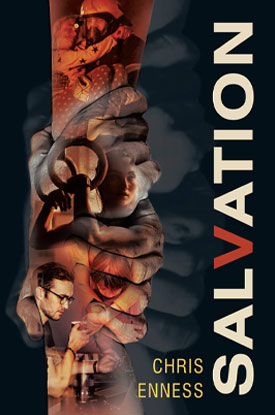
Our team has helped write, publish and market thousands of books over the past decade. Our books are well-written and finished to perfection. Have a look at some of our ghostwriters’ best works and clients’ bestsellers.



Geeks Ghostwriting’s helped me from idea refinement to publishing. I wanted a script on thriller-romance that had multiple twists and turns. I am directing a movie on the story now and our crew has fallen in love with the story!
Having a drama ghostwritten led me to gain the recognition I was seeking. I had an incomplete manuscript and Geeks Ghostwriting helped me complete it. I marketed it and it sold better than I had expected.
I thought that an illustrative self-help book was not possible! As an established designer, I have always wanted struggling designers and students to learn from my mistakes and achievements. The journey that I thought would be arduous turned out to be enjoyable and simple enough. Thank you, Geeks Ghostwriting!
 Chat with an Expert