Age, subject, and who else is in the class when the plan breaks.


Education
An education book has to know the room: thirty students, one adult, a bell, a test someone else wrote. Or one learner at a kitchen table after work. The advice has to live there. A philosophy of learning, with no Tuesday in it, is a talk.
Age, subject, and who else is in the class when the plan breaks.
A block of minutes, not an ideal afternoon.
What a teacher cannot fix with a better worksheet.
Your name on the book. Students stay unidentifiable.
The reader who has to try this tomorrow
If the lesson needs silence, curiosity, and no one having a bad morning, you have not visited the building.
We write for the person who has to stand in front of the room, or for the learner who has to do the work alone. Those are different books. A teacher needs the first ten minutes, the student who is lost, the student who is finished early, and the administrator who wants a different outcome than the chapter does. A learner needs the hour after a shift and a way to tell they understood, not a speech about lifelong curiosity. We will not write both audiences into one encouraging voice. One of them will be condescended to.
Methods need a subject and an age. “Engagement” is not a subject. Reading in grade two, algebra in grade nine, a night class for adults who have not been in school since they were seventeen: the moves are different, and so is the shame in the room. We want the task a person can see. A passage, a problem, a lab, a conversation with a text. If your method cannot be shown on one piece of work, it is still a value.
Students in the manuscript are not material. A funny failure, a diagnosis, a family story from a conference with a parent: if a colleague could name the child, it does not go in. Composite classrooms are fine when the pattern is true and the portrait is not. We also do not write teachers as the obstacle so a product can be the hero. If you sell a curriculum, say so. The book can still be useful. It cannot pretend the worksheet is a neutral law of learning.
When you are ready
A lesson, a rubric, or a theory that has not met a bell schedule. Call (833) 688-4166 or write [email protected].
Before the framework
Grade, subject, and the constraint: class size, a test, a language, a special education fact you will not fake. If you have not taught it, we do not invent the period.
A new teacher, a veteran, a parent, an adult student, a professor. The tone that helps a novice insults a veteran. Pick.
Poverty, a class of forty, a test you do not control, a child who needs a clinician. The honest chapter names the wall.
Order of the work
Philosophy can interpret a period. It cannot substitute for one.
The opening, the task, the student who is stuck, the close. If a step says “discuss,” we write the question and what you do when nobody answers.
A problem, a paragraph, a rubric a teacher could hand out. Advice about rigor without an example of the work is a mood.
The conversation the method creates, including the complaint. A book that only shows grateful students has not been in a school.
What you cut when the fire drill, the test, or the absent co-teacher eats the plan. A method with no cut list is a performance.
We will not romanticize
If the only adult is inspiring and the system is a cartoon, the reader who has a principal cannot use the chapter.
The “one kid who changed everything,” with details a homeroom would recognize. The pattern can stay. The identifier goes.
No trick that claims to erase language, disability, or hunger. We write what the task can do, and we stop.
Rigor, engagement, voice, with no task under them. We keep the word only if a teacher can see the student work it produces.
Questions worth asking first
We can write a teaching book, a chapter sequence, or a guide for instructors. A full textbook with problems, answers, and a scope set by a ministry is a different production, and we will say if your project is that before we call it a narrative. Either way, the subject matter has to be one you know well enough to be corrected. We do not fake a discipline.
Yes, if the criticism is specific and the teacher-reader is not blamed for the policy. A rant about “schools these days” helps no one plan tomorrow. A chapter about a real constraint, and what is still possible inside it, might.
Nonnegotiable. No full names, no distinctive incidents, no work reproduced that a family could identify, unless you have a permission that would still make sense if the child read the book at eighteen. When in doubt, we generalize. A point that needs a child’s humiliation is not a point we will print.
You do, unless a district or a publisher already owns the curriculum. Settle that before we draft in your voice. We do not reuse your students or your lessons as a sample.





The shelf
Our team has helped write, publish and market thousands of books over the past decade. Our books are well-written and finished to perfection. Have a look at some of our ghostwriters’ best works and clients’ bestsellers.

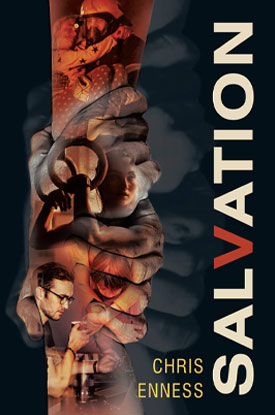


Geeks Ghostwriting’s helped me from idea refinement to publishing. I wanted a script on thriller-romance that had multiple twists and turns. I am directing a movie on the story now and our crew has fallen in love with the story!
Having a drama ghostwritten led me to gain the recognition I was seeking. I had an incomplete manuscript and Geeks Ghostwriting helped me complete it. I marketed it and it sold better than I had expected.
I thought that an illustrative self-help book was not possible! As an established designer, I have always wanted struggling designers and students to learn from my mistakes and achievements. The journey that I thought would be arduous turned out to be enjoyable and simple enough. Thank you, Geeks Ghostwriting!