What the power cannot do, and who pays when it tries.


Fantasy & Sci-Fi
Fantasy and science fiction fail in the same place. The invented world gives a speech, and the person the book is about waits in the hall. A rule of magic or a piece of technology is only useful if it takes something from somebody. We write that bill first.
What the power cannot do, and who pays when it tries.
Only the part that touches this story.
Wonder is not a substitute for a want.
A chapter can teach nothing and still change the stakes.
Both shelves, one discipline
The reader will forgive a strange world. They will not forgive a world that keeps explaining itself instead of happening.
Fantasy and science fiction ask the reader to accept a change in the rules. That is the pleasure, and it is also the risk. Once anything can happen, nothing has weight, unless you decide early what cannot happen and what it costs to push against that limit. We treat a spell and a technology the same way. Both are systems. Both must be felt in a scene before they are described in a paragraph.
The tour is the usual first draft. A newcomer is walked through a city, a ship, a court, a lab, and every room donates a fact. It feels like progress because the pages fill. It is not progress. We cut the walk and start at the moment the rule of this world injures or tempts the person we are following. The reader will pick up the customs from the way people flinch. They do not need the flinch footnoted.
Science fiction has an extra duty: the speculation has to behave. You do not need a textbook. You do need a consequence that follows from the idea you actually chose, not from a later idea you liked better. Fantasy has the twin duty: magic that solves a scene without having been paid for will make the reader distrust the next danger. We keep a short ledger. What the power has already done. What it is not allowed to do in chapter twenty just because the plot is stuck.
When you are ready
A map can wait. The bill cannot. Call (833) 688-4166 or write [email protected].
Before we build the world out
Not the history of magic, and not the full engineering. The single constraint this book turns on. Who is hurt when it is used. What a clever person will try, and why that cleverness fails or costs them a thing they wanted to keep.
Say what the character wants in a sentence that would still make sense in an ordinary city. Status, safety, a child, a pardon, a way home. If the want only exists because the world is shiny, the book is a setting. Settings do not turn pages by themselves.
Some secrets are plot. Some are trivia you are saving because you love them. We separate those in the first weeks. Trivia can live in a sentence of texture. Plot has to be aimed at a scene, or it becomes a lecture you were planning to deliver later.
How the manuscript is built
We keep a private page of rules so the draft cannot contradict itself. That page is not a chapter, and it does not go in the book.
We name the places, jobs, and customs this plot actually touches. Everything else can stay implied. A world feels large when the people believe it continues past the page, not when the book inventories it.
Early on, someone uses the power or the technology where another person can see the cost. That scene teaches the reader more than a prologue about the founding of the realm. We would rather earn the rule in front of a witness.
Around the middle, writers let the system solve a problem it was not allowed to solve. We read for that. If a later chapter depends on a convenience, we either pay for it in an earlier scene or we take the convenience out.
The last turn has to be possible under the laws you set, including the laws that made the villain powerful. A new exception in the final chapter is not a twist. It is a broken promise to the reader who was paying attention.
Cut from the book
If the reader needs a list of terms before they care about a person, the opening is in the wrong order.
People inside a world do not lecture each other about facts they both live with. We rewrite the speech as a decision made under pressure.
A beautiful impossibility that changes nothing about the character’s choices is decoration. Decoration gets one sentence, not a chapter.
We will stop and replot. We will not invent a gadget, a prophecy, or a forgotten spell to get someone out of a room.
Questions worth asking first
The discipline is the same. The texture is not. Hard science fiction owes the reader a consequence that follows from the idea. Secondary-world fantasy owes them a custom and a cost that the people in the book cannot casually step around. We will not paste dragons onto a lab, or paste a lecture onto a court, and call the mix a genre.
Less than most writers think. We need the rule that bites, the person who wants something, and the institution or force that can stop them. History, maps, and invented vocabulary can grow from the scenes. If you already have a bible, we will use the parts the story touches and leave the rest in your notes, where it can stay interesting without slowing chapter two.
Yes. Humor in this shelf works when the character is unimpressed by something the world takes seriously, or terrified of something it treats as normal. Jokes about how weird the world is, told from outside it, break the illusion. We keep the ones that could only be told by someone who has to live there tomorrow.
You do. The copyright in the manuscript and in the world as expressed in it stays with you. We will not recycle your system into another client’s book, and we will not describe your premise in a portfolio. If you want that stated before we see the notes, ask on the first call.





The shelf
Our team has helped write, publish and market thousands of books over the past decade. Our books are well-written and finished to perfection. Have a look at some of our ghostwriters’ best works and clients’ bestsellers.

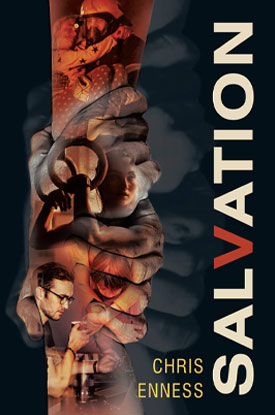


Geeks Ghostwriting’s helped me from idea refinement to publishing. I wanted a script on thriller-romance that had multiple twists and turns. I am directing a movie on the story now and our crew has fallen in love with the story!
Having a drama ghostwritten led me to gain the recognition I was seeking. I had an incomplete manuscript and Geeks Ghostwriting helped me complete it. I marketed it and it sold better than I had expected.
I thought that an illustrative self-help book was not possible! As an established designer, I have always wanted struggling designers and students to learn from my mistakes and achievements. The journey that I thought would be arduous turned out to be enjoyable and simple enough. Thank you, Geeks Ghostwriting!