The child wants something and does something. A mascot is not a plot.


Children’s Books
A children’s novel for a new reader runs on cause and effect a child can follow, and on a problem a child can touch. Adults may help. They do not fix the trouble while the child learns a lesson by watching. If the sentence cannot be read aloud cleanly, it is not finished.
The child wants something and does something. A mascot is not a plot.
Sentences a tired adult can read, and a child can hold.
A lost key, a friend, a pet, a fair. Stakes a child can picture.
Your name on the book. The story stays yours.
Which book this is
If the adult solves it and the child applauds, you have written a story for the adult’s idea of a child.
This page is for the books that sit between a picture book and a middle-grade novel: early readers and young chapter books, where a child is reading, or being read a longer story, and the plot has to be trackable without a lecture. The want is concrete. Find the dog. Keep the friendship. Tell the truth about the broken thing before someone else tells it worse. We do not hide the cause. A child reader will forgive a simple plot. They will not forgive a plot that cheats, and they will ask the adult to explain, which means we failed.
Language is a craft problem, not a list of short words. A sentence can be short and still be clumsy in the mouth. We read aloud. We listen for the clause that makes a parent stumble, the joke that requires an adult’s irony, and the metaphor a six-year-old cannot cash. Concrete nouns do more than vocabulary control. A red bucket is a plot object. “A journey of courage” is a caption, and captions are how these books start talking down.
Fear, sadness, and fairness belong here when they are the size of a child’s actual day. A lost parent in a shop is enormous. A vague darkness, borrowed from older fiction, is not braver. It is the wrong shelf. We will not use a child as a device to teach adults about grief, and we will not put a child in danger as a thrill. The trouble has to be one a child character can meet with the tools of their age: telling, hiding, trading, waiting, asking the right person, refusing a dare.
When you are ready
An age, a want, and the adult who cannot fix it by page two. Call (833) 688-4166 or write [email protected].
Before the cute version
A five-year-old at storytime and an eight-year-old alone with a chapter book are different contracts. Pick one. We can say so on the cover later. We cannot write both at once without sanding off the plot.
Name the action. If every turn requires a parent to relent, the parent is the protagonist and the child is the occasion. Sometimes that is a picture book. It is not this one.
Not “they learn to share.” The moment sharing costs the toy they actually wanted. Lessons that arrive without a loss will be spotted by the child as school, and they will be right.
Order of the work
The ear finds the sentence the eye was willing to call simple.
A child should know what is at stake early. Mystery can wait a chapter. Confusion cannot. We do not open with weather, a tour of the house, or a moral stated by a narrator who sounds like a teacher.
Each chapter changes what the child can try next. A chapter that is only a funny incident will be cut or made to cost something, even if the cost is social and small.
The parent, teacher, or neighbor gets a reason they cannot simply fix it: they do not know, they are wrong, they are busy in a way the child understands. They are not stupid so the plot can happen.
If a reader cannot say what the character did, the ending is a mood. We want a last action, not a last adjective. And we read the whole book aloud once more, including the jokes, before we call it finished.
Not in a book for this age
Asides about how children are, jokes that mock the character, irony the reader cannot join. The child is the audience, not the exhibit.
Violence, terror, or cruelty as a thrill. Trouble can be real. It stays at the scale of this life: shame, loss, unfairness, a scare that resolves because someone acts, not because the book wants a jolt.
Each child who takes space needs a stake in the outcome. A chorus of types is how drafts avoid writing one friend clearly.
We will not add a paragraph that tells the reader what they learned. If the action was clear, they learned it. If it was not, the paragraph will not save it.
Questions worth asking first
No. Picture books are a read-aloud in a fixed page count, and the image does half the sentence. Middle grade is for readers who can hold a subplot, a secret, and a joke that takes a page to pay off. This shelf is the younger chapter book and the early reader: one plot, clear cause, a child who acts. If you are not sure which you have, say what you imagine in the reader’s hands. We would rather move the project than stretch it.
Yes. Humor that a child is in on: a mistake, a literal reading, a repeated sound, an adult who is slightly ridiculous for a reason the child understands. Humor that embarrasses the child character for the parent’s amusement will come out. Read-aloud comedy has to survive being performed by someone who is tired.
Yes, if book one is complete. We will lock the facts a child will remember: the pet’s name, the rule of the club, the sibling’s age. Continuity is not a later polish. A second book that forgets the first is how a young reader loses trust, and they do not always get it back.
You do. The copyright is yours, including chapters drafted here. We do not reuse your child character as a sample. If the story is based on a real child, say so at the start. A child’s life is not material we sharpen without that conversation.





The shelf
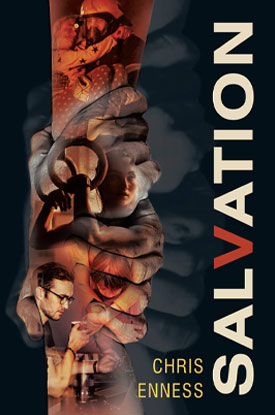
Our team has helped write, publish and market thousands of books over the past decade. Our books are well-written and finished to perfection. Have a look at some of our ghostwriters’ best works and clients’ bestsellers.



Geeks Ghostwriting’s helped me from idea refinement to publishing. I wanted a script on thriller-romance that had multiple twists and turns. I am directing a movie on the story now and our crew has fallen in love with the story!
Having a drama ghostwritten led me to gain the recognition I was seeking. I had an incomplete manuscript and Geeks Ghostwriting helped me complete it. I marketed it and it sold better than I had expected.
I thought that an illustrative self-help book was not possible! As an established designer, I have always wanted struggling designers and students to learn from my mistakes and achievements. The journey that I thought would be arduous turned out to be enjoyable and simple enough. Thank you, Geeks Ghostwriting!