A decision someone with a calendar can actually make.


Business Books
A business book has to survive a Monday. The reader is not owed a tour of your career. They are owed a way to see a problem they already have, with the mess, the incentive, and the number still attached.
A decision someone with a calendar can actually make.
What changed, and what the number does not prove.
The case where the framework should not be used.
Your name on the book. The method stays yours.
What the reader bought
If the chapter’s advice only works when everyone is talented and aligned, you have described a wish. You have not written a tool.
Business readers are impatient in a useful way. They will tolerate a story if it changes a decision they recognize: a pricing argument, a hire, a meeting that keeps producing the same delay. They will not tolerate a memoir of flights and keynotes with the method implied. We start from the decision. Who is in the room, what they are rewarded for, what the cheaper wrong choice looks like. The framework has to name that cheaper choice. Otherwise it is a poster.
Numbers are allowed to be modest. A twelve percent change, a queue that got shorter by a day, a customer who left for a reason you can quote, is more persuasive than a rounded triumph. We will not invent a metric to make a chapter feel researched, and we will not let a single win stand in for a pattern. If the evidence is one company, the chapter should say it is one company. Scope is part of honesty, and honesty is why a skeptical operator keeps reading.
Voice matters more than authors think. The reader can hear a keynote. Short sentences that all land on the same uplifting beat, stories in which you are the only adult, jargon that saves you from being specific. We write the way a competent person talks when they are trying to prevent a colleague from making a known mistake: concrete, a little dry, willing to say when the tool does not apply. Charm can stay. It does not get to replace the limit.
When you are ready
A slide, a memo, or a chapter that turned into a speech. Call (833) 688-4166 or write [email protected].
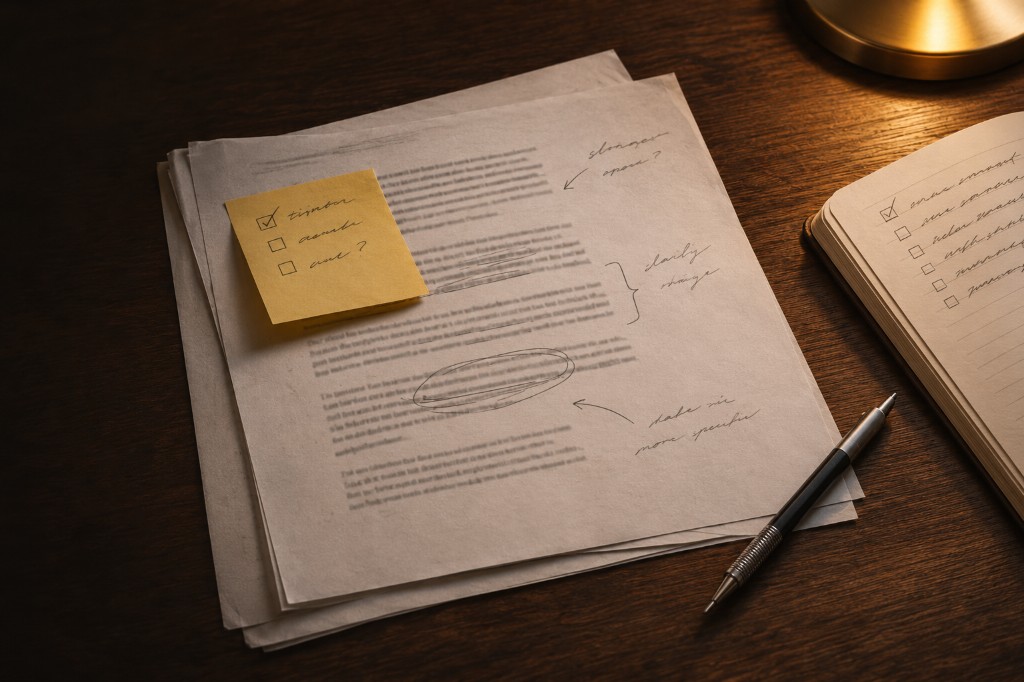
Before the table of contents
A founder, a new manager, a sales lead, an operator inside a company they do not own. The advice changes with the power they actually have. A book for all of them is a book for none of them.
One, named. Hire, price, kill a project, run the meeting, fire a client. If you cannot point to the decision, we are still in the land of themes.
The industry, the size, the personality, the regulation. A framework without a refusal is advertising. We would rather write the refusal in the same chapter as the claim.
Order of the work
Anecdotes are easy to beautify. The test is whether a hostile reader can still use the chapter.
What the reader will be able to do, and what they must already know. This sentence is the book. Chapters that do not serve it get cut, even if the story in them is good.
For each claim: observed, measured, or argued. We keep a note of the source. If the source is “I have seen this,” the prose has to sound like experience, not like a study.
A meeting, a document, a customer call. Written with the boring true details. Then we cut anything that makes you the lone hero if the work was done by a team. Credit is a factual matter.
Last, we try to break each chapter with a case you cannot wave away. Where the chapter breaks, we either narrow the claim or we write the exception in. We do not hide it in a footnote and call the book bold.
We will not ship
Invented ROI, a study we cannot name, a “most leaders” with no ground under it. If we cannot stand next to the sentence, it comes out.
Your career can illustrate a point. It cannot be the point, unless you hired us for a memoir and we have called it a memoir.
Leverage, align, unlock, and their cousins. We say who does what by when. If the sentence still needs the abstraction, the thought is not finished.
Values lists. We rewrite them as the meeting, the hire, or the firing that shows the value is real. If there is no such scene, the value is a wish, and the chapter should admit it.
Questions worth asking first
No. You need a decision you have seen from close enough to describe the failure, not only the win. A freelancer with a sharp method can make a better book than an executive with a communications team and nothing they are willing to have contradicted. What you cannot have is secrecy around every example and a request that the book still sound reported.
If the book depends on their work, yes, and we would rather hear the version that disagrees with yours. Interviews are not there to collect praise. They are there to find the step you have forgotten because you now do it automatically. We do not invent colleagues, and we do not put words in a client’s mouth.
Yes, if you want the commercial and the editorial goals to be the same book, and you say so. A book that is secretly a brochure will be felt. We can write a useful book that also makes your practice clear. We will not write a pitch deck with chapter titles. Tell us what you will not claim in public. That list saves time.
You do. The copyright is yours, including chapters drafted here, unless your employer already owns the ideas by contract. That is your question to settle before we start, not a surprise at the end. We do not reuse your method, your numbers, or your clients as a sample.





The shelf
Our team has helped write, publish and market thousands of books over the past decade. Our books are well-written and finished to perfection. Have a look at some of our ghostwriters’ best works and clients’ bestsellers.

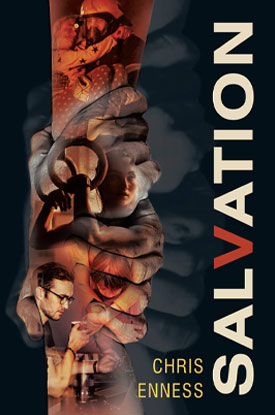


Geeks Ghostwriting’s helped me from idea refinement to publishing. I wanted a script on thriller-romance that had multiple twists and turns. I am directing a movie on the story now and our crew has fallen in love with the story!
Having a drama ghostwritten led me to gain the recognition I was seeking. I had an incomplete manuscript and Geeks Ghostwriting helped me complete it. I marketed it and it sold better than I had expected.
I thought that an illustrative self-help book was not possible! As an established designer, I have always wanted struggling designers and students to learn from my mistakes and achievements. The journey that I thought would be arduous turned out to be enjoyable and simple enough. Thank you, Geeks Ghostwriting!