What the fear wants, and what it cannot do.


Horror
Horror is not a contest of injuries. It is the discipline of letting the reader understand the rule of the fear one moment after the character needed it. If the scare can be swapped for any other scare, the scene has not chosen its monster yet.
What the fear wants, and what it cannot do.
The ordinary place it has permission to enter.
The picture that returns, because it was specific.
Your name on the book. The nightmare stays yours.
How fear actually works on the page
If the chapter’s only news is an injury, we do not have a horror novel. We have a startle.
The books that last on this shelf teach a rule and then keep it. The house answers a question. The thing in the water takes what you look at too long. The voice on the phone knows only what you have already confessed. Once the rule is felt, dread is the reader getting ahead of the character and being unable to help. Random harm, however loud, resets that education every scene. We will not write a book that startles and forgets.
Someone has to want an ordinary thing the horror can spoil. Sleep in a particular bed. A child home on time. A sobriety, a pregnancy, a tenancy, a faith, a friendship that uses the dark as a joke. If the characters exist only to be frightened, the reader has no stake in the room. We write the want first. Then we decide what the fear is allowed to touch, and what it will not cheapen.
Gore is a tool with a short life. Used once, in a scene where the injury changes what someone can do next, it can be honest. Used as punctuation, it becomes a style the reader learns to sit through. We are more interested in the image that returns on page two hundred because it was exact on page twenty: a wet shoe, a hymn sung in the wrong room, a name written in a hand the character buried.
When you are ready
A room, a want, and the first wrong detail. That is enough to start. Call (833) 688-4166 or write [email protected].
Before the set pieces
What it wants, how it arrives, and the one thing it will not do. If the sentence needs a paragraph of exceptions, the monster is still a mood.
Name the life that was workable before the fear. Horror that begins in hell has nowhere to fall from.
A child, a mortgage, a storm, a belief, a job that owns the housing. “They decided to stay and look” is rarely enough past chapter three.
Order of the work
The big scene is cheap if the reader has not already flinched at a smaller proof.
Before the rupture, we write the room as a life: who is tired, what is owed, what the joke is. The later wrongness needs this photograph.
A single impossibility that a practical person could still explain badly. We do not open with the full anatomy of the thing. Recognition should be gradual and, later, embarrassing.
This is where books restage the same shock. We escalate the rule instead: a new cost, a public sighting, a protection that fails for a reason we planted. Volume is not escalation.
Escape, bargain, ruin, or a survival that is not a reset. The last chapter may not invent a weakness the first two hundred pages never paid for. If there is a price for living, we put it on the page.
We will not lean on these
If the only news is the wound, we cut forward to the decision it forces, or we cut the spectacle.
The creature does not get a fresh power every time the outline sags. We replot, or we accept a smaller scene.
People the fear touches get a want that existed before it arrived. Otherwise the book is a sequence of disposable bodies, and the dread thins.
Lore can be a scene if someone needs it in order to act. A lecture that pauses the fear so the author can sound prepared will come out.
Questions worth asking first
Hauntings, body horror, folk horror, psychological dread, and human cruelty are different contracts. We will write the one your rule can carry. We will not mix all of them because a draft feels thin. If the fear is mostly that a mind is lying, we may be in psychological thriller instead, and we would rather move the book than force it to grow fangs.
As graphic as the rule requires, and no more. Tell us what you will stand behind, and who you expect to hand the book to. A nasty image that the scene does not need is not bravery. It is a loss of control. We can be plain about bodies without turning the chapter into a dare.
Yes, if the humor is how these people cope, or how the fear mimics a joke they already tell. A narrator winking about how scary the scary thing is breaks the rule. Comedy that comes from character can sit beside dread. Comedy that apologizes for it cannot.
You do. The copyright is yours, including the chapters drafted at this desk. We do not retell your premise, your house, or your image as a sample that points back to you. Nightmares travel. Yours will not travel from here.





The shelf
Our team has helped write, publish and market thousands of books over the past decade. Our books are well-written and finished to perfection. Have a look at some of our ghostwriters’ best works and clients’ bestsellers.

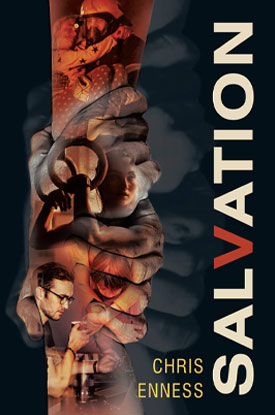


Geeks Ghostwriting’s helped me from idea refinement to publishing. I wanted a script on thriller-romance that had multiple twists and turns. I am directing a movie on the story now and our crew has fallen in love with the story!
Having a drama ghostwritten led me to gain the recognition I was seeking. I had an incomplete manuscript and Geeks Ghostwriting helped me complete it. I marketed it and it sold better than I had expected.
I thought that an illustrative self-help book was not possible! As an established designer, I have always wanted struggling designers and students to learn from my mistakes and achievements. The journey that I thought would be arduous turned out to be enjoyable and simple enough. Thank you, Geeks Ghostwriting!