Literary
Plot as the thing a person cannot bring themselves to say.


Home/Ghostwriting/Fiction
Fiction ghostwriting for novels, novellas, and the manuscript that lost its nerve around chapter six. We settle the voice before anyone piles up pages in the wrong one.
What this work actually is
A ghostwritten novel fails in a particular way. The grammar is tidy. The chapters show up when a schedule says they should. Somewhere in the middle the reader stops believing a person made any of it. That is rarely a plot problem. It is a voice problem, and it starts when a writer reaches for the sentence a “novelist” is supposed to write, instead of the sentence you would write if you had the afternoon.
We spend the first conversations on that difference. What you notice. What you skip. Whether your people talk in full sentences or over each other. Whether the book is funny on purpose. A lot of clients apologize for not sounding literary. There is nothing to apologize for. Literary is a set of choices, not a coat you put on, and the wrong coat is how books start to sound like each other.
If the voice is wrong, a perfect outline only helps you get lost faster.
The third chapter is where hired manuscripts usually start explaining the first one. We try not to. Bring a finished idea, a handful of scenes, or a draft that stalled. The stalled ones are often the better jobs, because the stall is the book telling you something about itself.
The shelf
A romance and a horror novel can both be about a house. They are not the same assignment. This is the range we actually sit with.
Plot as the thing a person cannot bring themselves to say.
A clock, someone under it, and the fact arriving a half-step late.
Fair enough to solve. Surprising that you could.
Want, with a cost. If nothing is risked, it is only a sequence.
A world with rules it does not break to save the ending.
The year has to change what people may do, not just their clothes.
Dread first. If there is a shock, the room already earned it.
One change to the world, followed out past the clever part.
Order of work
Six movements. You are in the room for the ones that decide the book.
 01
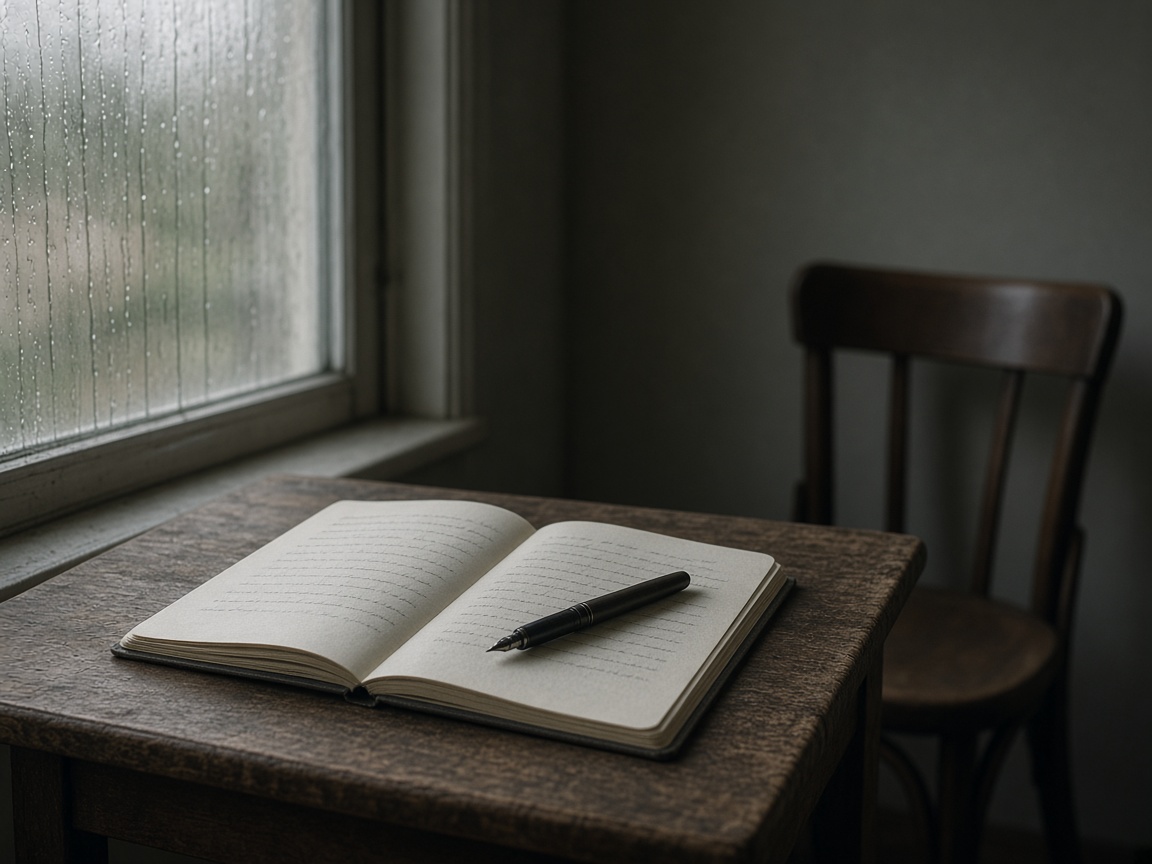
Before an outline, a conversation that is allowed to wander. The scene you already see. The reader you are not writing for. The version of the book you are afraid of. Those three save months.
 02
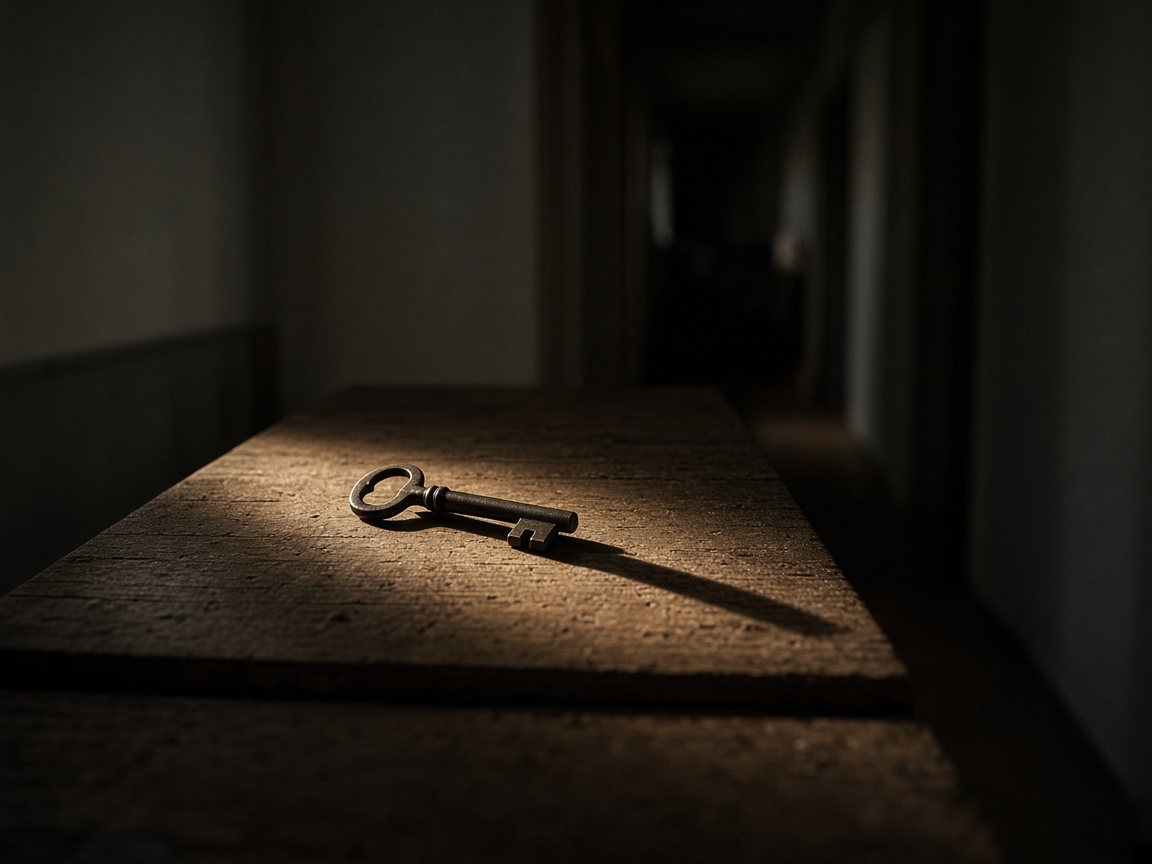
Then an outline. Chapter aims, turning points, what has to change in a person by the last page. It is a document you are meant to mark up. Polite nodding is how a draft goes wrong in private.
 03
Two or three pages in the voice. Sometimes the opening. Sometimes a scene from later, because openings lie. We do not write seventy thousand words in a sound you have not heard.
 04
Chapters arrive in batches. You read them before the book hardens. Notes go in the margin, in your words. “Make it pop” is not a note. “She would never admit this out loud” is.
 05
Every novel sags. Usually where a month got summarized instead of the afternoon that mattered, or where a character is waiting to be needed. We plan for that. It is the work, not a surprise in month four.
 06
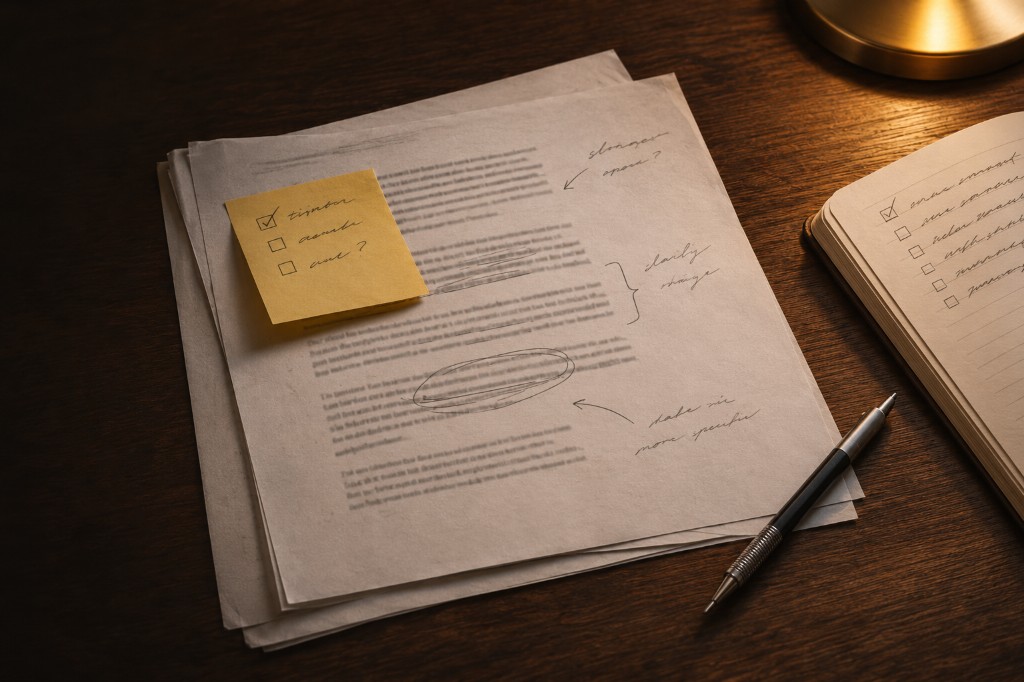
Line work, then a read from someone who never heard the calls. They find the private joke that never reached the page, and the explanation we kept because we were proud of the research.
Temperature
Range is not an adjective. These were written at this desk so you can hear what changes when the book changes. None of them comes from a client’s manuscript.
Literary · close third
The kettle clicked off and nobody got up. Mara kept both hands on the mug. Her brother’s coat had been on the chair since January, and it was March, and the house had organized itself around not being the one to move it. She thought, not for the first time, that grief was mostly admin.
Thriller · tight
He counted them on the way in. Two over the door, one in the lobby he was meant to see, and a fourth in the plastic ivy, which was the one that mattered. The badge on his chest belonged to a man who had called in sick. He had forty minutes before that man stopped being sick.
Romance · after
She knew him by the way he held the paperback, thumb breaking the spine, which she had once told him was a crime. Six years. A station that smelled like rain and oranges. He looked up the way people look up when they have been rehearsing it, and then he didn’t say the line.
House rules
Your story stays yours. Our job is to make it stronger.
We will not invent a wound so a chapter has somewhere to land.
We will not dress your book in a voice you use for company and drop at the kitchen table.
We will not vanish after the first full draft and call whatever follows “revisions” in an email.
We will not put our name near the cover. The book is yours. That includes the copyright, and the quiet around how it was written.
Before you write in
If yours isn’t here, ask it in plain language. A person answers.
No. Some of the better books we have taken on arrived as a person, a situation, and a feeling about the ending. You do need to care which ending it is. If any ending will do, it isn’t a novel yet. It might become one. That conversation is still worth having.
It will sound like the voice we agree on. That is usually closer to you than you expect, and cleaner than the draft you would have written at midnight. If you already have pages, we tune to those. If you don’t, the voice pages exist so you can hear the book before it is long.
Often. We read what you have before we promise anything. Sometimes the stall is structural and the book can be picked up. Sometimes the voice on the page and the voice in your head have parted ways, and the honest recommendation is to begin again with what you learned. We will say which.
A full-length novel commonly runs four to seven months once we are working. Shorter if the book is short and notes come back quickly. Longer if the story changes its mind, which stories do. We would rather give you a true range than a number that looks good in a headline.
You do. Your name, the copyright with you, and no public credit for us unless you ask, which almost no one does. If you want the paperwork in hand before a document is opened, say so. We would rather send it first than explain it later.
Your time at the points that decide the book: the outline, the voice pages, and each batch of chapters. Silence slows a novel down. Disagreement does not. Disagreement is useful. A note that says what feels false is worth more than a week of polite approval.
When you are ready
A scene, a stalled file, or a paragraph you would be embarrassed to show anyone else. That is enough to start. Call (833) 688-4166 or write [email protected].






The shelf
Our team has helped write, publish and market thousands of books over the past decade. Our books are well-written and finished to perfection. Have a look at some of our ghostwriters’ best works and clients’ bestsellers.


Geeks Ghostwriting’s helped me from idea refinement to publishing. I wanted a script on thriller-romance that had multiple twists and turns. I am directing a movie on the story now and our crew has fallen in love with the story!
Having a drama ghostwritten led me to gain the recognition I was seeking. I had an incomplete manuscript and Geeks Ghostwriting helped me complete it. I marketed it and it sold better than I had expected.
I thought that an illustrative self-help book was not possible! As an established designer, I have always wanted struggling designers and students to learn from my mistakes and achievements. The journey that I thought would be arduous turned out to be enjoyable and simple enough. Thank you, Geeks Ghostwriting!