The objection a real buyer uses, in their words.


Sales & Marketing
A sales or marketing book has to know who is being asked to part with money, what they already tried, and why a sensible person would say no. We write that no. We do not write a trick for getting past it.
The objection a real buyer uses, in their words.
A title, a budget, a fear. Not “the customer.”
What you will not say to make the quarter.
Your name on the book. The pipeline stays private.
The work, not the slogan
If the tactic only works on someone who was not paying attention, it is not marketing. It is a hope they stay careless.
Sales books drift into courage. Make the call. Believe. Those are not instructions. An instruction is who you call, what you know before you dial, what you say when they tell you the budget died in March, and what you write down so the next call is not a repeat of your nerves. Marketing books drift into taste. A beautiful campaign with no buyer, no offer, and no way to tell it failed. We start from the offer: what changes for the buyer, what it costs them besides money, and how they will know it worked.
We will not write deception. False scarcity, a review you did not earn, a dark pattern, a script whose point is to keep someone from understanding the price. Pressure is not the same thing as clarity. A fair book can still be commercially sharp. It tells the truth faster than the buyer expected, and it can survive a buyer who reads carefully. If your method cannot survive a careful buyer, we should not bind it.
The examples have to be allowed. A client’s numbers, a campaign’s spend, a lost deal. Rounded “we 10x’d” with no period and no spend is how this shelf became a joke among people who do the job. We would rather one honest quarter, including the leads that were garbage, than a highlight reel. Your reader is trying not to waste a quarter of their own.
When you are ready
A call, a page, or a framework that has not met a buyer yet. Call (833) 688-4166 or write [email protected].
Before the framework gets a name
A founder, a procurement office, a parent, a local shop. What they are afraid of spending, and who else must say yes. If you sell to “anyone,” you have not sold.
A call, a visit, a page, a sample, a renewal. The book should teach one motion well. A tour of every channel is a magazine.
The one that made the number and cost the trust. If it is still in the method, the book is a confession you have not decided to make. We should decide before we outline.
Order of the work
Won deals flatter the method. Lost deals show whether it was a method.
Who it is for, what they get, what they pay, why a careful person hesitates. If this page needs jargon, the offer is not clear yet.
Three real objections and the response that does not insult them. We cut any line that tricks, rushes, or pretends the price is other than it is.
Spend, replies, a close rate, a season. What it does not prove. Vanity metrics get labeled or deleted.
The wrong product, the wrong buyer, the team too small to run the motion. A method without a refusal is a course outline.
We will not script
False deadlines, hidden fees, a question designed so “no” is socially impossible. The reader’s commission is not a reason.
Funnels, flywheels, and narratives, stacked so a practitioner cannot tell what to do on Monday. We keep the verb.
Your morning routine is not the marketing. If the chapter does not change an offer or a conversation, it is a diary.
Revenue without cost, and without the leads you threw away. We do not print the half.
Questions worth asking first
Yes, if they are true. A script can help a new seller survive the first minute. It cannot be a device for confusing the buyer, and it should sound like a person, not a template with the nouns swapped. We read them aloud. If we feel the trick, the buyer will too.
It can make your practice clear. It cannot pretend to be a neutral textbook while every road leads to your invoice. Tell us which book you want. Readers forgive a commercial point of view. They do not forgive a disguise.
Then we write the pattern without the costume that identifies the client, or we leave the story. A blurred logo is not anonymity if the campaign was famous. You know which details a competitor would recognize. We will ask. We will not guess and publish.
You do, unless your company owns the method. Settle that before we sound like you in print. We do not reuse your pipeline, your lines, or your clients as an example.





The shelf
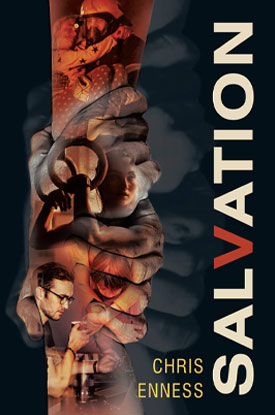
Our team has helped write, publish and market thousands of books over the past decade. Our books are well-written and finished to perfection. Have a look at some of our ghostwriters’ best works and clients’ bestsellers.



Geeks Ghostwriting’s helped me from idea refinement to publishing. I wanted a script on thriller-romance that had multiple twists and turns. I am directing a movie on the story now and our crew has fallen in love with the story!
Having a drama ghostwritten led me to gain the recognition I was seeking. I had an incomplete manuscript and Geeks Ghostwriting helped me complete it. I marketed it and it sold better than I had expected.
I thought that an illustrative self-help book was not possible! As an established designer, I have always wanted struggling designers and students to learn from my mistakes and achievements. The journey that I thought would be arduous turned out to be enjoyable and simple enough. Thank you, Geeks Ghostwriting!