Status, loyalty, and the friend who knows the true version.


Middle Grade
Middle grade is for readers old enough to manage a secret and young enough that home and school are still the whole map. The joke has to be one they are in on. The danger has to be one they could actually walk toward and still be believed at the end of the day.
Status, loyalty, and the friend who knows the true version.
What is allowed at school is not what is allowed at the kitchen table.
Information a kid can act on, not a prophecy they must carry.
Your name on the book. The world stays yours.
The contract with this reader
If the joke is about kids, rather than a joke a kid would repeat, the book has already chosen the wrong room.
Middle-grade readers are past being told what a chapter meant, and not yet interested in a narrator who treats adolescence as a thesis. They want competence, unfairness, and friendship with rules. A club, a team, a sibling bargain, a mystery in a building they are actually allowed to enter. We write the power they do have: bikes, group chats if the age is right, knowledge of which teacher is strict, the ability to notice that an adult is lying. Then we write the power they do not have, and we do not pretend a clever plan erases a parent.
Humor is structural. It is how status moves in a scene: who can tease, who is not allowed to tease back, what happens when a joke lands on the wrong person. A string of bits between the real plot reads as a writer performing. We would rather one repeated gag that the friends own, and that turns serious when someone uses it as a weapon. That is a middle-grade move. A narrator winking at the ceiling is not.
The danger stays inside a world a child can return from. Adventure is welcome. So is a real problem at home: money, a move, an illness in the family, a parent who is wrong. What we will not write is terror, cruelty, or a romantic plot as the engine. A crush can be a fact of the year, the way a crush is a fact in a classroom. It is not the book’s promise, and it is not a scene we push past embarrassment into a territory this shelf does not own. If your story needs that, it is young adult, and we should call it young adult.
When you are ready
A school, a secret, and the adult who must not find out yet. Call (833) 688-4166 or write [email protected].
Before the adventure gets bigger than the kid
Someone whose goal would still matter if the hero left town. Sidekicks who only assist are how middles go slack. The argument between friends is often the real clock.
Curfew, a suspicious parent, a school that notices absence. Magic, mystery, or a heist that forgets the adult world after chapter four will feel like a costume by chapter ten.
If there is a puzzle, the reader needs the pieces. Middle-grade readers are not forgiving of a clue that lived in the narrator’s pocket. Fair is part of the pleasure.
Order of the work
A quest with nobody to disappoint is a video game. The disappointment is the novel.
Who eats where, who is good at the thing, who is tolerated. We need this before the inciting weirdness, or the weirdness has no social cost.
The first plan should be wrong in a way a careful kid could notice. The friend who objects is not a drag. They are the book’s intelligence, unless the hero earns the right to overrule them.
Someone almost tells. Someone is left out. The adult world brushes the plot and misunderstands it. We do not add a second villain because the first plan was thin.
What they did, who forgave them, what the adult still does not know. Victory that humiliates a friend, or that requires an adult to become a fool, will be rewritten.
Off this desk
If we have to say what friendship means, the friendship scenes failed. The last chapter can show a changed seat at the table. It should not explain the seat.
A gift, a gadget, or a convenient adult that solves the social knot. We will take the power away or price it. The knot is the point.
Pairing kids off to make the ending feel finished is a different shelf’s habit. We will not import it.
A scare can exist. A book that wants the reader afraid to turn the page is not middle grade, even if the hero is eleven. We will say so early.
Questions worth asking first
Roughly eight to twelve, and the plot has to work for a reader in that range without boring the older ones by explaining jokes. If your protagonist is fourteen and the stakes are a job, a household they help run, or a loyalty that could wreck a reputation at school in an adult way, look at young adult. If they are six and the book is thirty-two pages, it is a picture book. The age on the cover should match the jurisdiction in the plot.
Sad, yes, if the feeling is specific and the child is not left as a symbol of it. A move, a sick grandparent, a friendship that ends. Scary, within limits: a mystery, a night in a familiar building, a bully with a real social power. We will not write graphic harm, and we will not leave a child in a terror the book treats as entertainment.
Enough that the book sounds like people this age, not so much that the plot is a setup for bits. Bring a book whose comedy you think is fair, not just loud. We will match the intelligence of that comedy, not the catchphrases.
You do. The copyright is yours, including the world and the chapters drafted here. We do not reuse your kids, your school, or your magic system as an example. If the story is drawn from a real child in your life, tell us before we make them funnier or braver than the living person can bear.





The shelf
Our team has helped write, publish and market thousands of books over the past decade. Our books are well-written and finished to perfection. Have a look at some of our ghostwriters’ best works and clients’ bestsellers.

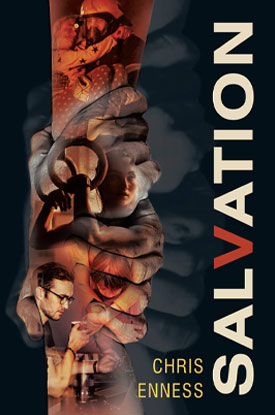


Geeks Ghostwriting’s helped me from idea refinement to publishing. I wanted a script on thriller-romance that had multiple twists and turns. I am directing a movie on the story now and our crew has fallen in love with the story!
Having a drama ghostwritten led me to gain the recognition I was seeking. I had an incomplete manuscript and Geeks Ghostwriting helped me complete it. I marketed it and it sold better than I had expected.
I thought that an illustrative self-help book was not possible! As an established designer, I have always wanted struggling designers and students to learn from my mistakes and achievements. The journey that I thought would be arduous turned out to be enjoyable and simple enough. Thank you, Geeks Ghostwriting!