A toddler and a twelve-year-old are different books. Pick one.


Parenting
A parenting book is a promise to an adult who is tired and still has to decide something before bed. It is not a theory of childhood, and it is not a list of virtues. We write the hour the advice has to survive: the kitchen, the car, the morning that is already late.
A toddler and a twelve-year-old are different books. Pick one.
The advice has to fit a kitchen, a shift, and a sibling in the room.
What you will not tell a parent to do, said in the chapter.
Your name on the book. Your child’s life stays private unless you have decided otherwise.
Who is holding the book
If the method only works when the house is quiet and the child is reasonable, you have written a wish.
Parenting manuscripts fail by floating. They describe a calm adult and a child who receives a lesson, and they skip the fact that dinner is burning and someone is late for a shift. We start from the constraint. One adult or two. A job with a clock. A child of a named age, with a sibling or without. Advice that ignores the constraint is advice for a household that does not exist, and the parent who bought the book will feel it by chapter two.
Evidence has to be labeled. Your years in a classroom, your own house, a named study, a clinician you are not pretending to be. “Research shows” is not a veil. If you are not a pediatrician, a therapist, or a teacher of this age, the book can still be useful and it has to sound like what you are. We will not invent a percentage to make a chapter feel official, and we will not tell a parent to ignore a doctor because the story wants a braver narrator.
A child in the book is a person, even at two. We do not use them as a punchline for adults, and we do not publish a real child’s humiliations because they make a point. If the scenes are yours, we talk about what an older version of that child could bear to read. Composite kids are allowed when they protect a real one. A book that needs a specific child’s private trouble, unaltered, needs that child’s privacy considered before a draft exists.
When you are ready
A kitchen, a conflict, or a chapter that turned into a lecture. Call (833) 688-4166 or write [email protected].
Before the ten principles
Not “kids.” The year the problem actually lives: sleep at one, friendship at eight, a phone at thirteen. The sentences change. So does what a parent is allowed to decide.
Who cooks, who is away, what money makes impossible. A method that requires a second adult every afternoon has to say so, or it is advice for someone richer in time than your reader.
A punishment, a product, a shame. Write the refusal down. Parenting books do harm when they get vivid about control and vague about the child.
Order of the work
Principles are easy to admire at midnight. The afternoon is where the parent finds out you have been in a house.
Bedtime, lying, a sibling, a school refusal, a screen, a co-parent who disagrees. If the book is about all of childhood, it will help with none of it. We cut until the promise fits a cover.
What was said in the kitchen. What the adult did next, including the time they did it badly. Then the move you are actually willing to repeat. Stories that only show the wise version get rewritten.
A partner, an ex, a grandparent, a teacher. Parenting advice that pretends the reader is the only grown-up in the child’s life will fail in the first week. We write the disagreement.
When this is a medical, developmental, or safety question the book must not answer. That sentence belongs in the chapter, not in a whisper at the back.
We will not print
If you never lose the hour, the reader cannot use you. The missed bedtime belongs in the book.
The reader is today’s parent. Scolding them for being tired is not a method.
Nicknames, school details, and humiliations that a family could recognize. We change them or we leave them out.
We will not write ways to frighten, shame, or overpower a child and call it a boundary. A boundary can be described plainly. A contest with a smaller person cannot.
Questions worth asking first
You need to be honest about what you are. A teacher, a pediatric clinician, a parent of this age, a person who has worked in care. The book can be practical without a license if it does not impersonate one. The moment you tell a reader to change a medication, ignore a school evaluation, or handle a crisis alone, we stop and put that sentence back in the hands of someone qualified.
Yes, if you have thought about them as future readers, not only as material. We will ask what they would recognize and what should be blurred. A funny story at four can be a betrayal at fourteen. That is a writing decision, made now, not after the book is in a grandparent’s house.
Then the book should say how a household acts when the adults are not aligned, or it should be honest that the method assumes agreement. Silent contempt for the other parent is not guidance. It is a second book, about the marriage, leaking into this one.
You do. The copyright is yours, including chapters drafted here. We do not reuse your children, your house, or your method as a sample. A child’s life is identifiable. We treat that as a reason to be quieter.





The shelf
Our team has helped write, publish and market thousands of books over the past decade. Our books are well-written and finished to perfection. Have a look at some of our ghostwriters’ best works and clients’ bestsellers.

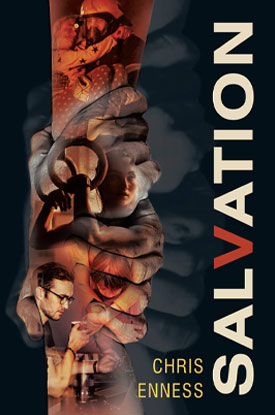


Geeks Ghostwriting’s helped me from idea refinement to publishing. I wanted a script on thriller-romance that had multiple twists and turns. I am directing a movie on the story now and our crew has fallen in love with the story!
Having a drama ghostwritten led me to gain the recognition I was seeking. I had an incomplete manuscript and Geeks Ghostwriting helped me complete it. I marketed it and it sold better than I had expected.
I thought that an illustrative self-help book was not possible! As an established designer, I have always wanted struggling designers and students to learn from my mistakes and achievements. The journey that I thought would be arduous turned out to be enjoyable and simple enough. Thank you, Geeks Ghostwriting!