Inside the years
- First person, unless distance is the point
- Your memory, checked where a date would embarrass you later
- Family treated as people, not as furniture in your story

The usual failure
Autobiography fails when every chapter proves you were right. Biography fails when it becomes a fan letter, or a prosecution. After two hundred pages the reader should recognize a person, including the parts that do not flatter them. A life with no error in it is not inspiring. It is unreadable, because the reader cannot find a mind they trust. The interesting pages are the ones where the person can see the choice they would not make again, and can say so without a speech about growth.
We will ask which book you actually want before anyone opens a document. Families often say biography and mean a tribute. The tribute can be written. It should not be called the life. If the family needs every chapter to land as affection, say that at the start. We can write a shorter, warmer book on purpose. What we will not do is research a life and then sand it until it matches the speech at the funeral.
If the subject can still answer
The first answers are the ones they have given at dinners. We write them down and then leave them. They are not useless. They show the story the person has already made fit for company. The book usually starts where that story gets impatient with itself.
We come back to the decision they describe too quickly. Speed is usually a door. A career summarized in four sentences often has a year inside it that still stings. We ask about that year twice. If they will not open it, the chapter has to be honest about the closed door, not decorated around it.
A second person who was in the room gets the same question. The gap between the answers is material, not a problem to erase. Two honest accounts that do not match are more trustworthy than one smooth chapter that borrowed the best line from each. We show you the gap before we decide which one the book can carry.
You read the chapter before it hardens. “That is not how it felt” is a useful note. “Make it inspiring” is not. Feeling is the subject’s. Shape is ours, until the shape has started to lie. We would rather lose a tidy ending than keep a sentence the person says they would not stand behind at their own table.
Check the record
Letters, a desk nobody has sorted, and the relative who still winces. We will tell you early if the book you want cannot be sourced. A life invented around a few anecdotes is a different product, and we will not put a biography’s name on it. Anecdotes are a start. They are not a record. If the papers are thin, the book has to get shorter, or it has to say, in the text, what it does not know. Inventing the missing Tuesday is how a family history becomes fiction without admitting it.
Permission is not a mood. If a living person is identifiable and the story can hurt them, we stop and ask you to decide in writing. We would rather lose a vivid chapter than hand you a problem in print. The estate’s wish is not the same as every cousin’s wish. We will ask who actually has the right to approve a chapter, and we will not workshop that question in the margins after the book is already lovely.
Plain answers
A person can write their own life with help, and that is an autobiography. A writer can research someone else’s life, and that is a biography. Doing both at once, about yourself, usually means you want the glamour of research and the control of memory. Pick the one you are willing to live with. An autobiography can mention the record. It does not become a biography because a few letters were checked. A biography can quote the subject. It does not become theirs because they liked the chapter.
Living subjects often do. We build that into the schedule. Approval of facts is fair. Approval that removes every disagreement is how a biography becomes a press kit. We will say which notes we are taking, and which we are pushing back on. If the condition of the project is that nothing difficult survives, we would rather know that before the interviews, when the book can still be designed as a shorter, kinder thing on purpose.
A focused life, with a willing subject, often runs five to eight months. A biography that depends on archives takes as long as the papers take. You own the copyright. Our name stays off the cover unless you ask for it. The months are not a production mystery. They follow the interviews, the sample chapter, and the reading you still have to do. If the papers are in another city, or a relative is slow to open a drawer, the calendar has to say so before anyone promises a season.
Start with the distinction
That is the whole brief for a first conversation.
Call (833) 688-4166 or write [email protected].





The shelf
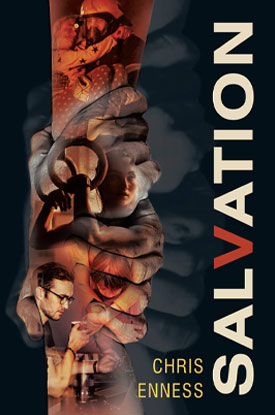
Our team has helped write, publish and market thousands of books over the past decade. Our books are well-written and finished to perfection. Have a look at some of our ghostwriters’ best works and clients’ bestsellers.



Geeks Ghostwriting’s helped me from idea refinement to publishing. I wanted a script on thriller-romance that had multiple twists and turns. I am directing a movie on the story now and our crew has fallen in love with the story!
Having a drama ghostwritten led me to gain the recognition I was seeking. I had an incomplete manuscript and Geeks Ghostwriting helped me complete it. I marketed it and it sold better than I had expected.
I thought that an illustrative self-help book was not possible! As an established designer, I have always wanted struggling designers and students to learn from my mistakes and achievements. The journey that I thought would be arduous turned out to be enjoyable and simple enough. Thank you, Geeks Ghostwriting!