The brief that is allowed to be untidy
What the book is for. Who it is not for. The claim you will not make even if it would sell. Those three save a season.


Home/Ghostwriting/Nonfiction
Nonfiction ghostwriting for founders, practitioners, and people sitting on a decade of work that has not yet become a book. We settle the argument before anyone starts stacking chapters.
The actual job
Most nonfiction fails in a dull way. The author knows a great deal. The chapters are informative. And a reader cannot tell why this page follows that one. Information is not an argument. A book has to decide what it is for, and then leave the rest out.
People arrive with a folder of talks, a method they use with clients, a record of years inside an industry, or a story they are finally allowed to tell. The material is usually better than they think. The shape is usually worse. We are hired for the shape, and for sentences a person can follow on a Tuesday night.
If every chapter is important, the book has no spine.
Bring the mess if that is what you have. A clean pitch is less useful than the claim you keep circling, and the example you are slightly afraid to use.
A chapter has to arrive somewhere. “More about leadership” is not an arrival.
It has to rest on something a reader can trust, not on the warmth of your certainty.
It has to sound like one person. Committees write brochures.
It has to make the next chapter feel necessary, or the next chapter should not exist.
The shelf
A business book and a work of reported narrative can both be about a company. They are not the same assignment. Open a row.
Order of work
Writing too early is how experts produce long, polite chapters that do not add up.
What the book is for. Who it is not for. The claim you will not make even if it would sell. Those three save a season.
The thesis, said so a stranger could repeat it on the way out of a room. If it keeps swelling back into a paragraph, we are not ready to outline.
Each chapter gets a job, not a topic. “Leadership” is a topic. “Why the offsite did not change Monday” can be a chapter.
Interviews, documents, the afternoon only you were in the room for. We mark them differently. Memory is allowed. It is not a footnote.
We write that one before the long draft. It is usually the chapter where the method is explained. If it goes soft there, the rest of the book will too.
You read in batches, while the structure can still move. “Make it punchier” is not a note. “This is not how the deal actually died” is.
A chapter can be elegant and still be wrong. Those are separate jobs, done in that order. Then a reader who was not on the calls.
On the page
Written at this desk as exercises, so you can hear the difference. None of this is from a client’s manuscript.
Argument
Most companies do not have a strategy problem. They have a permission problem. The plan was agreed in January. By March, the only people allowed to mention it were the ones who could not change it. Call that culture if you like. It is a set of permissions with a nicer name.
The claim goes first. The office is there so a reader can test it against a room they know.
Explanatory
A habit is not a decision you keep remaking. It is a path the day already knows. The useful question is not how to become disciplined. It is what happens in the ten minutes before you usually quit.
One mechanism. No pep talk riding on the back of it.
Reported
By seven-twenty the chairs on the left were full, and the board by the door still read twelve. The office manager had stopped calling the late patients. She said it only taught them the list was a suggestion. Tuesday, March, forty people before noon.
Scene, then the number that keeps it from being a sketch.
House rules
Seven principles, because seven looks like a book.
The three that change the work, and a clear reason the other four were cut.
A study says, with no study attached.
Who studied whom, what they found, and what they did not find.
In today’s fast-changing world.
The specific room, year, and constraint. If it was 2019, it was 2019.
A wound invented so the chapter has a moral.
The story you can stand behind if the person in it reads the page.
Our name, somewhere discreet, on the jacket.
Your name. The copyright with you. We are not mentioned unless you ask.
You bring
The desk brings
Before you write in
No. An outline you invented to sound organized can be worse than the mess. Come with the claim, the reader, and the material you already have. If the claim is still fuzzy, say that. Finding it is part of the work, and we would rather do it at the start than in chapter six.
Yes. That is a common way these books begin. We will not paste the talks into chapters and call it done. A talk is built for a room. A chapter is built for a person alone. The ideas can move. The shape almost always has to change.
When the book needs a voice that is not yours, yes. We do the calls, or we work from recordings you already have. Quotes get checked back with the person who said them whenever that is possible. A vivid line we cannot stand behind does not go in.
We keep a list as we go. A claim that cannot point at something — a document, a study, a named person, your records — gets rewritten or cut. Your own experience can carry a chapter. It has to be labeled as yours, not dressed up as research.
We ask, early, what you can say in public. Living people, employers, patients, clients, family. Memory is not the same thing as permission. If a story only works because someone cannot answer it, it is the wrong story for this book.
A full nonfiction book commonly runs four to eight months once we are working. Shorter if the book is short and the material is already in hand. Longer if it still needs reporting. You own it. Your name, the copyright with you, and no public credit for us unless you ask. If you want the paperwork before a document is opened, say so.
When you are ready
A paragraph, a folder of talks, or the chapter that stalled. That is enough to start. Call (833) 688-4166 or write [email protected].





The shelf
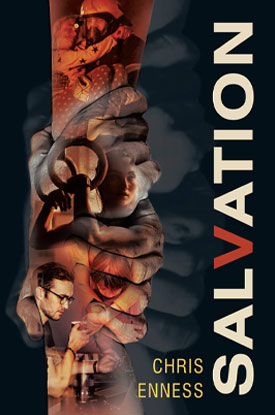
Our team has helped write, publish and market thousands of books over the past decade. Our books are well-written and finished to perfection. Have a look at some of our ghostwriters’ best works and clients’ bestsellers.



Geeks Ghostwriting’s helped me from idea refinement to publishing. I wanted a script on thriller-romance that had multiple twists and turns. I am directing a movie on the story now and our crew has fallen in love with the story!
Having a drama ghostwritten led me to gain the recognition I was seeking. I had an incomplete manuscript and Geeks Ghostwriting helped me complete it. I marketed it and it sold better than I had expected.
I thought that an illustrative self-help book was not possible! As an established designer, I have always wanted struggling designers and students to learn from my mistakes and achievements. The journey that I thought would be arduous turned out to be enjoyable and simple enough. Thank you, Geeks Ghostwriting!