How the money actually moves, in words a client could repeat.


Finance & Investing
A finance book explains a mechanism: a fee, a time horizon, a way a person can lose the money. It is not a pitch with the downside moved to a footnote. We do not promise a return. We write the decision a reader can make with the numbers still on the table.
How the money actually moves, in words a client could repeat.
The fee, the tax, the year it ties up.
The ordinary way this goes wrong, not a rare disaster.
Your name on the book. The numbers stay sourced.
What this reader is risking
If the chapter would sound different in a year when the market is unkind, write the unkind year now.
Readers of this shelf are about to do something with money they may not be able to replace. That fact changes the prose. A clever analogy is not a favor if it hides a fee, a lockup, or a sequence of returns that depended on a decade the reader cannot order again. We write the mechanism in plain order: what you pay, what you own, what can go to zero or simply disappoint, and what the author does not control. Optimism can be in the book. It does not get its own chapter while the risk lives in a box at the back.
Numbers have to be the numbers. We will not round a career of results into a story, invent a compound path, or let a single household stand in for a rule. If the data is historical, we say the period. If the example is hypothetical, we label it before the reader can feel it as a promise. “Imagine” is a word we keep visible. So is “past.” A manuscript that slips from one to the other in the space of a paragraph is the manuscript that gets people hurt, and it will not leave this desk in that condition.
Who the book is not for belongs beside the method. A person with high-interest debt, a person who needs the money in two years, a person being sold a product the author also sells. Conflicts are disclosed in human sentences, not in a hedge the marketing will later regret. If you are writing toward a practice, say so. A useful book can also be commercially clear. A book that pretends to be neutral while it walks the reader to one door is a sales letter, and we will name it before we agree to dress it as education.
When you are ready
A chapter, a chart, or the sentence you hope we will soften. Call (833) 688-4166 or write [email protected].
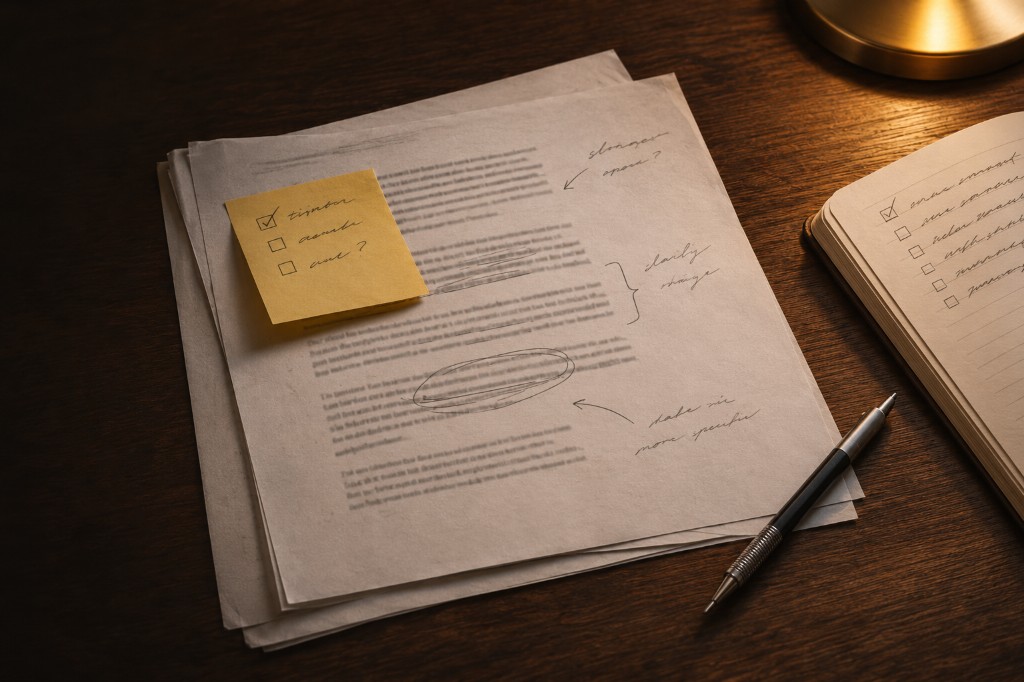
Before any chart
Adviser, operator, journalist, or a person teaching what they did with their own accounts. The reader deserves that role in chapter one, including how you are paid if you are paid when they act.
Age, debt, a short horizon, a pension they cannot touch. Advice for a person with surplus capital is a different book from advice for a household one bill from trouble. We will not merge them and call it “everyone.”
A rate, a date, a lifestyle. Write it down. Every time the draft drifts toward it, we have a sentence to return to, instead of a negotiation with your enthusiasm.
Order of the work
The winning case is easy to remember and bad at teaching. The ordinary loss is the chapter.
Inputs, fees, time, what the reader owns at the end, what can interrupt it. If this page requires a slogan, we do not understand it yet.
Every load-bearing number gets a source and a date. Hypotheticals are marked in the paragraph, not only in a footnote. We would rather use a round illustration than a precise-looking fiction.
A bad year, a needed withdrawal, a fee drag, a tax. Written next to the upside, in similar detail. If the downside is shorter and vaguer, we are selling, and the revision continues.
Who pays you, what you cannot know about the reader, and the sentence that sends them to a fiduciary, a tax professional, or nobody if the right answer is to do nothing. Doing nothing is sometimes the responsible chapter.
We will not publish the sound of
No rate the reader is invited to expect. Historical ranges can be described as history. A lifestyle at the end of a compound curve cannot.
If the idea is sound, it can survive being ordinary. Secrecy is how bad books create urgency. We write the idea so a skeptical friend could argue with it.
Alpha, optionality, and the rest, used to keep the reader impressed rather than informed. We define the term in the act, or we use the plainer word.
If a chapter exists to arrive at one fund, one course, or one firm, the chapter has to say that is what it is doing. We will not hide the door in a fable about freedom.
Questions worth asking first
No. We are writers. We will not tell you, or your reader, what to buy. We will help you explain a mechanism you already understand and keep the risk in the sentence. If your book gives individualized advice, that advice has to be yours, inside your license, and reviewed by the compliance process you actually have. We do not provide that review.
Only if we can say the period, the context, and what a reader should not generalize from it. A good decade is not a method. We will not annualize a story into a promise, and we will not omit a bad year because it hurts the arc. If compliance must approve the figures, build that time into the schedule before we polish.
Then the job is vocabulary, fees, and the ways beginners get parted from money, written without contempt. We will not open with a lecture about latte habits and call it a plan. A beginner needs to know what a fee is and what a horizon is. They do not need to be shamed into a personality.
You do. The copyright is yours, including chapters drafted here. We do not reuse your strategy, your clients, or your numbers as a case study. If your firm owns the work product, that agreement needs to exist before we write, so nobody is surprised by a voice they cannot publish.





The shelf
Our team has helped write, publish and market thousands of books over the past decade. Our books are well-written and finished to perfection. Have a look at some of our ghostwriters’ best works and clients’ bestsellers.

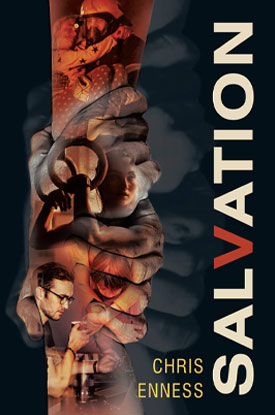


Geeks Ghostwriting’s helped me from idea refinement to publishing. I wanted a script on thriller-romance that had multiple twists and turns. I am directing a movie on the story now and our crew has fallen in love with the story!
Having a drama ghostwritten led me to gain the recognition I was seeking. I had an incomplete manuscript and Geeks Ghostwriting helped me complete it. I marketed it and it sold better than I had expected.
I thought that an illustrative self-help book was not possible! As an established designer, I have always wanted struggling designers and students to learn from my mistakes and achievements. The journey that I thought would be arduous turned out to be enjoyable and simple enough. Thank you, Geeks Ghostwriting!