What they need before they start, including the thing they can skip.


How-To Books
A how-to book is a procedure with a result someone else can check. Tools, order, the step where people quit, and a way to tell the work failed. Inspiration can introduce it. Inspiration cannot be step three.
What they need before they start, including the thing they can skip.
Hands in sequence. Not a cloud of tips.
How the job looks when it has gone wrong.
Your name on the book. The method stays one you have done.
The promise on the cover
Tips are what experts say when they do not want to watch a beginner struggle. The struggle is the book.
How-to is a form, not a subject. It can be a craft, a piece of software, a repair, a kitchen, a first management task. The test is the same. A stranger with the tools you named can follow the chapter and produce something you could recognize as the thing, or recognize as a specific mistake. If the outcome is a feeling, you are on a different shelf, and we should say so before we number the steps. Numbering a mood does not make it a procedure.
We write at the altitude of a real beginner, which is lower than experts remember. Experts skip the step their hands learned years ago: which way the clamp faces, which menu is hidden, when to stop sanding. Those skipped steps are why readers blame themselves. We pull them back onto the page, even when they embarrass you. A tester who is not you then tries the chapter alone. Their questions are not nitpicks. They are the revision.
Safety and honesty sit in the step, not in a box at the end. If a tool can hurt someone, the warning is attached to the moment they pick it up. If a result takes longer than the cover wants, the time goes in the chapter. We will not write a dangerous procedure we do not understand, and we will not write one whose point is harm. A how-to that shows a person how to injure, deceive, or break into something is not a project we will take because the form is clever.
When you are ready
A process, a failed draft of tips, or a beginner you are willing to watch struggle. Call (833) 688-4166 or write [email protected].
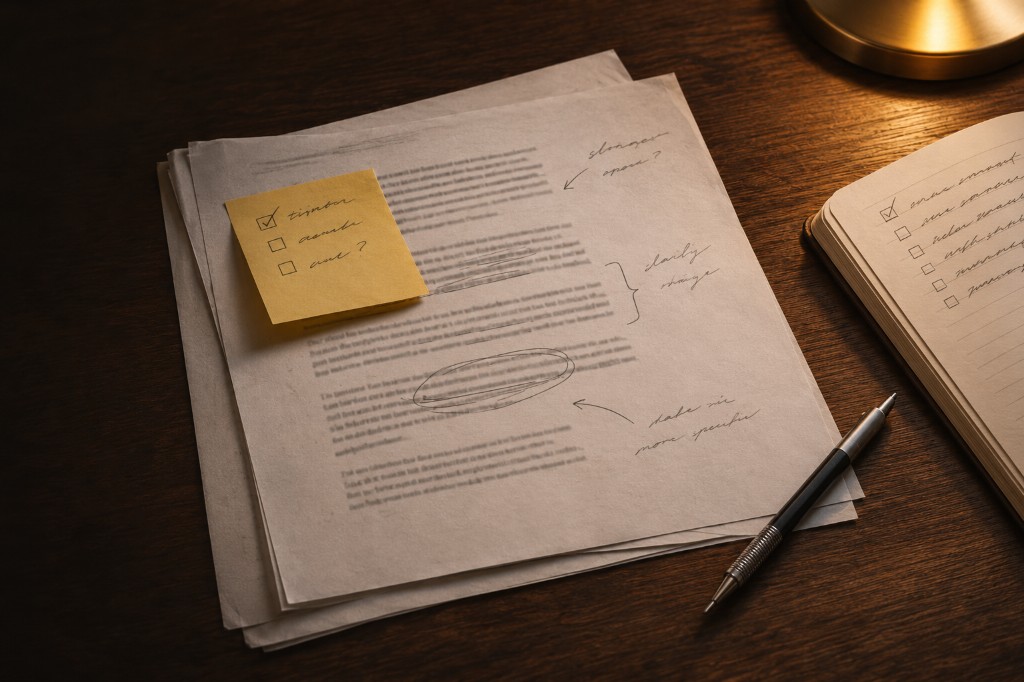
Before the steps get numbered
Their tools, their time, their vocabulary. A chapter for a professional and a chapter for a first-timer are different books. A book that winks at both will lose both.
What “done” looks like, in a form a stranger can compare to their own result. If you cannot point at it, we cannot tell whether the steps worked.
The expensive tool, the ugly middle, the week of drying, the permission they need. “Anyone can” is usually the first lie.
Order of the work
Flourishes are how experts show off. Beginners need the path and the ditch beside it.
Tools, materials, the thing they should not buy yet. A photo or a plain description of the starting state. We do not begin in the middle because the middle is more impressive.
One action per step. The cue that it worked. The cue that it did not. We read them while doing nothing else, because that is how a stuck reader reads.
Not an appendix of shame. The three ways it usually goes wrong, and the repair, placed where the reader will already be in trouble.
Someone who does not know your shortcuts follows the chapter. Where they stop, the book was incomplete. We fix the book, not the tester.
We will not number
Ten things to remember, with no order and no result. That is an article. We will not stretch it with anecdotes and call it a book.
A product or a hack that does the thing for them, offered as if they learned it. If the tool does the work, say the tool does the work.
“Just be careful” is not a step. If we cannot say what careful looks like at that moment, we do not write the procedure.
Deception, injury, or breaking into a system, taught as a skill. The form does not make it neutral. We decline.
Questions worth asking first
You do, or a practitioner we can interview until the steps are real. We will not research a craft from the outside for a weekend and write a confident procedure. If the skill is yours, you still have to watch a beginner fail it. Your fluency is the reason steps go missing.
A little, where the story teaches a mistake or a reason for a step. A how-to that becomes a memoir every other page abandons the reader who came to do the thing. We will cut the life back until the hands can move again.
Then the book should teach the decision, not only the menu, and it should say the version. Click-paths rot. A reader can survive a moved button if they understand what they were trying to do. We will not pretend a screenshot is a permanent truth.
You do. The copyright in the text is yours, including steps drafted here. A traditional craft is not something you own just because you wrote it down clearly. Your sequence and your words are. We do not resell the method as a sample.





The shelf
Our team has helped write, publish and market thousands of books over the past decade. Our books are well-written and finished to perfection. Have a look at some of our ghostwriters’ best works and clients’ bestsellers.

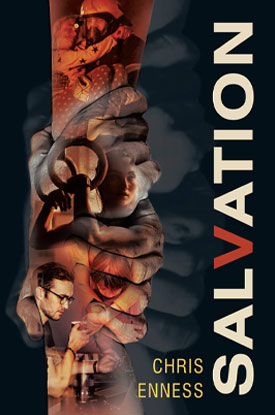


Geeks Ghostwriting’s helped me from idea refinement to publishing. I wanted a script on thriller-romance that had multiple twists and turns. I am directing a movie on the story now and our crew has fallen in love with the story!
Having a drama ghostwritten led me to gain the recognition I was seeking. I had an incomplete manuscript and Geeks Ghostwriting helped me complete it. I marketed it and it sold better than I had expected.
I thought that an illustrative self-help book was not possible! As an established designer, I have always wanted struggling designers and students to learn from my mistakes and achievements. The journey that I thought would be arduous turned out to be enjoyable and simple enough. Thank you, Geeks Ghostwriting!