Documents, testimony, dates. Not a mood of darkness.


True Crime
True crime is a narrative built from what can be checked. A public file is not permission to invent what a victim said in a kitchen. We write the case you can source, and we say, in the book or in the notes, where the record stops.
Documents, testimony, dates. Not a mood of darkness.
Families, the accused, and anyone a sentence could harm.
What you do not know, written as a gap and not as a guess.
Your name on the book. The sourcing stays with you.
The duty that comes with the shelf
The moment you write a sentence a dead person cannot correct, you are no longer “adding color.” You are inventing a witness.
Readers come to this shelf for two things that can fight each other: a story with momentum, and the sense that nobody is being used. Momentum is our craft. Use is the line we will not cross for it. We do not put dialogue in the mouth of a victim, a witness, or a defendant unless it is in the record and attributed. We do not supply a childhood, a marriage, or a last hour because the chapter feels thin. Thin is honest. Invented intimacy is a kind of theft, even when the prose is good.
Structure still matters. A file is not a book. We choose a question the record can actually bear: how an institution failed a procedure, how a story was told at the time, what a community did with a fact it had. “Who did it,” when a court has not settled it, is a question we treat with legal caution and with humility. We will not write an accusation the documents do not support because the narrative wants a villain. If your book depends on that accusation, we stop and talk before a draft exists.
The living are in the room even when they are not in the chapter. A parent, a person who was investigated and cleared, a minor who was nearby, a community that still has to shop on that street. We ask who will read this and recognize themselves. Sensational detail that does not change the public meaning of the case, especially bodily detail, is usually there for a jolt. Jolts are cheap, and they cost the people who did not agree to be entertainment. We cut them.
When you are ready
A file, a question, and the names of the living. Call (833) 688-4166 or write [email protected].
Before a single scene is written
Transcripts, filings, interviews you conducted, clippings, photographs with a provenance. A podcast recap is not a source. If the book is mostly other people’s books, we are not the right desk.
Name them. We need to know which portraits are fully public, which are sensitive, and which you do not have the right to psychologize. “It was in the paper” is not a complete answer.
Guilt, motive, a reconstruction of a private room. Write the refusals down. They become the spine of the honest version, and they keep the draft from drifting into a theory you cannot defend.
Order of the work
Suspense that depends on a fact you do not have is a different genre. It is not one we will counterfeit.
Every dated event, and where it comes from. Conflicts between sources stay visible. We do not pick the version that reads better and drop the other into silence.
If you have not spoken to people the book will characterize, we either plan those conversations or we narrow the book to what the paper will support. We do not write “those close to her say” as a fiction device.
Not a birth-to-crime biography by default. The form follows what you can know: a procedural failure, a community, a trial, a reporting story about how the story was told.
Before the prose is polished, we mark accusations, graphic passages, and any sentence a living person could credibly say is invented. You bring counsel if the risk is real. We do not play lawyer. We also do not hide the risk in smooth chapters.
Not from this desk
If it is not in a transcript, a letter, or a quoted interview, it does not go in quotation marks, and it does not get paraphrased into a scene we cannot source.
Injury described past the point where it changes the public facts. The reader does not need to be walked through suffering to understand that a crime occurred.
Speculation labeled as such, kept short, and never used as the climax. If the book collapses without the theory, the book is not ready.
We will not psychologize a child, living or dead, to give the narrative a tenderness it has not earned from the record.
Questions worth asking first
We can write what is known, and how the unknown has been handled by police, press, and family, if those people are treated with care. We will not pick a culprit for narrative satisfaction. An unsolved book is about the limit of knowledge. If that limit bores you, this is the wrong case, not the wrong writer.
We are not one. If the manuscript accuses a living person, uses sealed material, or depends on interviews given under an agreement, you need advice from counsel before publication. We will flag the passages that create the question. Clearing them is your responsibility, and it should happen before anyone falls in love with a chapter.
Then we stop and talk. Access is not a right you acquire by being interested. A family is not an obstacle to the story. In many books they are the people the story is most likely to harm. We would rather lose the project than write over a refusal you have not honestly faced.
You do. The copyright in the prose is yours. The underlying facts are not anyone’s property, but the interviews, the selection, and the wording are. We do not shop your case, your files, or your theory as a sample. True crime premises spread fast. They will not spread from here.





The shelf
Our team has helped write, publish and market thousands of books over the past decade. Our books are well-written and finished to perfection. Have a look at some of our ghostwriters’ best works and clients’ bestsellers.

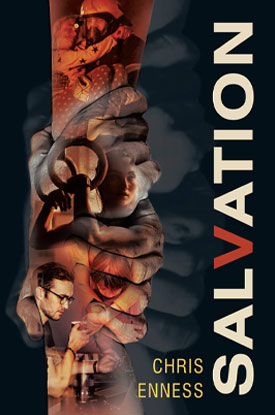


Geeks Ghostwriting’s helped me from idea refinement to publishing. I wanted a script on thriller-romance that had multiple twists and turns. I am directing a movie on the story now and our crew has fallen in love with the story!
Having a drama ghostwritten led me to gain the recognition I was seeking. I had an incomplete manuscript and Geeks Ghostwriting helped me complete it. I marketed it and it sold better than I had expected.
I thought that an illustrative self-help book was not possible! As an established designer, I have always wanted struggling designers and students to learn from my mistakes and achievements. The journey that I thought would be arduous turned out to be enjoyable and simple enough. Thank you, Geeks Ghostwriting!