One problem, said so a stranger could recognize their week.


Self-Help
A self-help book is a promise to one reader with one stuck place. It is not a mood of encouragement. If the steps only work for a person who is already winning, the book is a speech. We write the version a person can fail and still be inside.
One problem, said so a stranger could recognize their week.
Something they can do before they feel ready.
Who this will not help, and what it will not fix.
Your name on the book. The method stays yours.
The promise, kept small
If the reader has to become a different personality before step one, you have written a gate, not a book.
The shelf is crowded with books that describe a better self and skip the afternoon on which a tired person would have to begin. We write that afternoon. The dishes, the shift, the shame, the phone, the fact that they have tried a version of this advice and quietly quit. A method that cannot survive a missed day is a method for people who did not need it. The book should say what to do on the day after the miss, in the same voice it used for the clean start. That page is where readers decide you are telling the truth.
Stories are evidence only of what happened to someone, and they have to be specific enough to prove that. “A client of mine” who transforms in two paragraphs is a mascot. We want the detail that makes the case hard: the job they could not leave, the parent they still answer, the week the practice did nothing visible. Composite people are allowed if we are honest that they are composite and the facts still happened. Invention, to make the method look inevitable, is not allowed.
We do not diagnose the reader, and we do not write over a clinician. If your method touches anxiety, grief, addiction, or any condition a person might be in treatment for, the book has to point them toward qualified care and stay inside what you are actually trained to say. A warm tone is not a license. The limit chapter is not a legal courtesy at the back. It is part of the usefulness. A reader who knows who the book is not for will trust it further on the problem it can touch.
When you are ready
A reader, a practice, and the claim you will not make. Call (833) 688-4166 or write [email protected].
Before the ten steps
Not “anyone who wants more.” A person with a situation: the new manager who freezes, the adult child who cannot leave a phone call, the artist who never finishes. One. The others can be a later book.
What would count as the method working in two weeks, without a new personality. A sent email. A boundary kept once. A practice done on a bad day. If the only proof is a feeling, we cannot plot the chapters.
Therapist, physician, financial adviser, pastor, unless you are, and then we write inside that license. We need the sentence you are willing to put in the front of the book.
Order of the work
Inspiration is easy to add once the steps are real. It cannot lead.
A sequence a person can do in order, and the page that assumes they have already fallen off. We draft that page early so the voice of the book includes it, instead of scolding from a later insert.
Each story has to demonstrate a step the reader just heard. If the story is more interesting than the step, we are writing a memoir and we should either cut the story or change the book’s promise.
Who should stop, who should get a different kind of help, what the method has not been shown to do. Written so it does not sound like a shrug. A precise limit makes the rest of the advice stronger.
No sudden demand for a bigger life. The ending returns to the original stuck place and shows what “enough” looks like. Readers can feel a bait. They close the book on it.
We will not print
We will not tell a reader they will be loved, rich, thin, or healed because they finished the chapters. The book can promise a practice. It cannot promise an outcome it does not control.
The one mindset that makes the rest unnecessary. If it were a switch, they would not need the book. We write repetitions, returns, and the boring middle.
Diagnoses, protocols, and claims about the brain or the body that you cannot source. We would rather be plain and smaller.
If step four restates step two in a warmer tone, we cut it. Length is not care. Care is a next action that was not available ten pages ago.
Questions worth asking first
Yes. Your own stuck place can be the proof, if you are willing to include the part where you failed the method, not only the part where it defines you. Readers trust a scar with dates. They do not trust a before-and-after that has no middle. If there are other people in the story, we need to talk about what they have agreed to, or we change the details until the portrait is fair.
Then we will not write as if you are. Many useful books are written by people who figured out a practical problem and can teach the practice without pretending it is treatment. The line is the claim. “This helped me do the dishes and make the call” can be honest. “This rewires trauma” is a different authority. We will not borrow it for you.
Long enough for the path, the failures, and the limit. Many honest books on this shelf are shorter than the author feared. We will not add chapters to look comprehensive. A reader with a stuck place would rather finish a book that respects their week.
You do. The copyright is yours, including chapters drafted here. We do not reuse your method, your clients, or your story as an example we can tell. If a story belongs to a client, it is not ours to sharpen without permission you actually have.





The shelf
Our team has helped write, publish and market thousands of books over the past decade. Our books are well-written and finished to perfection. Have a look at some of our ghostwriters’ best works and clients’ bestsellers.

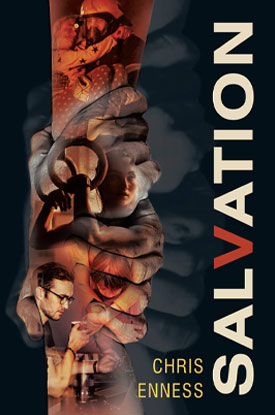


Geeks Ghostwriting’s helped me from idea refinement to publishing. I wanted a script on thriller-romance that had multiple twists and turns. I am directing a movie on the story now and our crew has fallen in love with the story!
Having a drama ghostwritten led me to gain the recognition I was seeking. I had an incomplete manuscript and Geeks Ghostwriting helped me complete it. I marketed it and it sold better than I had expected.
I thought that an illustrative self-help book was not possible! As an established designer, I have always wanted struggling designers and students to learn from my mistakes and achievements. The journey that I thought would be arduous turned out to be enjoyable and simple enough. Thank you, Geeks Ghostwriting!