The argument they have already had, with the real topic under it.


Relationships
A relationship book is about two or more adults who keep colliding in the same place: money, sex, family, work, silence. The reader does not need the word communication. They need the scene they are already in, written clearly enough to recognize, and a move that does not require their partner to become a different person first.
The argument they have already had, with the real topic under it.
Chores, money, in-laws, a shift. The relationship lives there.
What the book will not teach anyone to do to a partner.
Your name on the book. Other people’s privacy stays negotiated.
The reader is already in the room
If the method begins after both people have become calm and fair, you have skipped the only chapter they bought.
Most drafts start too late, in the wise conversation. The book people need starts earlier, in the kitchen when someone is already unfair. We write that minute without decorating either person as the monster or the saint. Then we write what one person can do without a transformation from the other: a sentence, a pause, a boundary with a consequence they are actually willing to keep. A script that only works if the partner follows the script is a fantasy, and it makes the reader feel stupid the first night they try it.
We will not write manipulation. How to win, how to make someone need you, how to punish a silence, how to ignore a no. Those are control manuals, and they do not become healthy because the tone is soft. Desire, repair, and sex can be in the book when the adults are adults and the writing stays on the decision, the history, and the respect. We do not write techniques for pressure. A no is not a plot obstacle.
The third person is usually the real subject. A parent, an ex, a child, a job that owns the evening. Relationship advice that treats the couple as a closed room will fail in any house that has a door. We ask who else has a claim on the week, and we put them in the chapter instead of blaming “communication” for a structural fact.
When you are ready
A scene, a stalled chapter, or the advice that only works if both people are calm. Call (833) 688-4166 or write [email protected].
Before the exercises
One partner, reading alone. A couple reading together. A person who is dating, or done. The moves are different. A book for all of them will scold somebody.
Money, jealousy, sex, chores, a family holiday, a phone. Name the scene you have watched, not the value you wish they had.
Staying in harm. Spying. A sexual pressure. A script for someone who has said no. We need those refusals in writing before the chapters get clever.
Order of the work
Exercises are easy to invent and hard to survive. The scene tests them.
What people actually say, including the cheap shot. Then the topic under the topic. If we only have the topic, we have a lecture.
Something the reader can do when the other person is not reading the book. If every exercise says “ask your partner to,” we add the chapter for the night they will not.
Kids, money, work, a parent in a spare room. The advice has to sit beside those facts or admit it is for a couple with none of them.
Any line that could trap someone in a harmful house gets cut or redirected to real help. Insight is not a reason to stay. We will not write it as if it were.
Not from this desk
There isn’t one. We will not sell a sentence as if the other adult has no will.
Monitoring, punishment, sexual pressure, isolation from friends, disguised as attachment or honesty. The soft vocabulary does not change the act.
Your best weekend is not a method. The Wednesday after a fight is.
We will not write a kid into the role of messenger, judge, or reason a harmful adult must be endured.
Questions worth asking first
No. If you are a clinician, the book has to stay inside your license and your limits, and we will write those limits where a reader can see them. If you are not, we will not borrow the authority. A sharp book about ordinary conflict can be honest without diagnosing anyone. The moment the prose names a disorder and tells the reader what to do about a partner’s mind, we stop.
Yes, between adults, as part of the relationship’s actual problem: avoidance, shame, a mismatch, a history. We write the decision and the respect. We do not write a manual of pressure, and we do not write anyone under the age of consent into a sexual frame. If the book needs explicit technique, say so at the start so we know that is the promise, and so it is not slipped into a chapter about trust.
We will not write a communication tip for a house where someone is being harmed. If that is the situation, the book’s job is to say so plainly and point to help, not to offer a better way to argue. If you are not sure where your material crosses that line, we would rather have the conversation before the draft makes the harm sound mutual.
You do. The copyright is yours, including chapters drafted here. Partners, clients, and exes are not material by default. If a portrait is recognizable, you need the right to it, or we change it until it is a pattern instead of a person.






The shelf
Our team has helped write, publish and market thousands of books over the past decade. Our books are well-written and finished to perfection. Have a look at some of our ghostwriters’ best works and clients’ bestsellers.

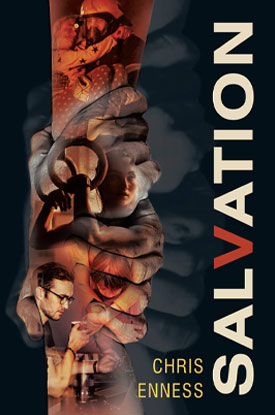


Geeks Ghostwriting’s helped me from idea refinement to publishing. I wanted a script on thriller-romance that had multiple twists and turns. I am directing a movie on the story now and our crew has fallen in love with the story!
Having a drama ghostwritten led me to gain the recognition I was seeking. I had an incomplete manuscript and Geeks Ghostwriting helped me complete it. I marketed it and it sold better than I had expected.
I thought that an illustrative self-help book was not possible! As an established designer, I have always wanted struggling designers and students to learn from my mistakes and achievements. The journey that I thought would be arduous turned out to be enjoyable and simple enough. Thank you, Geeks Ghostwriting!