Who had to carry the decision after the meeting ended.


Leadership
A leadership book that is only a list of traits has nothing to teach on Thursday. We write the meeting, the mistake, and the cost to someone who was not the hero of the story. Competence is specific. A vision paragraph is not.
Who had to carry the decision after the meeting ended.
A hire, a cut, a no, a standard enforced when it was awkward.
What the choice did to a person who could not overrule it.
Your name on the book. The standard stays yours.
What the word is doing here
If the story still works when you are the only adult in the room, it is a fable. Your staff will know.
Leadership manuscripts drift toward adjectives. Decisive, humble, brave, clear. None of those can be practiced on a Thursday without a scene. We replace the adjective with the moment it cost something: the competent person you did not promote, the product you killed while the team still loved it, the meeting you stopped because the disagreement was fake, the standard you enforced against someone who had been loyal. Readers who manage people do not need to be told that listening matters. They need to see what you did when listening produced an answer you disliked.
The lone visionary is the default lie of this shelf. Work is done by people who go home. We write them back in. Who argued, who had the number, who carried the consequence after you left the room. Credit is not modesty theater. It is accuracy, and accuracy is what separates a book a manager can use from a book a manager will skim on a plane and forget. If a story requires your team to be afraid, foolish, or invisible, the story is not ready, even if it is flattering.
Authority is also a limit. What you could not do. The budget, the law, the union, the board, the person you loved and still had to disappoint. Books that skip constraints teach omnipotence, and omnipotence is useless to a reader whose constraint is the point. We would rather a shorter book that a supervisor can argue with than a longer one that sounds like a commencement speech. Argument is a sign the tool is real.
When you are ready
A decision, a person who lived with it, and the principle you are tempted to start from. Call (833) 688-4166 or write [email protected].
Before the principles
A shift lead, a founder, a director of a function, a chief who does not do the work. The decisions are different. A book that speaks to all four will instruct none of them. Pick the reader who still has a calendar like yours used to.
The one that cost someone. If every story ends with your judgment confirmed, we do not have a leadership book. We have a defense. The mistake is not a branding exercise. It is the chapter.
A deputy, a board, a crew. If they would tell the story differently, we need that version, or we need to narrow the claim until it is only what you can swear to. Disagreement from the room is research.
Order of the work
Principles derived from a pile of flattering stories are just the stories, wearing a suit.
Ten real calls, including at least two that went badly. Who was in the room. What you knew. What you chose not to do. The principle, if there is one, gets named after the pattern is visible, not before.
We draft the scenes so a colleague could find themselves without being mocked or erased. Where the portrait needs their confirmation, we stop and get it. We do not surprise a staff with a book.
Vision language, culture language, anything that could be hung in a lobby. If the paragraph does not change an action, it goes. The book should be shorter than the keynote version of your life.
For each chapter: what a reader with your old job can do in the next month, and what excuse we have removed. If the answer is “be braver,” the chapter is not finished.
We will not help you print
Five qualities of great leaders. We will not pad a book with them, and we will not let them introduce a chapter that never returns to a behavior.
People who exist to be inspired, corrected, or grateful. If they have no competence of their own, the scene is a mirror, and mirrors are not teaching.
The number can stay if the layoffs, the luck, the market, and the team stay too. A clean hockey stick is usually a lie of omission.
The quotable line, offered instead of what was said when the decision was still reversible. We keep the meeting. The line can earn its way in, or not.
Questions worth asking first
It has to be about decisions you were close enough to describe honestly. Those may live inside one company, or across a career. What it cannot be is a theory of leadership assembled from other people’s airport books. If confidentiality binds the best stories, we write around the bind or we drop the story. We do not smudge details until the lesson is fictional and still presented as yours.
Then it is probably the chapter the book needs. We will not humiliate you, and we will not invent a redemption you did not earn. We will write the mistake at the size it actually was, including who paid for it. Readers in charge of other people trust that chapter more than the one where you were early and correct.
Yes. A hundred pages of decisions will outlive two hundred pages of culture language. We will not add parts to make the book look like a category. If you need a textbook, say so, and we will build teaching apparatus on purpose: questions, cases, a structure a course could use. A textbook hiding inside a memoir helps neither reader.
You do, unless your employer owns the stories by contract, which you should settle first. The copyright in what we draft is yours. We do not reuse your team, your failures, or your method as an anecdote. Leadership books are identifiable. That is a reason to be discreet, not a reason to blur who wrote what.





The shelf
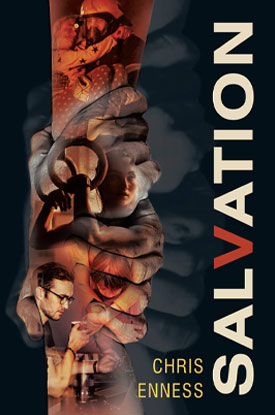
Our team has helped write, publish and market thousands of books over the past decade. Our books are well-written and finished to perfection. Have a look at some of our ghostwriters’ best works and clients’ bestsellers.



Geeks Ghostwriting’s helped me from idea refinement to publishing. I wanted a script on thriller-romance that had multiple twists and turns. I am directing a movie on the story now and our crew has fallen in love with the story!
Having a drama ghostwritten led me to gain the recognition I was seeking. I had an incomplete manuscript and Geeks Ghostwriting helped me complete it. I marketed it and it sold better than I had expected.
I thought that an illustrative self-help book was not possible! As an established designer, I have always wanted struggling designers and students to learn from my mistakes and achievements. The journey that I thought would be arduous turned out to be enjoyable and simple enough. Thank you, Geeks Ghostwriting!