A sentence that knows more than it admits.


Literary Fiction
On this shelf the sentence is doing something the plot has not announced yet. Smooth prose is not the job. The job is attention: what a person almost says, what the paragraph refuses to explain, and whether the story is still there when the style steps back.
A sentence that knows more than it admits.
What the scene leaves for the reader to finish.
A moral fact, not a mood with good adjectives.
Style serves the story. It does not replace it.
The shelf, said plainly
A beautiful paragraph that could be moved to another novel is not literary. It is unused.
People bring us literary fiction when they are afraid of two opposite things: sounding plain, and sounding like they are trying. Both fears produce the same page. The sentences perform sensitivity. The story stands in the hallway, waiting to be let in. We do not start by heightening the prose. We start by asking what the paragraph is unwilling to know.
Implication is a craft, and it has rules. You can leave a thing unsaid only after the scene has given the reader enough to say it themselves. A withheld fact is powerful. A withheld story is a fog. We mark the places where a line is doing real work, and the places where a metaphor arrived because the draft did not yet know what happened.
Rhythm matters here more than on most shelves, and it is not a trick of short sentences followed by a long one. It is the speed of a mind. A person who is ashamed thinks in interruptions. A person who is lying to themselves thinks in clean, finished claims. We tune the prose to that mind, then we read it aloud. If a line exists to be admired, it comes out.
When you are ready
The one that is almost the book, or the one you keep rewriting because it is only impressive. Call (833) 688-4166 or write [email protected].
What we ask before the style
Not a sample of your best writing. The sentence you would fight for, the one that already contains the book’s trouble. We build out from that, instead of decorating a plot until it looks serious.
Name the thing the narrator will not say in chapter one, and the chapter where the book can no longer protect them from it. If you cannot name it, the silence is not a choice yet. It is a hole.
Literary fiction that injures no one is usually a sketch. Someone’s loyalty, marriage, work, or idea of themselves has to be spent. We want the cost in the first conversation, even if the prose will take its time arriving there.
How the pages are made
A literary draft that begins with tone usually has to be thrown away. Tone is what is left after the seeing is accurate.
We write four or five pages at the pressure you actually care about. Not the opening you think a literary novel should have. The passage is where we find out if the mind can sustain a book.
We list what the narrator understands, what they refuse, and what the reader is allowed to know earlier than they do. That list keeps implication from turning into confusion.
You read sections while we can still cut a scene, not after three hundred pages have been polished around a weak turn. Pretty late drafts are expensive to be honest about.
Before the book is called finished, we mark every sentence that is asking to be noticed. Some of them earn it. The ones that are only well dressed come out, even if we were proud of them on the day they were written.
We will not call these literary
A character walking and thinking is not a scene unless the thought changes what they are willing to do next.
One exact image is worth more than a style that cannot stop comparing. We cut the second and third.
A reader can be asked to work. They should not be asked to guess what the book is about because the draft was afraid to be clear.
We can hear it. So will anyone who has read that writer. Your book has to sound like its own mind, including the awkward parts.
Questions worth asking first
No. It has to be exact. Some of the best books on this shelf move quickly and still leave space around the sentence that matters. Slow is a choice you make for a scene, not a membership rule.
It should. If you cannot say what changes, the manuscript is still a sensibility. Plot in literary fiction is often smaller than in a thriller. It is not optional. Someone ends the book in a different relation to the thing they could not face.
We will make it more precise. If your draft is already full of gestures that mean literary to you, the edit may feel like less, not more. That is usually the right direction. We can show you the cut on a sample before anyone commits to a full manuscript.
Yes. You hold the copyright, including lines written here. Literary work is easy to gossip about in a workshop or a portfolio. We do not. If a sample would identify you, it does not leave the desk.





The shelf
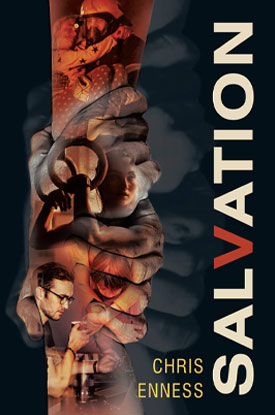
Our team has helped write, publish and market thousands of books over the past decade. Our books are well-written and finished to perfection. Have a look at some of our ghostwriters’ best works and clients’ bestsellers.



Geeks Ghostwriting’s helped me from idea refinement to publishing. I wanted a script on thriller-romance that had multiple twists and turns. I am directing a movie on the story now and our crew has fallen in love with the story!
Having a drama ghostwritten led me to gain the recognition I was seeking. I had an incomplete manuscript and Geeks Ghostwriting helped me complete it. I marketed it and it sold better than I had expected.
I thought that an illustrative self-help book was not possible! As an established designer, I have always wanted struggling designers and students to learn from my mistakes and achievements. The journey that I thought would be arduous turned out to be enjoyable and simple enough. Thank you, Geeks Ghostwriting!