The step a non-specialist can follow without being talked down to.


Science & Technology
A science or technology book has to teach how something works, to a reader who does not live in the lab or the codebase, without pretending the result is larger than it was. Wonder is allowed. Hype is a different genre, and it ages badly.
The step a non-specialist can follow without being talked down to.
What the study, the device, or the system does not do.
A paper, a spec, a person who built it. Named and dated.
Your name on the book. The claims stay checkable.
The reader who is intelligent and late
If the metaphor cannot be retired by the real mechanism, the metaphor is doing the teaching, and it will teach the wrong thing.
We write for a reader who can follow a careful explanation and should not be rewarded with baby talk or punished with unexplained jargon. The order is the mechanism: what goes in, what happens, what comes out, where it fails. Analogy can open a door. It has to be closed again by the actual account, or the reader leaves with a picture that will betray them the first time they argue with someone who knows the field. We would rather a plainer chapter than a charming one that smuggles an error.
Scale is a moral issue in this category. A lab result is not a product. A prototype is not a platform. A model is not a prediction of the next decade. We keep the sentence in the size of the evidence. “Might” and “showed, in this setting” are not weak words. They are the words that let a book still be true in five years. If you want a manifesto about the future, say so, and we will label speculation as speculation instead of letting it wear a lab coat.
People who build the thing are part of the explanation: the constraint they designed around, the cost, the user they failed. Technology books that erase labor, maintenance, and harm read as brochures. We ask who is affected when the system works as intended, not only when it breaks. That question is part of accuracy.
When you are ready
A paper, a product, or a chapter that became a prophecy. Call (833) 688-4166 or write [email protected].
Before the future tense
Researcher, engineer, journalist, founder. A founder’s book can be good and must sound like a founder. We will not borrow a neutral voice you have not earned.
A battery, a model, a protocol, a piece of infrastructure. “Technology” is not a topic. A reader cannot hold it.
A cure, a replacement for a worker, a certainty about risk. If the marketing department loves the sentence, we look at it twice.
Order of the work
Elegance is easy to praise and expensive to undo when a specialist laughs.
Plain enough for the intended reader, specific enough that a specialist would not wince. We mark every step that is a simplification and decide if the simplification lies.
Paper, year, what it measured, what it did not. Interviews dated. A demo labeled as a demo.
Where it breaks, what it consumes, who maintains it. A chapter without a failure mode is an advertisement.
Clearly fenced. The reader should be able to tell the moment we left the evidence. If the fence keeps moving, the book is a pitch.
We will not inflate
If everything is unprecedented, nothing is explained. We start with the machine, not the era.
Words the writer cannot cash, left in to sound native. We define them in the act or we cut them.
“The algorithm decides” is not an explanation. If we cannot say more, we say we cannot, and we do not mystify the gap.
Bias, safety, labor, environmental cost, mentioned once so the book can feel responsible. If it changes the mechanism, it belongs in the mechanism.
Questions worth asking first
We will not write past the sources you can show, and we will ask stupid questions until the mechanism is one we can repeat accurately. We are not a peer reviewer. If the book makes a specialist claim, a specialist should read it before it pretends to be settled. We would rather pause a chapter than smooth a dispute into a metaphor.
Yes, when the reader you named can use them, and when they are correct. A decorative equation is worse than none. Code that does not run is a bug in the book. If the audience is general, we keep the math in a place a determined reader can find and the prose in a place everyone else can survive.
Then the book should say you build it, and the limits should be as clear as the demo. Readers will accept a founder who explains. They will not accept a founder pretending to be a historian of a field they are raising money in. We can write the honest version. We will not write the pitch as a textbook.
You do, unless your lab or company owns the text. That is a contract question, and it belongs at the start. We do not reuse your data, your system, or your unpublished result as a sample.





The shelf
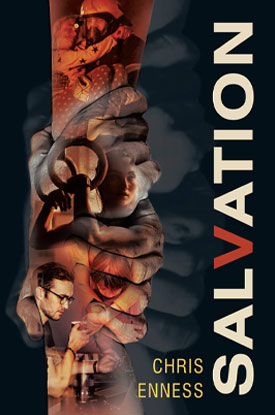
Our team has helped write, publish and market thousands of books over the past decade. Our books are well-written and finished to perfection. Have a look at some of our ghostwriters’ best works and clients’ bestsellers.



Geeks Ghostwriting’s helped me from idea refinement to publishing. I wanted a script on thriller-romance that had multiple twists and turns. I am directing a movie on the story now and our crew has fallen in love with the story!
Having a drama ghostwritten led me to gain the recognition I was seeking. I had an incomplete manuscript and Geeks Ghostwriting helped me complete it. I marketed it and it sold better than I had expected.
I thought that an illustrative self-help book was not possible! As an established designer, I have always wanted struggling designers and students to learn from my mistakes and achievements. The journey that I thought would be arduous turned out to be enjoyable and simple enough. Thank you, Geeks Ghostwriting!