Whose version of the week the book is willing to trust.


Psychological Thriller
A psychological thriller asks the reader to live inside a mind that is not a safe narrator. The scare is not a figure in the hall. It is the moment you realize you have been agreeing with the wrong account of the room, and that the pages already showed you.
Whose version of the week the book is willing to trust.
What is done on the page, and what is only said about it.
A misreading has to injure a life, not just surprise a reader.
Your name on the book. The desk stays off the cover.
What this shelf is actually doing
If the truth only works because the narrator hid a memory, you have a stunt. You do not have a thriller yet.
A psychological thriller is not a mystery that forgot its clue list, and it is not horror that moved indoors. The pressure is interpretive. Someone is telling the reader what happened, and the telling is the thing that cannot be trusted. That can be a marriage, a workplace, a patient and a clinician, a parent reconstructing a child. The genre is the gap between the account and the event.
Readers of this shelf reread. They will find the sentence you hoped they would skim. We write the lie so that it is present the first time as a defense, a kindness, or a habit, and obvious the second time as a distortion. Hiding the narrator’s own knowledge and calling it a twist is the move we will not make. The ignorance has to belong to a person under pressure, not to a hole we cut in the camera.
The mind still has a week. Rent, a school run, a shift, a pill taken or skipped, a text answered too quickly. Atmosphere will not hold a book in which nobody has to be anywhere at nine. We keep the ordinary obligations in the scene so the dread has a clock, and so the character’s version of events has something it is trying to protect.
When you are ready
A scene, a stalled chapter, or the version of events you keep defending. That is enough to start. Call (833) 688-4166 or write [email protected].
Before we outline the dread
The narrator, the person they love, the reader, or all three at different times. If everyone is a reliable witness except a villain who arrives to explain, this is a different shelf.
A marriage, a job, a child, a version of the self that cannot survive the plain sentence. The lie needs a reason that would still make sense if it were only a private habit.
Name one image, objection, or repeated courtesy that will mean something else on a second pass. If you cannot name it, the ending is still a surprise party.
How the draft is built
Explanation is cheap at the end and expensive in chapter four. The order of work protects the reread.
We draft a key hour once as the narrator needs it to have happened, and we mark every place the physical facts do not require that telling. The second version is not written yet. The gaps are.
A running list: what a character reports, what another person does, and what the narration steps over. The thriller lives in the third column. We do not fill it with hints that wink.
Around the center, the reader’s best explanation has to fail for a reason already on the page. A new character with a file is not a middle. A contradiction in the old file is.
The last turn rereads cleanly. We cut any sentence that only works if the reader was not paying attention, including a confession that does the book’s thinking for them.
Left off this desk
A label can be true and still do no scene work. We will not let a condition arrive in the last chapter as the explanation of every odd page.
If they knew it and the prose hid it as a game, we rewrite so the not-knowing belongs to fear, love, or shame.
The clinician, the detective, or the spouse with a speech is where these books go to retire. Understanding should come from what people do.
A violent set piece that does not change what the reader is willing to believe is spectacle. Spectacle has a very short budget here.
Questions worth asking first
No. A liar knows the fact and withholds it. An unreliable narrator is often protecting a version they need, and may not have a clean fact to withhold. We will ask which one you have before we draft, because the sentences are different. A liar writes around a thing. A pressured mind writes through a habit.
Yes. Many of the strongest books on this shelf never leave the house, the office, or the group chat. The threat has to be able to edit the record: what the neighbors saw, what the phone shows, what the narrator is willing to call normal. A stranger with a knife is usually a different book.
If the book makes a specific claim about a condition, treatment, or procedure, we want a source, and we will not invent symptoms to make a twist land. Atmosphere is ours. A case history is not a costume. Tell us what you actually know, and what you only hope sounds right.
You do. The copyright stays with you, including chapters drafted at this desk. We do not reuse your premise, your domestic situation, or your ending as a sample that could be traced. If you want that in writing before a file is opened, say so on the first call.





The shelf
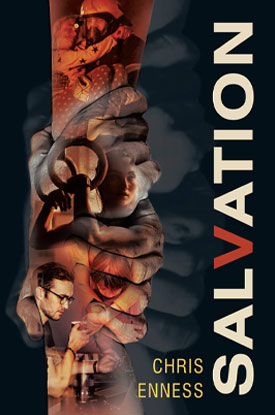
Our team has helped write, publish and market thousands of books over the past decade. Our books are well-written and finished to perfection. Have a look at some of our ghostwriters’ best works and clients’ bestsellers.



Geeks Ghostwriting’s helped me from idea refinement to publishing. I wanted a script on thriller-romance that had multiple twists and turns. I am directing a movie on the story now and our crew has fallen in love with the story!
Having a drama ghostwritten led me to gain the recognition I was seeking. I had an incomplete manuscript and Geeks Ghostwriting helped me complete it. I marketed it and it sold better than I had expected.
I thought that an illustrative self-help book was not possible! As an established designer, I have always wanted struggling designers and students to learn from my mistakes and achievements. The journey that I thought would be arduous turned out to be enjoyable and simple enough. Thank you, Geeks Ghostwriting!