Attention, grief, a habit. Named narrowly enough to be honest.


Mental Health & Mindfulness
A book on this shelf can teach a practice, report a life, or explain an idea a reader can hold. It cannot quietly become their clinician. We separate what a study showed, what you are licensed to say, and what has only been true for you.
Attention, grief, a habit. Named narrowly enough to be honest.
A few minutes with a rule, including the day it does nothing.
When the reader should stop the book and call a person.
Your name on the book. Patients stay unidentifiable.
The tone is not the ethics
If a chapter could talk someone out of care they already have, the chapter is not gentle. It is reckless.
Mindfulness books often describe a peaceful reader and then offer them a technique. The people who buy the book are frequently not peaceful. They are at work, in grief, or already in treatment and hoping a paperback will be quieter than the week. We write for that person. A practice of attention can be described: when you sit, what you do with a thought, what you do when you quit on day four. It cannot be described as the cure for a condition you are not treating. If you are a clinician, we write inside that license and we put the limit where the exercise is, not after the reader has already been told to rely on it.
We do not diagnose the reader. Lists of symptoms that add up to “this is you, and here is what it means” are a clinic’s job. A book can say “some people notice this” and send them toward an evaluation. It should not close the case. Personal story is allowed, labeled as one life. Composite patients, if privacy requires them, cannot be given a recovery the real sessions did not show.
Crisis is a bright line. We will not write a method for staying alone with thoughts of suicide, self-harm, or a psychotic break and call it mindfulness. Those pages, if the book must acknowledge them, point to emergency help and to a person. Technique stops. This is not a failure of depth. It is the difference between a book and a hotline, and only one of those can answer at 2 a.m.
When you are ready
An exercise, a memoir, or a chapter that started to sound like care. Call (833) 688-4166 or write [email protected].
Before the exercises
Therapist, researcher, teacher of a practice, or a person writing a memoir of a mind. The verbs change. We will not let a memoirist “treat” and we will not let a clinician hide the license.
Trauma history, active crisis, a practice that can dissociate or spike panic. If you do not know, we do not guess in lyrical language. We ask someone who does, or we narrow the exercise.
Five minutes in a break room, not a retreat. If the book only works on a cushion at dawn, say so. Most readers do not have dawn.
Order of the work
A disclaimer at the back is where publishers hide the sentence the chapter contradicted.
Each exercise, what it is for, what it is not for, and the source. Experience is labeled experience. A paper is named. “Studies show” without a study comes out.
What to do when nothing happens. The boring session is the one that teaches. A book of only peak calm is a brochure.
The paragraph that tells a reader to contact a clinician, a crisis line, or a person in the room. Written in ordinary language, early enough to be seen.
We mark any line that praises going without help, stopping medication, or treating a loved one’s crisis as a mindfulness lesson. Those lines do not get a revision. They get deleted.
We will not ship
Attention can be useful. It is not a treatment plan we will invent. If a result is claimed, it needs a source and a limit in the same breath.
Stop a medication, skip an appointment, replace a therapist with a chapter. We will not write the sentence, and we will not write it as “listen to your body” either.
Details that a waiting room could match. Privacy is not a style pass at the end.
The reader who cannot sit still is not failing the book. If the prose implies they are, we rewrite the prose.
Questions worth asking first
Yes, if it remains a life and does not slide into protocols. The moment you tell a stranger what to do about their mind, you have changed genres and the standard changes with it. We can write the seam honestly: this is what I lived, this is what I am not qualified to prescribe. Hybrids that hide the seam are how readers get hurt.
We can write a practice that is simple enough to follow and humble enough to abandon. We will not write a script that promises to clear trauma in a session. If a meditation needs a clinician in the room, it does not belong in a book for people who are alone.
A practice can be secular or held inside a faith. Say which. We will not add spiritual language to make a clinical claim feel softer, and we will not strip a prayer out of a practice that is actually a prayer. The reader should know what they are being asked to join.
You do. The copyright is yours, including chapters drafted here. Case material is not yours just because you remember it. If consent is missing, the portrait goes. We do not reuse a reader’s distress as a sample.





The shelf
Our team has helped write, publish and market thousands of books over the past decade. Our books are well-written and finished to perfection. Have a look at some of our ghostwriters’ best works and clients’ bestsellers.

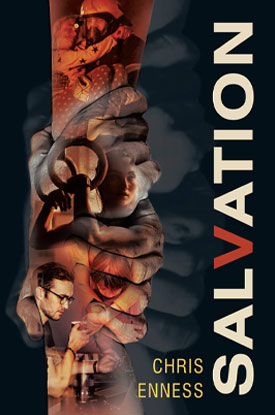


Geeks Ghostwriting’s helped me from idea refinement to publishing. I wanted a script on thriller-romance that had multiple twists and turns. I am directing a movie on the story now and our crew has fallen in love with the story!
Having a drama ghostwritten led me to gain the recognition I was seeking. I had an incomplete manuscript and Geeks Ghostwriting helped me complete it. I marketed it and it sold better than I had expected.
I thought that an illustrative self-help book was not possible! As an established designer, I have always wanted struggling designers and students to learn from my mistakes and achievements. The journey that I thought would be arduous turned out to be enjoyable and simple enough. Thank you, Geeks Ghostwriting!