A school, a job, a house. Someone else still has the keys.


Young Adult
Young adult fiction is a novel about a person who cannot yet sign for the life they are living. School, work, family, and friendship have real power over them. The stakes have to be large on that map. Talking down is the fastest way to lose the only reader who can tell.
A school, a job, a house. Someone else still has the keys.
Loyalty is plot. A sidekick who only agrees is furniture.
A mind the reader can stand inside, without a wink from above.
Your name on the book. The desk stays off the jacket.
Who this book is actually for
If an adult could solve it with one phone call, you do not have a young adult novel. You have a delayed conversation.
The shelf is defined by jurisdiction, not by a lesson. A teenager can be brilliant and still be unable to move a household, hire a lawyer, or make a parent believe them. That gap is the engine. Books that forget it turn into adult novels with younger faces, or into lectures about what youth ought to learn. We write the limit first: the curfew, the shift, the form a guardian has to sign, the friend whose parents will not allow the visit.
Voice is where these manuscripts get caught. A narrator who sounds like a committee of adults describing “kids these days” will be closed. So will a narrator stuffed with slang as a proof of research. The sentence should be how this particular person thinks when they are in trouble: precise, unfair, funny at the wrong moment, unable to say the thing in front of the adult who needs to hear it. We draft a page they would not want read aloud at dinner. If that page could belong to anyone, we are not ready for chapters.
Friendship and first loyalty carry more plot than authors expect. A secret kept from a parent may matter. A secret kept from the one friend who has earned the truth usually matters more, because that is the court this character actually fears. Romance, if it is in the book, is a decision about loyalty and status, not a spice. We plot what it costs in the friend group and at home. We do not write the body as the point, and we do not write desire as a dare.
When you are ready
A friend, a rule, and the thing they want anyway. That is enough to start. Call (833) 688-4166 or write [email protected].
Before a chapter count
Leave, pay, sign, be believed. Pick the door that is actually shut. The plot has to go through it, not around it, when the scene would be cleaner if an adult stepped in.
Name the friend, team, sibling, or group chat whose opinion can ruin a week. If the only judge is a villainous grown-up, the social world is too thin for this shelf.
A place on the team, a job that pays for a car, a sibling they are quietly raising, a college form, a name they need used correctly. The want should be concrete enough to photograph.
How the draft is built
Theme is what a reader can say afterward. It is a bad place to start. The week has buses in it.
Ordinary hours, including the boring ones that show status: who sits where, who can leave early, who is tired because they closed the store. If the day is only the inciting crisis, we do not know this person.
We find the conversation they keep editing in their head. That avoidance is often the spine. An external villain can wait until this pressure is real.
Each major choice should change a friendship, a grade, a shift, or a standing at home. A choice that only changes the protagonist’s mood will not hold the middle.
Not a speech about growing up. A change in what they are willing to risk, with the adult world still larger than they are. Triumph that erases the jurisdiction is usually a wish, and it reads like one.
Not on this desk
If the paragraph could be a poster in a counselor’s office, it does not belong in the scene. The scene can be wiser than the narrator. The narrator should not pause to be wise for us.
A few words this person would actually use. Not a dialect written from a list. We would rather sound slightly plain than sound like we visited.
If the book was about a friend, a parent, a grade, or a job, the last chapter does not get to pretend the question was a crush. When love is the question, it has to have been the question from early on.
Parents, teachers, and bosses can be wrong and still have a Tuesday. A cartoon authority makes the young character’s intelligence look free.
Questions worth asking first
Usually a protagonist in the mid-teens, and a reader who may be that age or older. The test is not a number. The test is whether the plot depends on limited legal and household power. If your lead lives alone, pays the rent, and the book never notices that as strange, we should talk about adult fiction. If the reader you imagine is eight, this is middle grade, and the jokes, the danger, and the independence all change.
Yes, when the feeling changes a loyalty the book has already made important. We write the social cost: a friend displaced, a parent who finds out, a status that moves. We do not write sexual scenes, and we do not treat intimacy as a reward chapter. If the heat is the promise of the book, it is not this shelf.
We will tell you if a premise is crowded. We will not dress your book in last year’s plot because a list said it sells. A specific school, job, faith, or family is worth more than a template about chosen ones. If you want the template, say so. We would rather decline than imitate it and call the result yours.
You do. The copyright stays with you, including chapters drafted here. We do not use your premise, your town, or your teenager’s situation as an example we can repeat. If the book is close to your own adolescence or your child’s, say that early so the handling is part of the plan.





The shelf
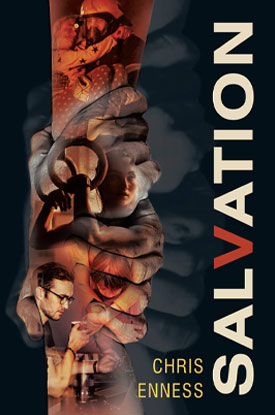
Our team has helped write, publish and market thousands of books over the past decade. Our books are well-written and finished to perfection. Have a look at some of our ghostwriters’ best works and clients’ bestsellers.



Geeks Ghostwriting’s helped me from idea refinement to publishing. I wanted a script on thriller-romance that had multiple twists and turns. I am directing a movie on the story now and our crew has fallen in love with the story!
Having a drama ghostwritten led me to gain the recognition I was seeking. I had an incomplete manuscript and Geeks Ghostwriting helped me complete it. I marketed it and it sold better than I had expected.
I thought that an illustrative self-help book was not possible! As an established designer, I have always wanted struggling designers and students to learn from my mistakes and achievements. The journey that I thought would be arduous turned out to be enjoyable and simple enough. Thank you, Geeks Ghostwriting!