The relationship is the plot, not a reward for surviving one.


Romance
A romance novel owes the reader a relationship that is the point of the book, and an ending that pays that debt. Chemistry is not a sparkle in chapter two. It is what these two do to each other’s plans, page after page, including the pages where they are angry.
The relationship is the plot, not a reward for surviving one.
Desire written as decision, not as fog.
Consent is part of the scene, not a disclaimer after it.
Happy, or happy for now. Earned, either way.
What the reader was sold
If they could solve it with one honest conversation in chapter four, you do not have a romance yet. You have a misunderstanding.
Romance has a contract, and readers know when it is broken. They came for two people who change each other’s lives, and for an ending that does not punish them for wanting that. You can write grief, comedy, a small town, a city, a marriage already in trouble. You cannot spend the book on a mystery, a war, or a workplace and then hand the couple a kiss as if the kiss were the story. We will tell you early if the book you are describing is a novel with a love story in it. That can be a good book. It is a different promise.
The obstacle has to be worthy of the length. A secret that one adult could explain in a paragraph will not hold thirty chapters, and the reader will spend those chapters wanting to shake both of them. We look for a conflict that comes from who they are: what they owe, what they are afraid of wanting, what they stand to lose if they choose this person. External trouble is welcome. It has to press on that fault line, not replace it.
Heat is craft. A scene that goes vague at the moment of wanting is usually embarrassed, and embarrassment reads as distance. We write desire the way we write any other action: who does what, who hesitates, what it costs, what they know about each other afterward that they did not know before. Consent lives inside those beats. A person who cannot tell the truth with their body is not passionate. They are unclear, and the scene has to be rewritten until the want is theirs.
When you are ready
If the reason is real, the book has a spine. Call (833) 688-4166 or write [email protected].
Asked on the first call
Happy ending, or happy for now. On the page, or implied in a last scene the reader can trust. We do not discover this in revision. If you want a love story that ends in loss, we should not call it romance and then hope the reader forgives the shelf.
What each of them wants besides each other. Why this person ruins a plan the other person was committed to. Attraction with no inconvenience is a mood. Romance is the inconvenience they choose anyway.
Closed door, open door, or somewhere a specific reader will recognize. We match the heat to the characters, not to a trend. A shy book can be specific. An explicit book still needs character in the room. Both fail when the prose looks away at the wrong time.
The order of the work
Cute is easy to add and easy to see through. The spine is how the want gets harder to refuse.
What keeps them in contact when a sensible person would leave. A job, a town, a child, a secret, a house neither can afford alone. Without a lock, the middle of a romance is just visits.
Each major scene should make the next honest sentence more expensive. We outline those beats before we write banter. Banter is a pleasure. It is not a structure.
This is where authors repeat the attraction because they do not know the new problem. We put a turn in: a loyalty tested, a public cost, a choice that favors the old life. Then the book has somewhere to go besides another almost-kiss.
The last chapters pay the specific debt of this couple. Not a generic declaration. The fear named in chapter one has to be in the room when they choose, or the ending is a poster taped over the book.
We will not print these
One crossed wire can start a scene. It cannot be the reason two adults stay apart for two hundred pages.
Bodies with no history, no humor, and no consequence are not a love scene. They are a pause.
Ignoring a no, cornering someone, or treating jealousy as proof of love is not passion. We will not write it that way, and we will not call the rewrite a loss of chemistry.
If the dark moment could be lifted into a different couple’s story, it is not theirs. We build it out of the fear we already put on the page.
Questions worth asking first
We write the level the book and the characters can carry, from a glance that does all the work to a scene that is fully on the page. Tell us what you will stand behind at a reading, and what your reader expects from the shelf you want to be on. Those two answers should match before we draft.
Yes. Marriage romance is often better than a first meeting, because the obstacle is already in the house: a debt, a silence, a child, a job that ate the conversation. We still need a promise about where the marriage lands. Reconciliation is an ending. It still has to be earned scene by scene.
Comedy works when it is how these two people cope, not a string of bits between the real scenes. The joke should tell us who has the power in the moment. If the humor is only the narrator being charming, it will not survive the chapter where someone gets hurt.
Yes. You own the copyright, including the scenes written at this desk. Romance readers talk, and so do authors. We do not. Your names, your premise, and your pages stay off any sample that could point back to you.






The shelf
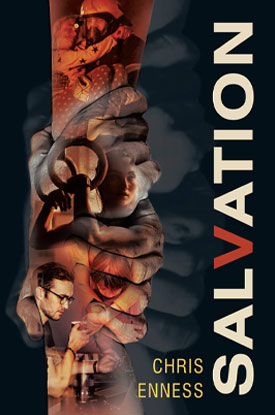
Our team has helped write, publish and market thousands of books over the past decade. Our books are well-written and finished to perfection. Have a look at some of our ghostwriters’ best works and clients’ bestsellers.



Geeks Ghostwriting’s helped me from idea refinement to publishing. I wanted a script on thriller-romance that had multiple twists and turns. I am directing a movie on the story now and our crew has fallen in love with the story!
Having a drama ghostwritten led me to gain the recognition I was seeking. I had an incomplete manuscript and Geeks Ghostwriting helped me complete it. I marketed it and it sold better than I had expected.
I thought that an illustrative self-help book was not possible! As an established designer, I have always wanted struggling designers and students to learn from my mistakes and achievements. The journey that I thought would be arduous turned out to be enjoyable and simple enough. Thank you, Geeks Ghostwriting!