What you are actually saying a body can do.


Health & Wellness
A health book can be useful and still be careful. We separate what a paper showed, what a clinician told you, and what you hope is true. We will not write a chapter that tells a reader to abandon care because the story needs a turn.
What you are actually saying a body can do.
A paper, a guideline, or an experience, labeled as itself.
Where a reader should call a licensed clinician instead.
Your name on the book. The citations stay with you.
The sentence a reader might obey
If the chapter would frighten someone out of a prescribed treatment, it is not bold. It is a risk you do not get to narrate away.
Wellness manuscripts often braid three different kinds of authority and hope the reader will not pull them apart. There is the study, which showed a narrow thing in a particular group. There is the clinical practice, which belongs to people licensed to touch a diagnosis. There is the personal experiment, which can be vivid and still be one life. We label them in the prose, not only in the endnotes. “Research suggests” is not a veil for “I have noticed.” A reader making a decision about sleep, food, pain, or a diagnosis deserves the distinction in the sentence where the claim appears.
Anecdote has a job, and it is not proof. A story can show what a recommendation feels like on a Tuesday: the early meeting, the medication schedule someone already has, the grocery store that does not carry the ingredient the chapter just made essential. That specificity is more useful than a transformation. We will not invent a patient, a lab result, or a recovery timeline. Composites, if you need them for privacy, have to be honest composites, and they still cannot demonstrate a result you did not see.
We are not your physician, and the book will say what it is not. General information, a report of what you do in a practice you are qualified to describe, or a personal account with the limits on the page. Recommendations that belong to a clinician stay with a clinician. We will write “talk to the person who knows your chart” as a real sentence, not a footnote added after the chapter has already told the reader what to stop, start, or fear.
When you are ready
A protocol, a story, or a chapter that started to sound like a promise. Call (833) 688-4166 or write [email protected].
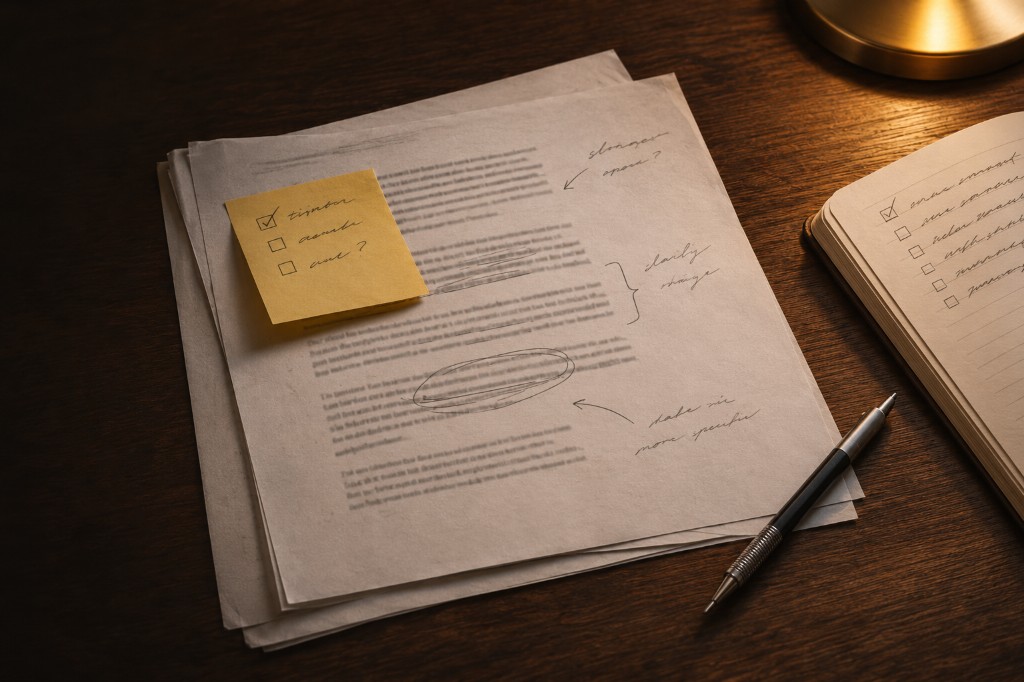
Before the protocol
Physician, nurse, dietitian, therapist, trainer, or a person writing from experience with no clinical claim. The voice changes. We will not borrow a white coat in the adjectives.
Stop a medication. Delay a screening. Treat a named disease at home. If your method tempts that sentence, we need to hear the refusal now, and we will build the chapters around it.
Shift work, a budget, a body that is not the one in the stock photo. Advice that assumes unlimited time and a private kitchen will be rewritten or labeled as advice for the person who has those things.
Order of the work
Stories are persuasive out of proportion to their evidence. The order of drafting has to resist that.
Each recommendation, what kind of authority it rests on, and the source. If the source is your clinic, we say so. If there is no source, the sentence becomes experience or it comes out.
Not an appendix nobody reads. The reader meets the boundary beside the advice: who should not try this, what symptom means stop and call, what the book cannot see.
Food, sleep, movement, or the habit, written against a calendar that includes work and other people. If the plan only works on a retreat, the chapter has to admit the retreat.
We mark any line that could be heard as “your doctor is the obstacle” or “your body is a moral failure.” Those lines get rewritten even if they are the most quotable. Quotable is not the same as safe, and it is not the same as true.
We will not dress up
We will not let the marketing sentence be truer-sounding than the chapter. If the book helps a habit, we say a habit. We do not say a disease is over.
Named products and quantities invented to look precise. If a dose matters, it belongs to a qualified source we can cite, or it does not belong in the book.
One person who did everything right and recovered, offered as the path. We will not write that parable. Bodies do not owe your outline a result.
A reader’s weight, age, illness, or fatigue used as a prod. The book can be direct. It cannot humiliate people into compliance and call the humiliation care.
Questions worth asking first
We will ask for the source of every load-bearing claim and we will not write past it. We are not a medical review board. If a chapter depends on a disputed literature, you need a qualified reader in that field before the book pretends the question is settled. We would rather hold the chapter than smooth a controversy into a tip.
Yes, if it is told as one person’s experience and does not slide into instructions for everyone with the same diagnosis. The moment the prose says “what you should do,” the standard changes. Tell us which book you want. A hybrid can work if the seams are visible. A hybrid that hides them is how readers get hurt.
Practical, bounded, and honest about money and time. We will not write a meal plan as a moral system, and we will not write exercise as punishment. If a recommendation is unsafe for people with a common condition, the chapter says so in the same spread as the recommendation, not in a later disclaimer.
You do. The copyright is yours, including chapters drafted here. Your obligation to sources, patients, and your license is also yours. We do not reuse client stories, case details, or your protocol as a sample. Patient privacy is not a style preference. If you do not have consent, we do not write the portrait.





The shelf
Our team has helped write, publish and market thousands of books over the past decade. Our books are well-written and finished to perfection. Have a look at some of our ghostwriters’ best works and clients’ bestsellers.

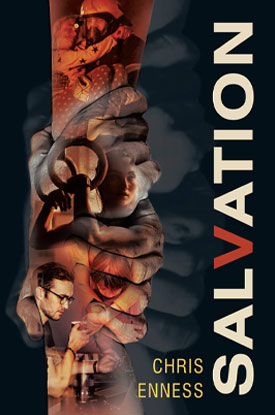


Geeks Ghostwriting’s helped me from idea refinement to publishing. I wanted a script on thriller-romance that had multiple twists and turns. I am directing a movie on the story now and our crew has fallen in love with the story!
Having a drama ghostwritten led me to gain the recognition I was seeking. I had an incomplete manuscript and Geeks Ghostwriting helped me complete it. I marketed it and it sold better than I had expected.
I thought that an illustrative self-help book was not possible! As an established designer, I have always wanted struggling designers and students to learn from my mistakes and achievements. The journey that I thought would be arduous turned out to be enjoyable and simple enough. Thank you, Geeks Ghostwriting!