The contract
What this reader was promised, said before a sentence gets pretty.

Genre
A thriller, a picture book, a memoir, and a business book are not the same assignment with different wallpaper. Each one owes the reader a different thing, and the draft fails in a different way. We name the shelf before we name the chapter count. Your name stays on the book.

What this reader was promised, said before a sentence gets pretty.
A page you can hear yourself in, before the manuscript gets long.
What this shelf will not invent, teach, or borrow from the next one over.
Yours on the jacket. The desk stays off it.
What we mean by the word
If the book still works after you delete the shelf, you have not written that shelf. You have written a mood.
People say genre when they mean taste. A little darker. A little more commercial. A little more serious. Taste is real, and it is not the job. The job is the bargain. A mystery owes a reader the pieces. A romance owes them the relationship as the plot, and an ending that pays that debt. A picture book owes them a page turn and a picture that does half the sentence. A finance book owes them the fee and the way the money is lost, in the same chapter as the upside. Those are not tones. They are tests. A manuscript can be well written and still fail the test of the shelf it claims.
We start by asking which promise you are actually willing to keep. Authors often arrive with two. A novel that is also a lesson. A memoir that is also a how-to. A business book that is also the story of a personality. Sometimes both promises are alive, and the book can hold them if each chapter knows which one it is serving. More often one of them is a costume the other is wearing because a category looked easier to sell. We would rather name the thinner book than spend months drafting the disguise.
Fiction and nonfiction do not fail the same way, and we do not edit them as if they do. A novel fails when the person can be lifted into another city, another year, or another love story without a rewrite. An argued book fails when the claim cannot survive a counterexample, or when a number has no source. A memoir fails when the other people in the room become extras, or when memory is polished until it plays like a film. A book for a child fails when the adult solves it and the child applauds. The shelves below are those tests, written out. They are not a menu of moods.
Length follows the shelf. It does not lead. A short story that needs a subplot is not a story yet. A novella with a second life stuffed in is a novel that dieted. A how-to that cannot show a beginner the mistake is a list of tips. We will tell you when the form you want and the pressure you have are not the same size. That conversation is cheaper than a draft written in the wrong container.
Fiction
A novel is not finished when the sentences are attractive. It is finished when the trouble belongs to that shelf. Contemporary fiction lives in a week a reader could still interrupt. Literary fiction puts pressure on the sentence and on what is left unsaid. Romance plots the relationship, not a series of cute events. Horror teaches a rule and then keeps it. A psychological thriller has to survive a reread.
We do not paste a twist, a lesson, or a love story onto a draft that was about something else and call it a genre. If the book is two shelves at once, we say which promise leads. The other one can stay as pressure. It does not get to steal the ending.
Younger readers
Picture books, early chapter books, and middle grade are not short adult novels. A picture book leaves work for the image and lives in a page turn. A children’s novel lets the child do the thing. Middle grade puts the friend, the school, and the secret at the center, and it does not borrow dread or romance from an older shelf. We write for the reader in the chair, not for the adult who wants a lesson delivered.
Memoir
Memoir is not a highlight reel and not a manual. Military service, a public career, a family archive, and a recovery each have a line the book does not get to cross: classification, a child’s privacy, a record you do not actually hold, a procedure that would teach the harm. We write the middle. The turnaround, by itself, is a speech.
Nonfiction
Nonfiction here means the book owes an argument, a method, or a sourced story. A business book that dies on a counterexample is a slogan. A cookbook that has not been cooked is a wish. A history that invents a mind is a novel that refused the name.
Health, finance, parenting, and sales books are allowed to be useful. They are not allowed to invent a result, a return, or a trick. The limit sits in the chapter, next to the advice.
How a book is placed
A stalled manuscript, a folder of notes, a method that only works while you are in the room, or a life you have told at dinner for years. Those are different starts. A slogan with nothing under it usually is not a start, and we would rather say that on the first call.
Not “people who love books.” A specific person with a specific debt to the book: a clue they can use, a Tuesday they have to survive, a recipe they can cook, a child who has to follow the cause. If you cannot point at them, the shelf is still a guess.
Happy ending, or not. Fair clues, or a book about the mess after the crime. A practice someone can fail, or a story that does not pretend to be a protocol. We write that sentence down. Later chapters are checked against it, including the ones you are proud of.
Before the book gets long, you read pages that could only be this shelf. If they could be lifted into another genre by changing the nouns, we are not ready. The sample is where voice, limit, and promise either show up or do not.
Across every shelf
Dragons on a lecture. A verse pinned to a chapter that did not need God. A love scene glued to a book about a job. If the ending belongs to a different promise than the first third, we rebuild or we rename. We do not decorate.
An invented study, an invented return, an invented recovery, a recipe nobody cooked, a fact a dead person cannot correct. Confidence is not a source. If the sentence needs a bluff, it comes out, even when the chapter gets shorter.
A child, a patient, a teammate, a congregation, a person in a meeting. Recognizable trouble is not yours to spend because it makes a point. We change it until the pattern remains, or we leave it in the drawer.
The copyright stays with you, including the pages drafted at this desk. We do not take a byline, a credit, or a story we can repeat about the project. If you want that in writing before a file is opened, say so on the first call.
Before you send the pages
Then that is the first conversation, not a failure. Tell us what the reader should feel in the middle of the book, what they were promised, and what you are unwilling to write. We will name the shelf those answers actually support. Sometimes the answer is that you have two books. We would rather split them than average them into a manuscript nobody’s reader ordered.
Yes, when both contracts are kept. A historical novel still owes a person who could have lived in that year. A thriller can be a love story if the relationship is plotted, not rewarded at the end. A business book can contain a life if the life serves a decision the reader can use. What we will not do is let the second genre arrive in the last chapter as a rescue.
The shelves on this page are the ones we have already built a standard for. If your book sits next to one of them, start there and we will say whether the difference matters. If it sits nowhere, bring the promise anyway. A dictionary, a sermon, and a manual for harm are not gaps we are trying to fill. A serious book with a clear reader might be.
Ghostwriting is the arrangement: we write, you remain the author, the desk stays off the cover. Genre is the standard the pages are held to. You can hire the desk for a novel, a memoir, or a method. You cannot hire it to ignore the contract of the shelf, and you should not want to. Readers punish that faster than any editor will.
You do. The copyright stays with you, including chapters drafted here, unless an employer or a publisher already owns the underlying work by a contract you should settle first. We do not reuse your premise, your family, your numbers, or your voice as a sample that could be traced. Say so on the first call if you want that in writing before a file moves.
When you are ready
A scene, a stalled file, or the promise you are afraid the book does not keep. That is enough to know whether we should take it. Call (833) 688-4166 or write [email protected].





The shelf
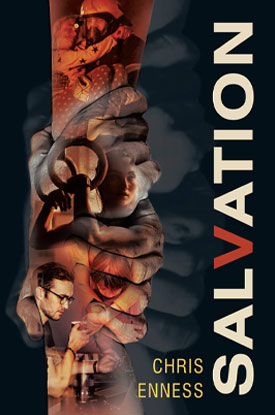
Our team has helped write, publish and market thousands of books over the past decade. Our books are well-written and finished to perfection. Have a look at some of our ghostwriters’ best works and clients’ bestsellers.



What makes us stand out from our competition is our high quality of work and experience. Our team has a diverse background though most of them are American. Our patriotism is to serve you as we serve our country. We find ways for you to grow and let your message be known to your audience across the world. Whether your work needs quality ghostwriting to marketing, we offer every service in between and we do it well.
With an experienced team, your work is of world-class standards and it is important in the world of writing. A great book means that it is easily marketable and publishable. Our team finds opportunities that let your work be recognized – not just in one country or language.
We believe in your work standing out. Our commitment is not just for you to have your name on your book, but also the rights and earnings from them. We fulfill our service agreement to ensure the limelight is solely yours to enjoy.
You will notice the difference in our team from the moment you connect with us. With round the clock availability and a dedicated team at your service, you will enjoy the process that allows you to provide the details and story while we perfect it. This is the reason that we have helped sell bestsellers and earn authors millions in royalties.
We know how important it is to understand a client’s requirement rather than to force a service that may not be of their use. This is why we offer customized services against your goals and desired outcomes. Our team intends to allow you to create the most impact, depending on your genre, idea and intention. You should reach out to us by dropping a message or calling us. We are available 24/7 and await to serve you – providing you with the best value for your money.
Geeks Ghostwriting’s helped me from idea refinement to publishing. I wanted a script on thriller-romance that had multiple twists and turns. I am directing a movie on the story now and our crew has fallen in love with the story!
Having a drama ghostwritten led me to gain the recognition I was seeking. I had an incomplete manuscript and Geeks Ghostwriting helped me complete it. I marketed it and it sold better than I had expected.
I thought that an illustrative self-help book was not possible! As an established designer, I have always wanted struggling designers and students to learn from my mistakes and achievements. The journey that I thought would be arduous turned out to be enjoyable and simple enough. Thank you, Geeks Ghostwriting!